

During rescue operations off Hinchinbrook Island in the Gulf of Alaska on 7 August
1981, a Sikorsky HH-3F helicopter crashed in heavy seas, killing four crew members.
There have been lots of stories of giant waves or walls water much higher than the significant wave height that was prevailing at the time.
I experienced one personally while on a cadet cruise. It was a beautiful summer day on USCGC Mackinaw (WAGB-83) in 1968. I believe we were on Lake Superior. I was sitting on a stool in the CIC, when the ship suddenly took a 54 degree roll. It came out of nowhere.
Only recently has there been scientific study of how and why they form.
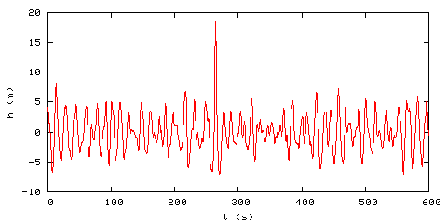
The Draupner wave, a single giant wave measured on New Year’s Day 1995, finally confirmed the existence of freak waves, which had previously been considered near-mythical.
Here are some sources:
- What is a rogue wave?
- Rogue Waves Can Reach Four Times Higher Than We Thought
- Gigantic Wave in Pacific Ocean Was the Most Extreme ‘Rogue Wave’ on Record
It now seems they are much more common than previously believed. Preceded by a deep trough, they can be much higher than previously thought, up to four time the significant wave heights, and they can appear suddenly from unexpected directions.
Wikipedia has some historical information, and pointed me to an excellent two-page, 2006 US Naval Institute article, “Monster Waves Threaten Rescue Helicopters” by Senior Chief Ken Freeze, U.S. Coast Guard, (Retired). It does not reflect the most recent research, but it does suggest that they may explain the loss of Coast Guard helicopters hovering low during SAR cases, the sinking of some of the “more than 200 large supertankers and container ships during the last two decades,” and the “estimated two large ships sink every week for undetermined causes.”
The USNI article includes the following,
“David Feit, Chief of Ocean Forecast Branch for the National Oceanic and Atmospheric Administration (NOAA) Ocean Prediction Center…puts the waves in two categories, non-dispersive and dispersive. “A non-dispersive wave is one you can see coming at you. It travels for 6 to 10 miles before it dissipates. [But] the dispersive wave is the one that gets you,” he said. “It is a wave that suddenly seems to come from no where and goes away just as quickly. These waves are the result of the interactions of many different elements taking place at the time and are as forcastable as where the next lightning strike might occur.”
 Chuck Hill's CG Blog
in the mid 1970s while serving aboard USCGC Mellon WHEC 717 we encountered 85’ seas during SAR for the sailing vessel SORCERY which canoe rolled down a 100’ rogue at 0100. The experienced rolls, ship shudders and sounds has made an indelible etching on my mind.
http://www.cncphotoalbum.com/archive/sorcery/sorcery2.htm
When they started looking for rogue waves they found out there were many more rogue waves than they thought. One problem has been captains reluctant to report rogue waves because they didn’t think they would believe them
Research Vessel Discovery and “The Night of Monster Waves” https://www.marinelink.com/news/research-vessel-discovery-night-monster-522057