
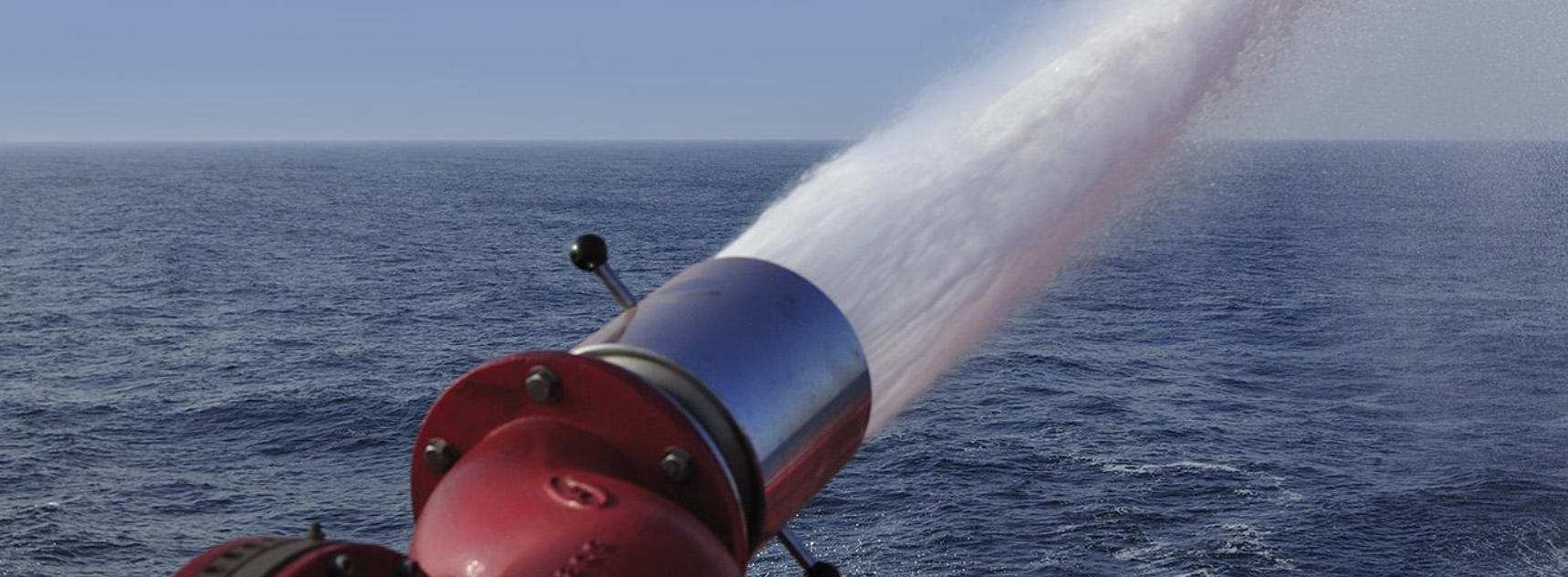
Powerful shipboard firefighting monitors can operate with flow rates in the vicinity of 16,000 gallons per minute, generating nozzle pressures and forces capable of knocking down or destroying drones with seawater. SHUTTERSTOCK
Captain Karl Flynn, U.S. Marine Corps, offers a novel counter to small drones,
It is well established that unmanned aerial systems (UASs) and vehicles (UAVs) are cheap, ubiquitous, and deadly against ground forces. While U.S. Navy ships and aircraft have proven themselves effective at shooting them down in the Red Sea, unmanned aircraft could soon become more dangerous in multiple environments: busy ports, canals, straits, the littorals, and other choke points. The Navy should explore using high-powered water cannons—also known as firefighting monitors—as ship-based counter-UAS (cUAS) weapons.
Now, I don’t think this would work against anything, but the small First Person Video drones that are now extremely common, but that is what the Coast Guard is most likely to encounter. At close range, water under high pressure can be damaging, but it’s not likely to cause collateral damage, like firearms could.
There are, of course, other reasons we might want to have powerful fire monitors.
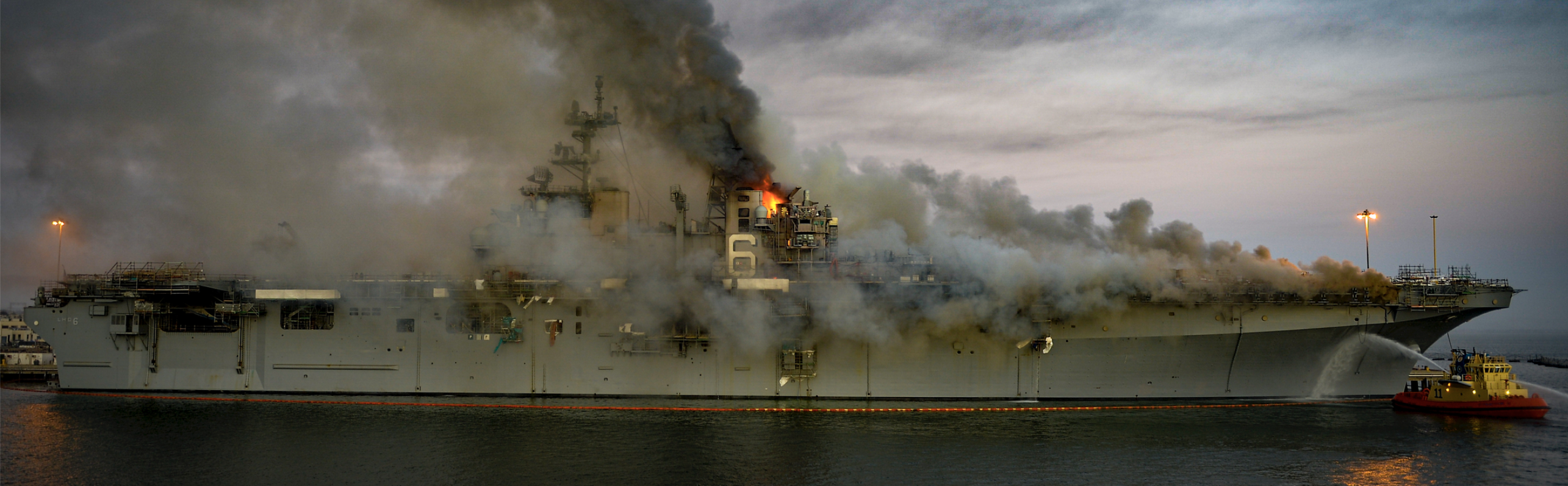
SAN DIEGO (July 12, 2020) The U.S. Navy amphibious assault ship USS Bonhomme Richard (LHD-6) on fire at Naval Base San Diego, California (USA), on 12 July 2020. On the morning of 12 July, a fire was called away aboard the ship while it was moored pier side at Naval Base San Diego. Base and shipboard firefighters responded to the fire. Bonhomme Richard was going through a maintenance availability, which began in 2018. The fire was extinguished on 16 July.
They can also be used in less than lethal confrontations.
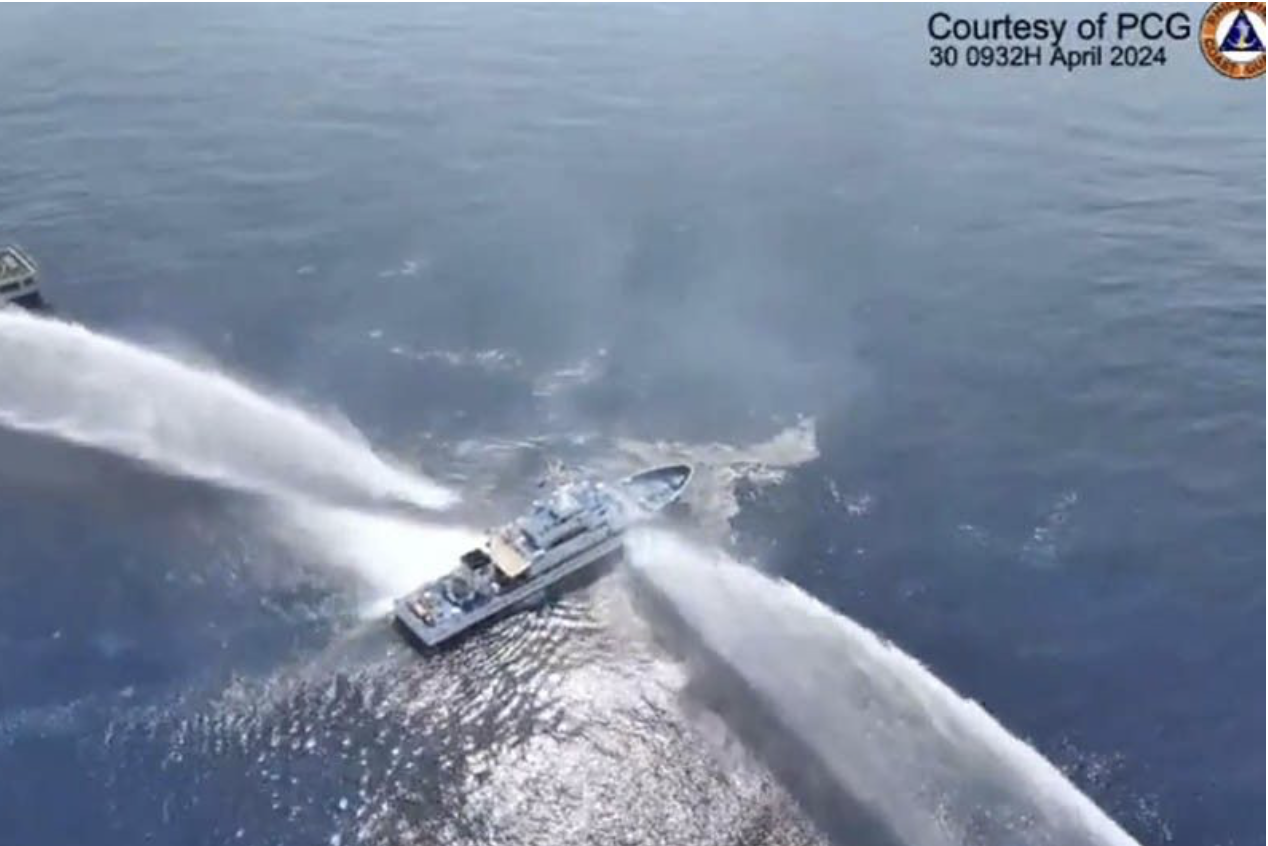
Screengrab from Philippine Coast Guard shows a Philippine vessel being water cannoned by the China Coast Guard on April 30, 2024.
They have become a regular feature of Gray Zone activities in the Western Pacific.
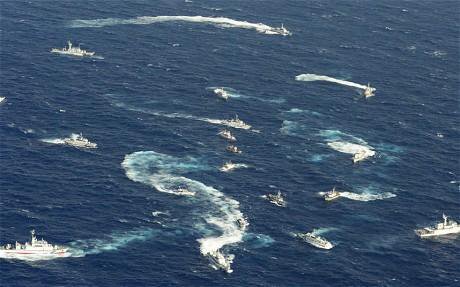
A water cannon battle between Taiwanese and Japanese Coast Guard vessels.
Frankly, what we have now looks kind of wimpy by comparison.
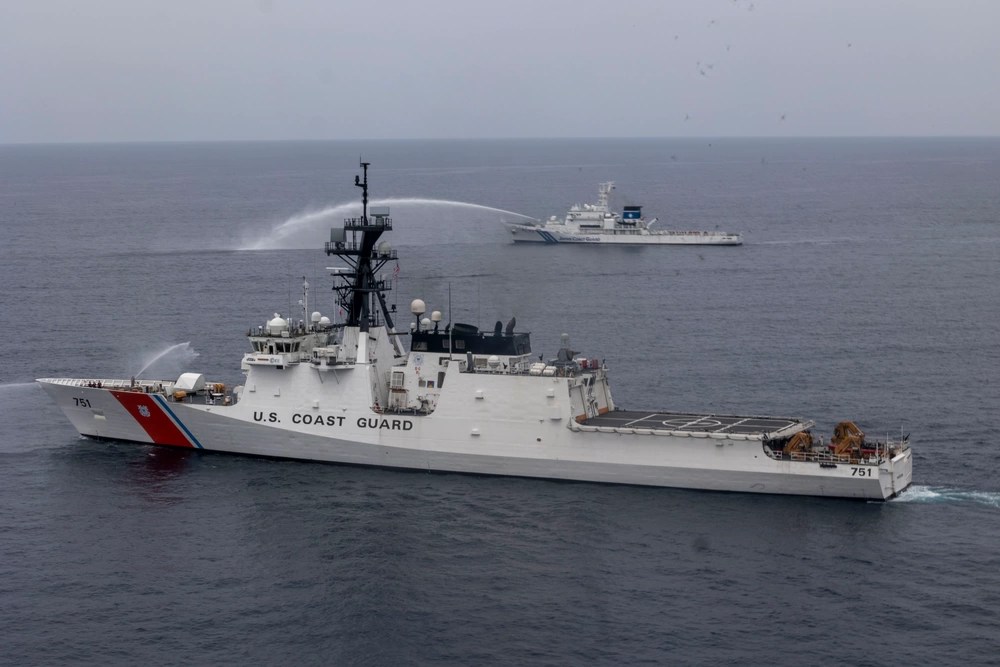
U.S. Coast Guard Cutter Waesche and Japan Coast Guard vessel JCGC Wakasa (PL-93) test their water cannons during a trilateral search and rescue exercise in the East Sea, June 6, 2024. Coast Guardsmen from Japan, Republic of Korea and the United States used the trilateral training as an opportunity to rehearse cohesion between the nations when operating together. The U.S. Coast Guard has operated in the Indo-Pacific for more than 150 years, and the service is increasing efforts through targeted patrols with our National Security Cutters, Fast Response Cutters and other activities in support of Coast Guard missions to enhance our partnership. (U.S. Marine Corps photo by Cpl. Elijah Murphy)
 Chuck Hill's CG Blog
Yeah, large water monitors are the main thing that is missing on our Coast Guard cutters that are obvious on almost everyone else’s.
The US Coast Guard specifically claims no desire to be an on call maritime fire department, but it does seem to fall into the SAR, disaster response mission area.