

Based on the Coast Guard Historian’s timeline, https://www.history.uscg.mil/research/chronology/
With inspiration from Mike Kelso
June 25

1935 Coast Guard aviator LT Richard L. Burke set a world record when he flew the Coast Guard Grumman JF-2 (V-167) at 280 kph (174 mph) over a 100 kilometer course with a 500 kilogram load in 21 minutes and 20 seconds, besting the previous record by roughly 14 miles per hour.

A U.S. Coast Guard Grumman JF-2 Duck (serial V148) in the mid to late 1930s.
1936 “The act of June 25, 1936 was in reality an amendment to the Seamen’s Act of 1915, and had been called the Merchant Marine Act of 1936. This law provided for (1) “qualifications, examinations, and issuance of certificates of service or efficiency to unlicensed personnel; (2) the issuance of continuous discharge books to all seagoing personnel,” a three-watch eight-hour day, and certain citizenship requirements. The act greatly increased the workload of the shipping commissioners, particularly in providing for the issuance of discharge books and various certificates. This had the effect of both increasing the efficiency of unlicensed personnel and raising the dignity of the profession.”
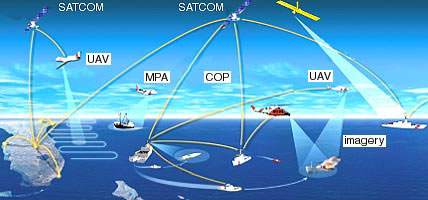
Deepwater Concept, https://cgaviationhistory.org/2002-initial-contracts-for-the-deepwater-project-awarded/
2002 U.S. Deputy Secretary of Transportation Michael Jackson, joined by U.S. Coast Guard Commandant Thomas H. Collins, announced the award of the Integrated Deepwater System (IDS) contract. It was the largest acquisition project in the history of the Coast Guard.

A Coast Guard C-27J Spartan crew, assigned to Coast Guard Air Station Sacramento, flies over San Francisco, California, during area of responsibility familiarization training, Monday, Feb. 6, 2018. The C-27Js are outfitted with weather radar and communications equipment capable of supporting transport and other Coast Guard missions. Coast Guard photo by Lt. Scott Handlin
2014 “The Coast Guard took a step toward introducing the C-27J into its medium range surveillance fleet with the commissioning of the C-27J Asset Project Office (APO) at Elizabeth City, N.C., June 25, 2014. The C-27J APO’s primary mission is to provide a purposeful, sequential plan to incorporate 14 C-27Js into Coast Guard operations. The aircraft are being transferred from the U.S. Air Force as required by the National Defense Authorization Act for Fiscal Year 2014. Among the C-27J APO’s responsibilities will be development of Coast Guard-specific operational and maintenance procedures, training plans, technical manuals and crew duties.”
 Chuck Hill's CG Blog