Precision Guided 70mm Rockets–APKWS and LOGIR, Poniard Low-Cost Guided Imaging Rocket

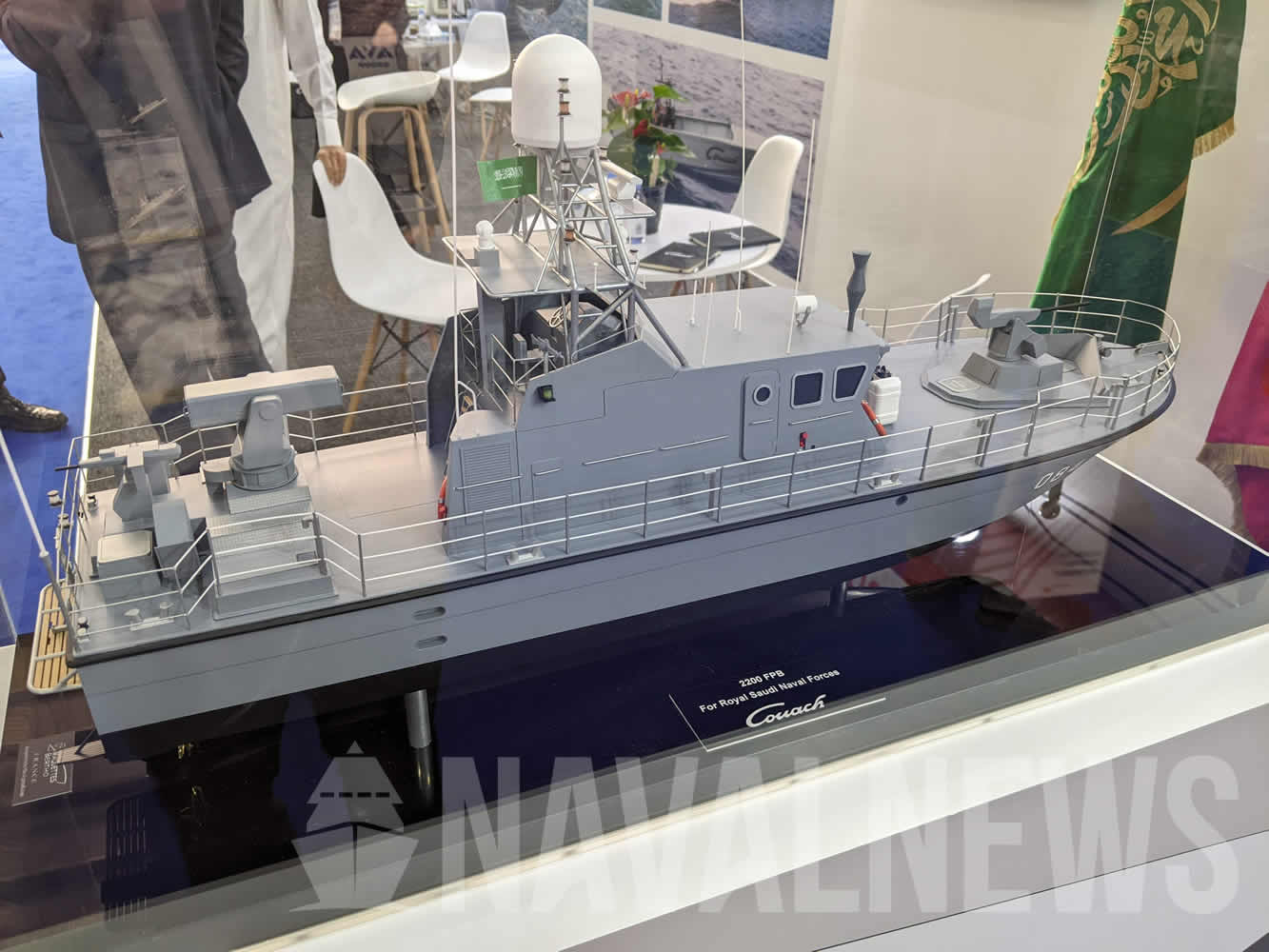
Couach 2200FPB Fast Patrol Boat. 12 being built for Royal Saudi Navy, armed with multiple rocket launchers by LIG Nex1 fitted at the stern.

Lately I have been seeing a lot of news about various developments related to guided 70mm (2.75 inch) rockets, particularly since an APKWS took down a cruise missile less than two weeks ago.

I probably don’t need to say this again, but I think these are extremely appropriate weapons for the Coast Guard because of their light weight, minimum training and maintenance requirements, low cost, and their range, accuracy, and effectiveness against the range of threats the Coast Guard is most likely to encounter from small drones to merchant ships.

The CUSV seen in the video and below is only 12 meters, 39′ in length.

Textron USV fitted with LIG Next1’s Poniard guided rocket. Textron photo.

South Korean Guided Rocket Test-Fired from USV at RIMPAC 2024

LIG Nex1’s K-LOGIR / Poniard guided rocket successfully finished a Foreign Comparative Testing (FCT) during RIMPAC 2024.

“A launch system for the 2.75-inch guided rocket was developed to be mounted on ships. Currently, it is installed on the Royal Saudi Navy’s 2200 Fast Patrol Boat (FPB) and HSI-32 interceptors, The UAE Navy new Gowind corvettes and is planned to be installed on the UAE Navy’s Falaj 3-class OPV.

Installing LIG Nex1’s Poniard launcher on Textron’s CUSV for the live fire test during RIMPAC. (ROK Navy Photo)

Infrared Seeker For APKWS Guided Rockets Is In The Works

“Advanced Precision Kill Weapon System II, better known simply as APKWS, is slated to be demonstrated with a passive infrared seeker. The news came in the 2025 Marine Aviation Plan, which states that “Additional demonstrations are also in [the] work[s] with the Army and Air Force to determine [the] feasibility of adding additional guidance methods to the APKWS family, including passive infrared seekers.”

“While little is known about this initiative, such a capability could potentially offer a far cheaper solution with independent targeting capabilities compared to existing missiles, while also increasing magazine depth on certain platforms dramatically.”

OKSI Awarded USSOCOM and AFRL Contracts for Precision Guidance Seeker for Munitions

“July 23, 2024 /PRNewswire/ — OKSI has been awarded multiple contracts totaling nearly $6 million from USSOCOM and the Air Force Research Laboratory (AFRL) for their ARMGDN seeker. ARMGDN is a capability enhancement to BAE Systems’ APKWS® laser-guidance kit, providing passive target acquisition and tracking for precision engagements. APKWS is a guidance kit for the 2.75 inch Hydra-70 rocket. Together, the APKWS with OKSI’s ARMDGN seeker will facilitate rapid engagements of multiple air or ground targets via ripple fire of multiple precision- guided rockets in rapid succession.”

U.S. F-16 Fighters Shot Down Drones with Laser-Guided Rockets in Combat

“The U.S. Navy also announced in late 2023 that it was about to deliver a new proximity-fused warhead for APKWS II rockets, optimized for use against drones, albeit developed ostensibly for the surface-to-air role. However, further developing an air-to-air capability out of these older rockets is another impressive feat for the U.S. Air Force, that has now the possibility to engage targets at a very small fraction of the cost of other existing missiles.”

Marines to give air-to-ground missile new counter-drone capabilities

“APKWS II continues to provide a reliable, high-capacity precision guided munition for both the rotary wing and fixed wing communities. The program has now completely transitioned to the Single Variant Block Upgrade (SVBU) that will enable the same guidance unit to be used for any platform, as well as increasing the overall employment envelope. To improve performance against UAS, certification of a suitable proximity fuse is in work for fielding to the fleet with current guidance and warhead combinations. Additional demonstrations are also in work with the Army and Air Force to determine feasibility of adding additional guidance methods to the APKWS family, including passive infrared seekers,” officials wrote.
Sweden Selecting New Family of Weapons for Small Craft

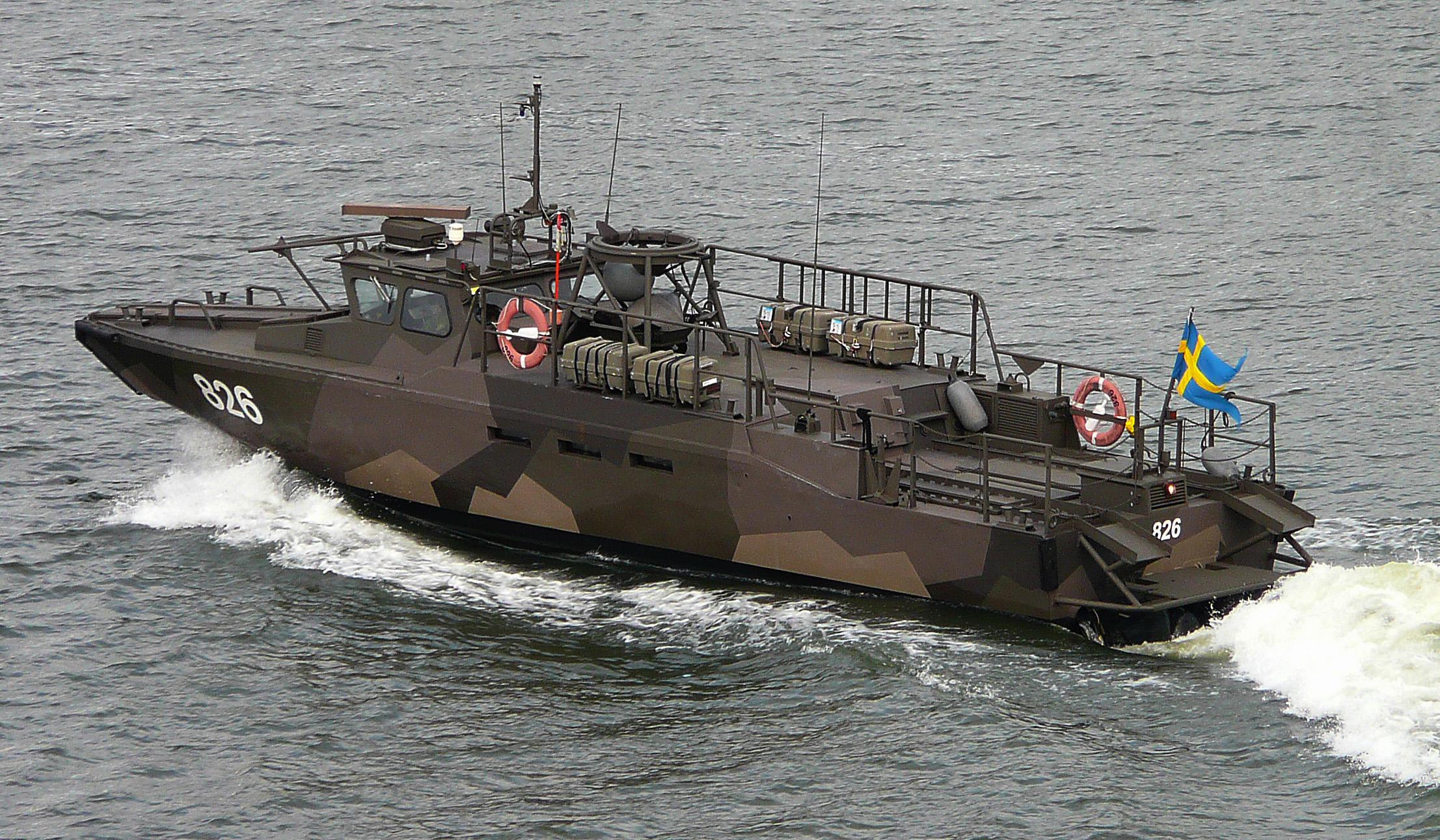
Swedish Combat Boat 90 (CB 90) in the port of Gothenburg. Photo by Arco Ardon

Naval News reports,

The Swedish modernization of their coastal troops is continuing, with the formal call for tenders for a new surface-to-surface anti-ship missile. The new weapon will receive the formal designation RBS 18, and unlike the current man-portable Hellfire-missile system used in the short-range anti-ship role by the Swedish marines will be mounted aboard the CB 90 combat boat.

Defense News reports,

“Sweden plans to acquire anti-aircraft guns for its fast-assault boats to counter drones and helicopters…”

Defense Industry Europe reports,

“FMV (Försvarets materielverk), the Swedish Defence Materiel Administration, announced the signing of a contract for the delivery of mortar-armed boats as part of the Amfbat 2030 programme.”

The Mortar equipped assault craft appears to be a resurrection of the previously cancelled Combat Boat 2010 program. The associated Patria 120mmAdvanced Mortar System could also be used in a direct fire mode.

The Amphibious Battalion operates between sea and land with the overall task of preventing enemy amphibious assaults. With the new maritime artillery, the fire controller on, for example, a Combat Boat 90 HSM can provide target data to the firing platform, enabling the firing of grenades at a high rate of fire while advancing, for indirect engagement of various types of ground targets. Image: FMV.

What we are seeing is a comprehensive overhaul of Sweden’s approach to littoral combat for their Amphibious Battalions (Amfibiebataljonen) of the Swedish Armed Forces from Stockholm and Gothenburg, assigned with defending the coastline, including numerous islands, against potential amphibious assaults.

While the mortars will be mounted on new construction boats, the new air defense and anti-ship missile systems will be mounted on existing CB90 (combat boat) assault craft.

The CB90 is a very popular product, used by at least nine different nations including the US, UK, and Ukraine. The Russian Navy even has what appears to be unlicensed copies of the craft. Mexico’s eight ship Oaxaca class Offshore Patrol Vessels carry a CB-90 HMN Patrol Interceptor in their well deck.

The CB90 displaces 23 tons and is 52 feet long with a 12.5 foot beam. 

If a weapon system fits on a CB90 it will certainly fit on any of the US Coast Guard’s patrol boats and larger cutters. 

In all probability the AAW weapon system will include a 30mm chain gun. Short range AAW missiles are possible. Perhaps the APKWS.

The anti-ship missile may be something entirely new. The closest to the description I know of, other than the MARTE MK2/N mentioned in the article, is the Spike NLOS.

“ADAPTING LAND-BASED SYSTEMS FOR EFFECTIVE LOW-COST ENGAGEMENT SOLUTIONS AT SEA” –L3 Harris

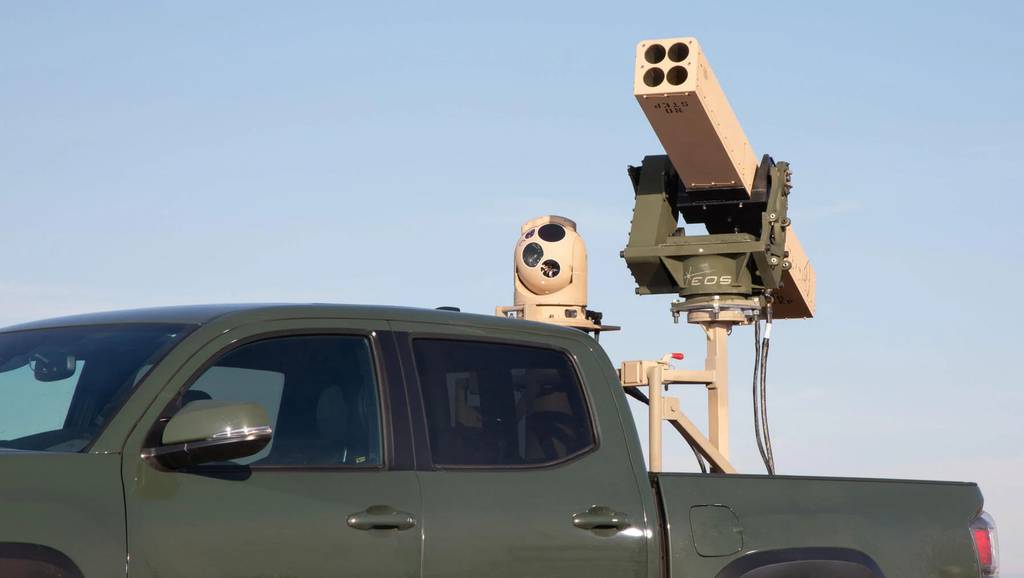
The VAMPIRE system can fit in almost any pickup or vehicle with a cargo bed. (Courtesy of L3Harris)

Below is an L3 Harris news release labeled as an editorial. If you are a regular reader of this blog, you know I have been a fan of APKWS since 2017. Tens of thousands of APKWS conversion kits are made annually. They are cheap at about $30,000. There is now a proximity fuse available. L3 Harris has integrated electro-optic sensors and fire control to create a complete system. It is combat proven against Unmanned Air Systems. It seems an almost ideal system for executing the Ports, Waterways, and Coastal Security mission against both surface and air asymmetric threats. Perhaps significantly, VAMPIRE is a Navy system.


While our Vehicle-Agnostic Modular Palletized ISR Rocket Equipment (VAMPIRE™) system has already proven its effectiveness with ground based missions, its adaptation for maritime use will revolutionize maritime surveillance and defense.

The VAMPIRE system, originally designed to address the emerging unmanned aerial systems (UAS) threat, has garnered acclaim for its precision and reliability in combat. Already proven on the ground in Ukraine, these effective, low-cost engagement capabilities can be extended to the seas, offering a transformative solution for maritime operations against UAS, fast inshore attack crafts and low-slow flyers.

The significance of the maritime system extends beyond its immediate capabilities. Its integration into naval operations redefines maritime security protocols, enhancing surveillance, reconnaissance, and deterrence capabilities. With the ability to swiftly detect and counter aerial and surface threats, naval forces can better safeguard maritime assets, ensure personnel safety, lower the weapons cost curve and maintain strategic superiority in contested environments.

The mission management system enables the integration onto manned and unmanned surface vessels featuring an advanced WESCAM MX™-10 MS targeting sensor with its weapons station, allowing a remote operator to engage targets quickly and accurately. Like its ground-based counterpart, maritime VAMPIRE employs the Advanced Precision Kill Weapon System (APKWS) paired with L3Harris’ proximity fuze to defend against surface and air threats, providing naval forces with an accurate, low-cost engagement capability.

The VAMPIRE system highlights L3Harris’ dedication to supporting the defense needs of nations across the globe. By extending this versatile solution to the maritime domain, L3Harris is providing naval forces with cost-appropriate options to adapt to evolving threats and safeguard waters effectively.

As the landscape of maritime security challenges undergoes constant evolution, forward-looking, full-scale production and low-cost solutions are needed to counter the wide range of dynamic challenges.  L3Harris is committed to innovation and adaptability in addressing evolving security threats by leveraging and adapting existing technology like VAMPIRE for maritime use.

RELATED CAPABILITIES

“Roadrunner Reusable Anti-Air Interceptor Breaks Cover” –The Drive

The Drive reports on a new sort of modular system that has a wide range of possible uses including as an anti-air weapon against threats from small drones to cruise missiles. It is small and relatively cheap. It can loiter. It can return and be refueled. It requires only minimal maintenance. It can be cued by a number of systems. It probably would work against surface targets too. It is jet powered, with high sub-sonic speeds.