
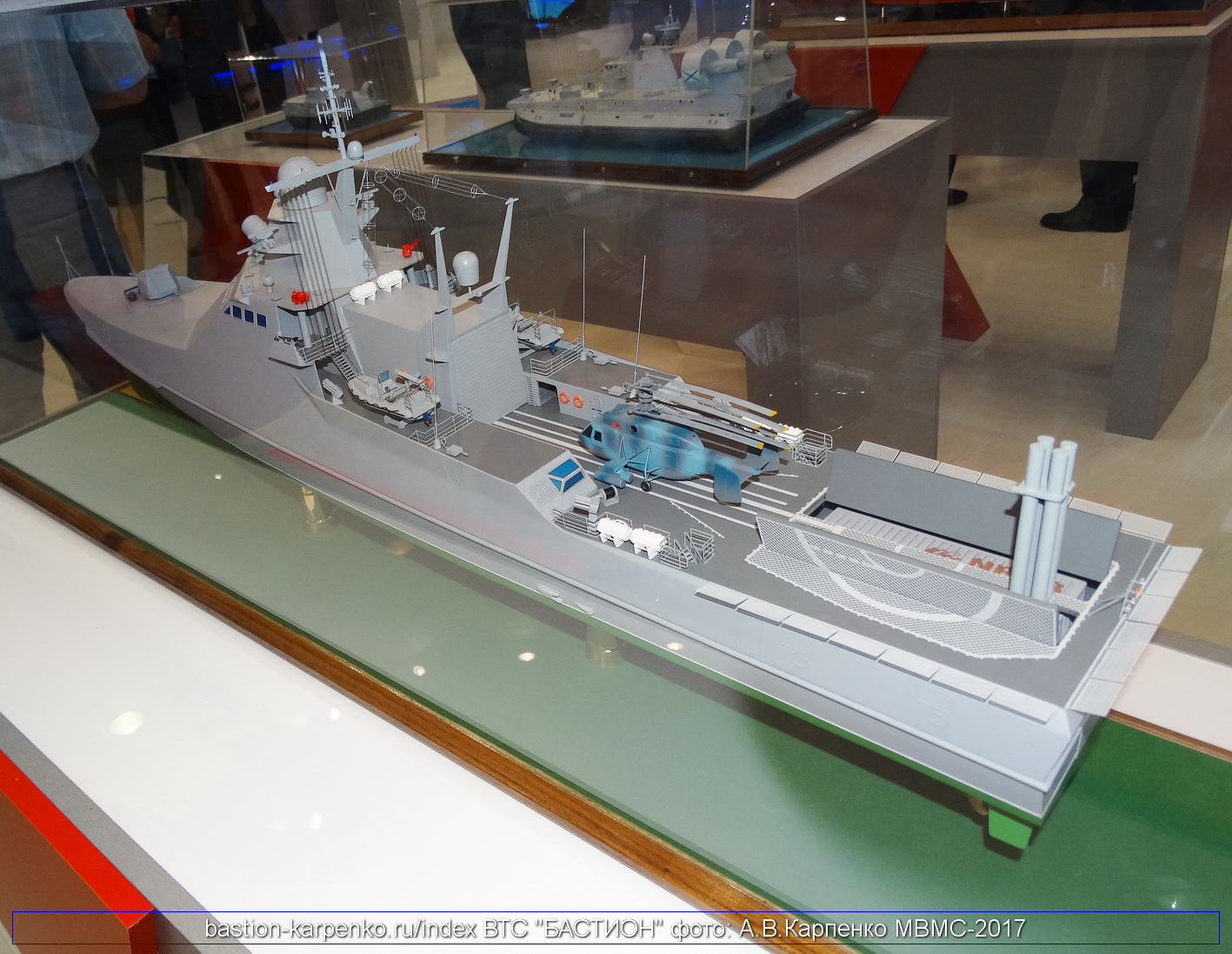
Russian Project 22160 corvette, with optional missile launch system shown elevated.
“Ukraine continues to strike blows against the Russian Black Sea Fleet, with the latest victim being the Project 22160 patrol ship Sergei Kotov, which was the target of an overnight attack involving uncrewed surface vessels (USVs), or ‘drone boats.’ The same vessel had come under USV attack before, with Russia claiming to have foiled an effort to sink it last July before the warship was reportedly damaged again in September.”
Specs for the Russian patrol ship are as follows:
- Length: 94 meters (308 ft)
- Beam: 14 meters (46 ft)
- Draught: 3.4 meters (11.2 ft)
- Speed: 30 knots
- Range: 6,000 nmi
- Endurance: 60 days
- Crew: 80
The Project 22160 patrol ships like Sergei Kotov are similar in size and armament to Coast Guard cutters. If Russia had attempted to blockade Ukraine, these would have been the logical ships to enforce the blockade. Looking at what has been happening in the Black Sea makes a strong argument that Coast Guard cutters need a better secondary armament than crew served M2 .50 caliber machine guns.
The attack occurred near the Kerch Strait, East of Crimea, very far from the nearest Ukrainian controlled coast.
Again, the attack was done at night.
Again, the attack involved numerous unmanned surface vessels, at least five in this case.
Again, we see the attacking unmanned craft approaching from the stern, presumably because the target has turned away from the threat in an effort to maximize the time available to counter the threat.
Again, the medium caliber gun is still on the centerline.
Again, we see no supporting units coming to the aid of the target vessel.
Notably the only effective aft facing weapons available were crew served heavy machine guns (presumably 14.5mm). In a video I have seen, it appeared that smoke from the machine guns may have been obscuring their targets. Tracers and muzzle flash probably also adversely effected the gunners’ night vision. (In my 22 years in the CG, including three years at Fleet Training Group San Diego, I don’t think I ever saw a .50 exercise conducted at night against a small moving target.)
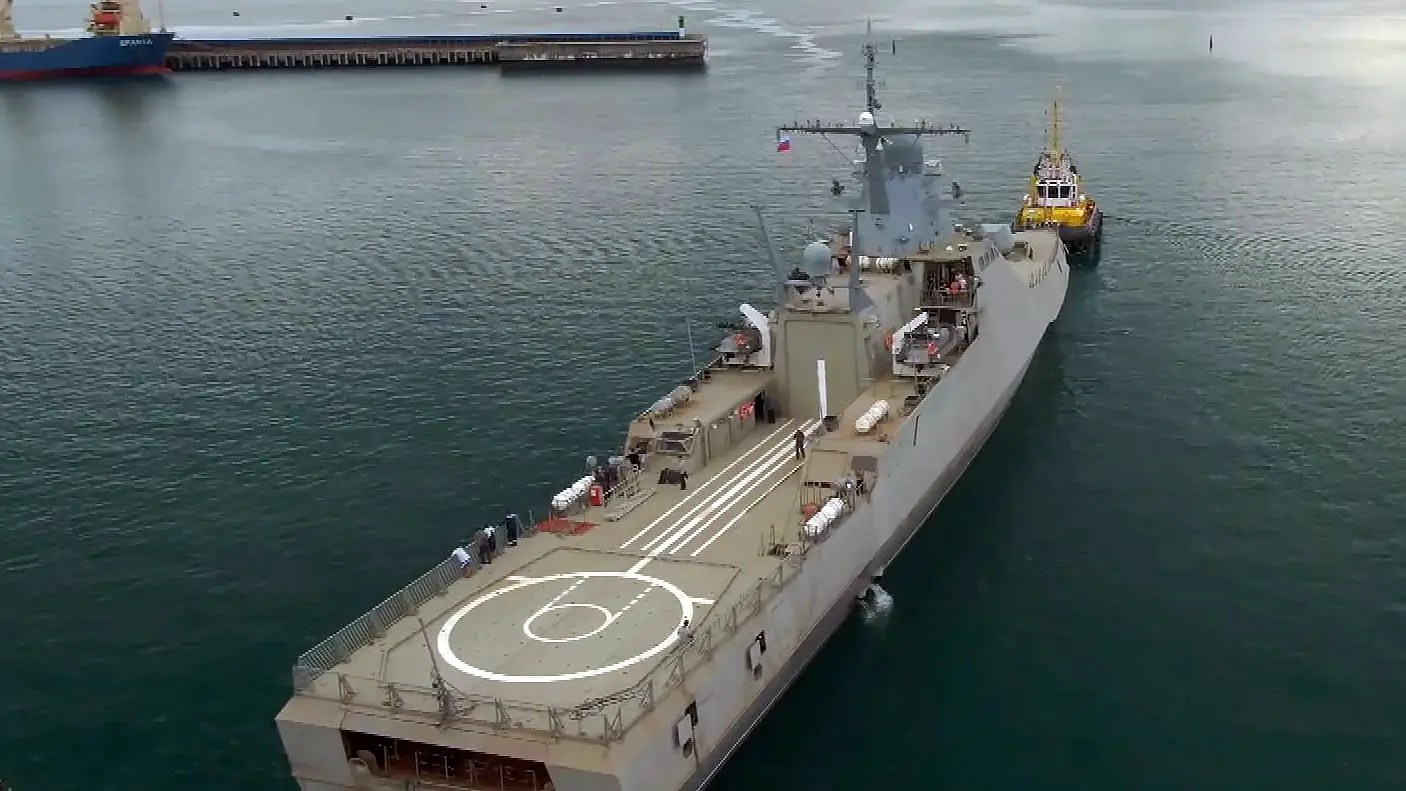
Russian Federation Ship Sergey-Kotov Project 22160 corvette
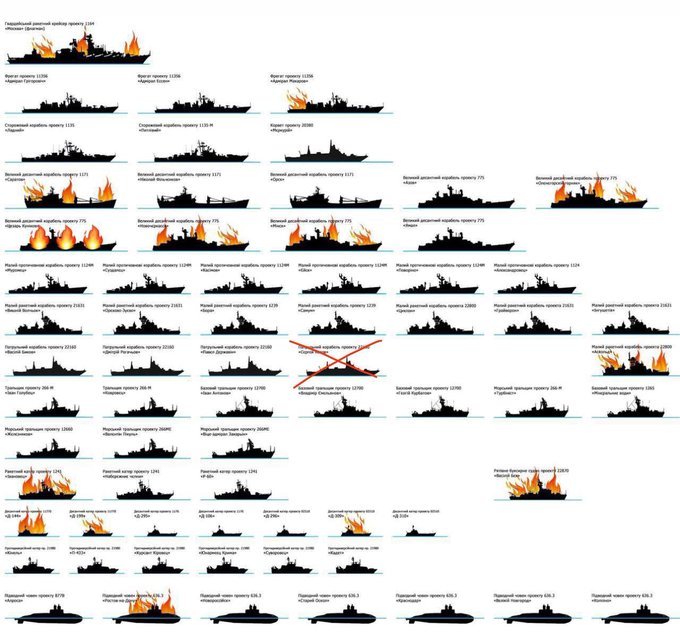
Things have not been going well for the Russian Black Sea Fleet.
 Chuck Hill's CG Blog
More info and videos here. New Video Shows Russian Ship’s Desperate Attempt to Fight Off Drone Boats (maritime-executive.com)
I really don’t see how this might not happen o a U.S. ship even if better prepared. We really need hemispheric EO/IR detection similar to the system on the F-35 for starters. I’m also pretty sure crew served weapons can’t be trusted to get the job done. I wouldn’t put much faith on the 25mm Mk 38 either. We need stabilized remote mounts with air burst ordnance from my view. Maybe a mortar system to really put some shrapnel out there.
The key I would think is for them to be detected by aircraft while in transit and then go after them with attack helicopters.
For point defense Infrared sensors would be very useful for both detection and fire control.
Crew served weapons don’t cut it, particularly at night. I have seen a lot of gun exercises against small high speed surface targets. We shoot and shoot and shoot and the target almost never stops.
I probably don’t need to say again, I really like APKWS.
Every combatant (and patrol craft) needs a forward gun with airburst capability (30mm or above or preferably 57mm), and an aft SeaRAM, which can be used against surface targets. At least it is an 11-round launcher. But I’m with you, having APKWS mounted P/S with independent designators could be helpful.
@DaSaint, what we are seeing in the Black Sea is that the Russian ships are turning and running away from the USVs. That makes sense because it minimizes closing speed giving them more time to destroy the threat.
That suggests the need for systems effective against the threat that cover the stern. This is one reason I am concerned about the PATFORSWA FRCs. They only have crew served .50 caliber MGs to cover the stern. If they go into combat with Iranian Revolutionary Guard Corps using swarm tactics, I hope they bring along some Marines and their weapons to beef up the defenses.
For a larger vessel it might be better to have the gun aft and the SeaRAM forward.
The Israelis tend to put their Phalanx on the bow, so there probably would not be a problem putting the SeaRAM there. The Sa’ar 4.5s and Sa’ar 5s have their CIWS on the bow. The Sa’ar 4.5s also have a 76mm on the stern. The Sa’ar 6s do not have Phalanx or SeaRAM.
Yet another Russian warship upgraded to a submarine by Ukraine for no charge! With any luck, soon most of Russia’s surface ships in the Black Sea will be upgraded to submarines.
I wonder how well Javelin would work at sea. Is why I like the Kongsberg RWS-6 with the 30×113 with air burst. It can carry a Javelin or 2 Stinger.
The 30mm M230 is likely to have a role against both UAS and USVs.
I still think the APKWS may be the best solution for this because it is smaller, meaning we can put more of them on a Remote Weapon Station (RWS) and it is accurate and has enough range and destructive power to take down any UAV or USV.
Combining the M230 and APKWS on a RWS looks like the best way to deal with small surface and air threats without going to larger, heavier and more expensive systems. It would not be hard to place two to four of them on most ships.
Mounting them on merchant ships with a naval armed guard would not be too hard.
Looks like the Russian Black Sea Fleet has lost another ship in port in Sevastopol to air launched cruise missiles.
25 March 2024, Putin’s £80,000,000 spy ship taken out by massive missile strike (msn.com)
I have decided this is the best place to continue to count up the loses so I am also adding this earlier loss even though I had already included it as a comment on a different post. Dates are approximate.
24 March 2024, Russia’s Huge Black Sea Fleet Losses After Two More Ships Hit (msn.com)