

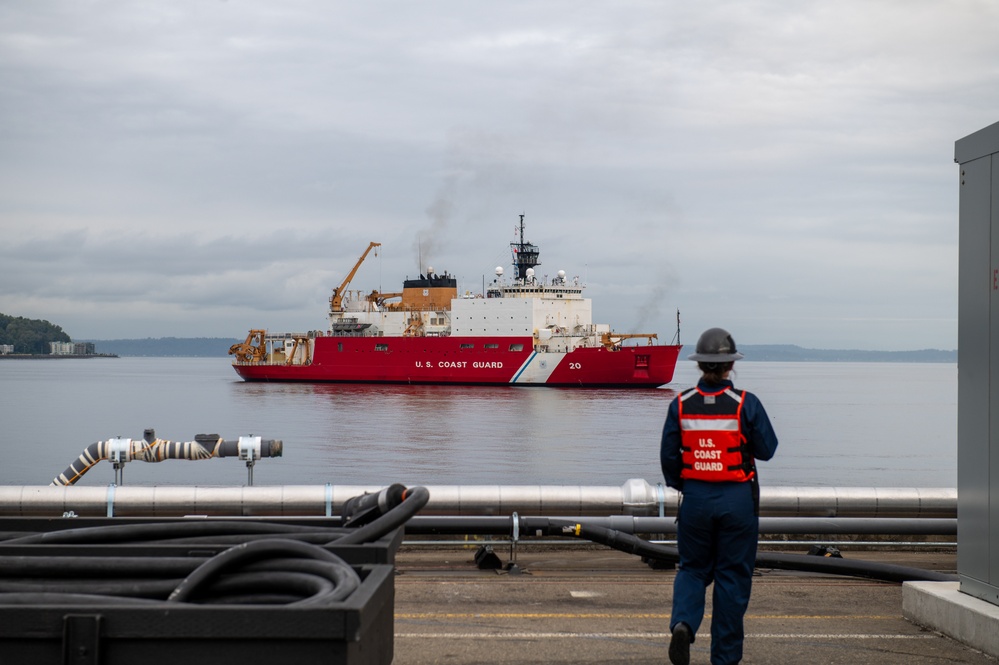
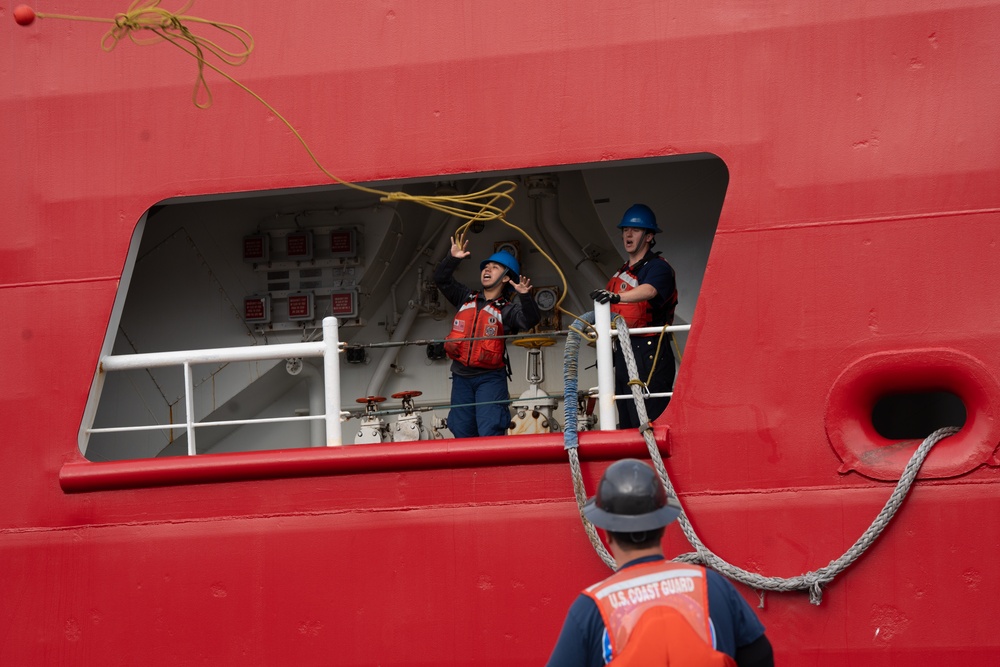
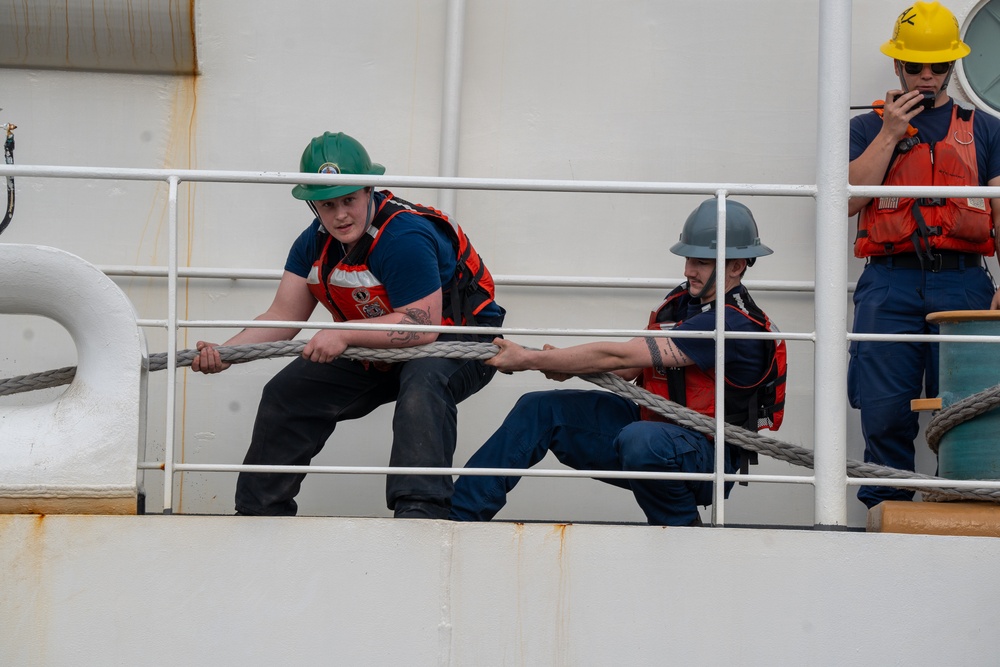
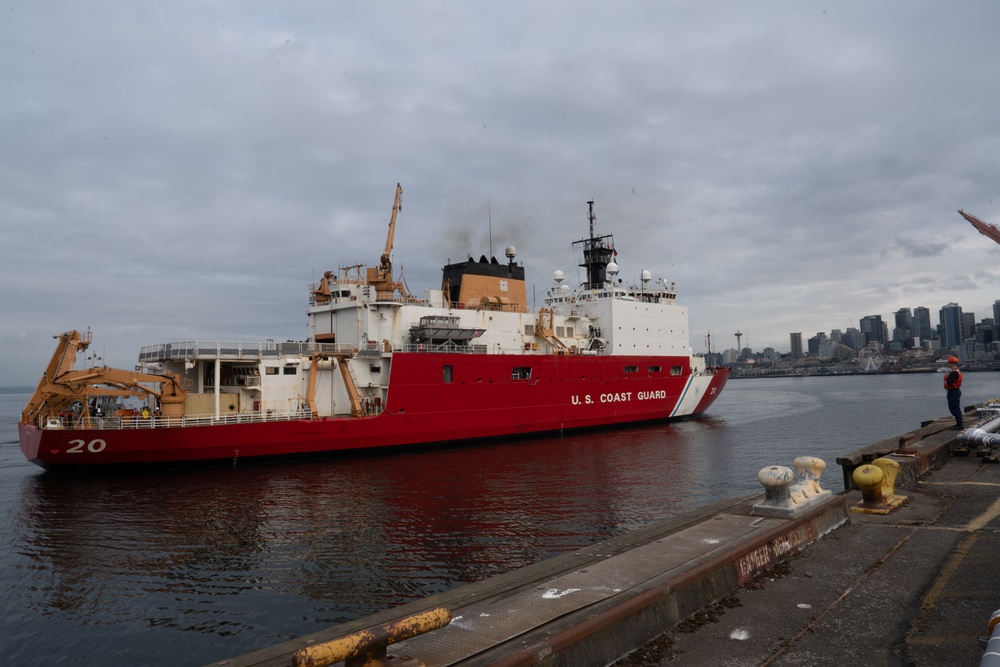
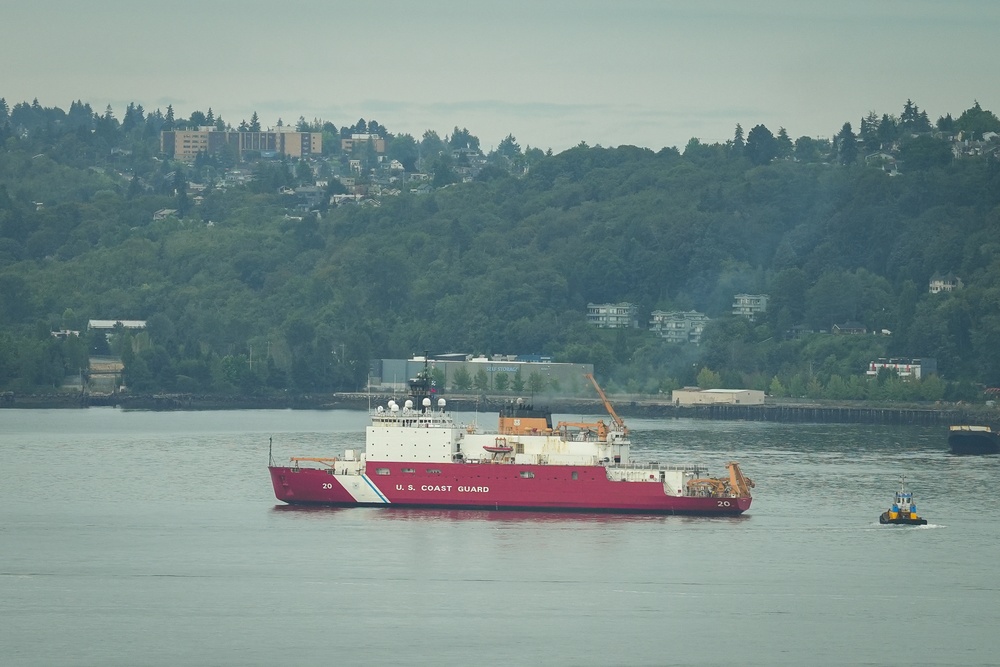
The Coast Guard Cutter Healy (WAGB 20) returns to Seattle following a two-month Arctic patrol, Aug. 16, 2024. The Healy is the United States’ largest Polar icebreaker and was commissioned in 2000. (U.S. Coast Guard photo by Petty Officer 2nd Class Taylor Tracy)
Below is a Coast Guard News release.
Actually, sounds like they got a lot of this season’s Arctic research completed.
Also appears the redundancy that frequent contributor “Tups” talked about in an earlier comment section kept both shafts turning. These were his comments.
“The general layout is pretty standard and inherently pretty redundant: a split power plant and main switchboard, cross-connected propulsion transformers, and double-wound propulsion motors. The design ensures that in the event of any single component failure — diesel generator, switchboard, propulsion transformer, frequency converter, or even some components within the propulsion motor — both shafts would remain turning. This is extremely important on an icebreaker as a non-rotating propellers can be easily damaged by ice. Of course the ship’s operational capability would be limited and a lower-priority mission would likely be cancelled.”
U.S. Coast Guard Cutter Healy arrives in Seattle following scientific research, onboard fire
 |
 |
 |
 |
 |
 |
 |
 |
SEATTLE — U.S. Coast Guard Cutter Healy (WAGB 20) arrived in Seattle Friday after conducting scientific research in the Pacific sector of the Arctic Ocean in support of the Arctic Observing Network, funded by the U.S. National Science Foundation (NSF).
Healy’s crew and embarked researchers conducted more than 150 conductivity, temperature, and depth (CTD) casts to investigate the circulation and properties of the water, monitored for signs of harmful agal blooms, and collected observations on marine mammals and birds in the Bering, Chukchi, and Beaufort Seas.
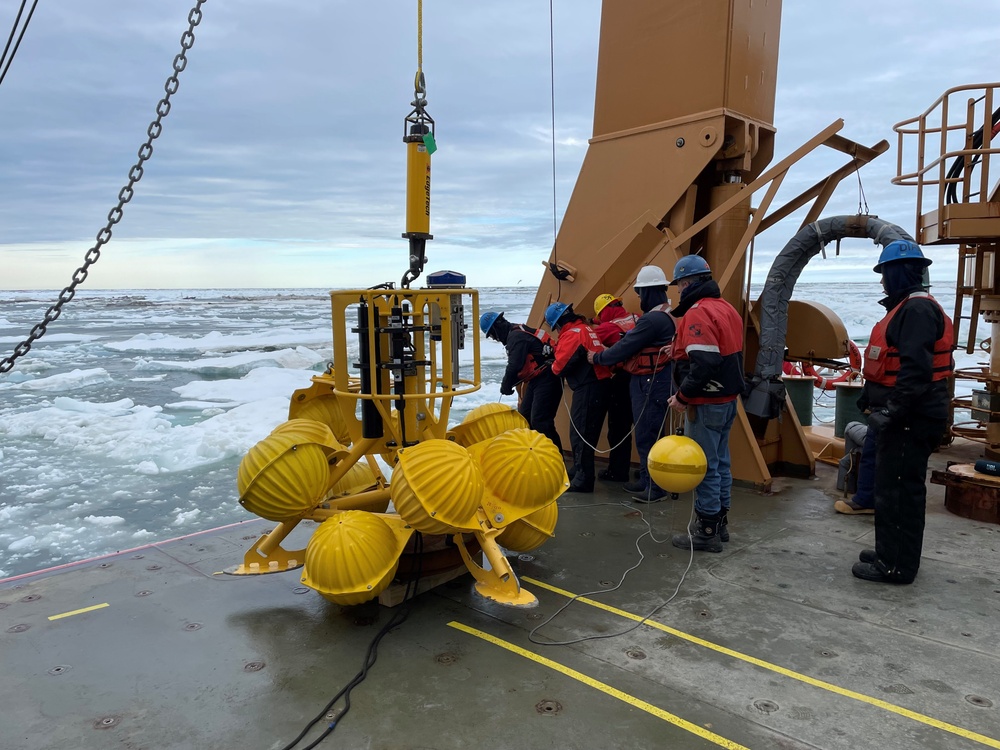
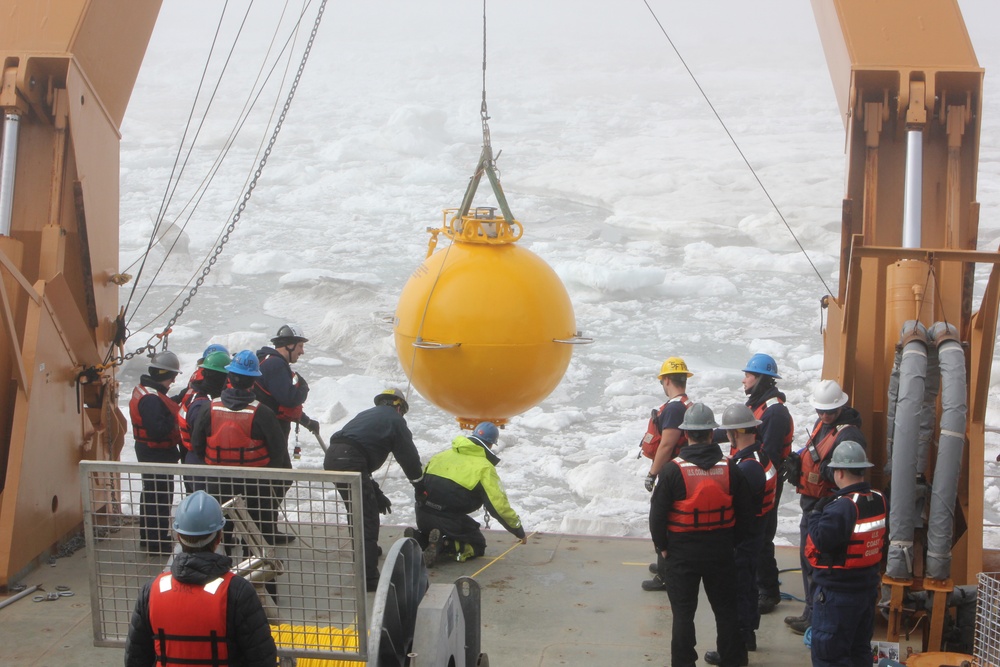
Additionally, two subsurface moorings were deployed that are equipped with multiple sensors collecting oceanographic data on the physical, chemical, and biological state of the Arctic Ocean. This year’s work builds on more than two decades of research to improve understanding of the Pacific Arctic ecosystem in a changing climate.
On July 25, 2024, while underway in the vicinity of Banks Island, Northwest Territories, Canada, Healy experienced an electrical fire on a transformer impacting one of the ship’s two main propulsion motors. The crew swiftly extinguished the fire with no personnel casualties. Healy’s crew and contractors restored power to the affected motor. However, out of abundance of caution, the cutter returned to Seattle to ensure all redundant systems are fully operational before returning to the Arctic.
“Healy’s crew and scientific researchers completed valuable data collection throughout the Bering Sea and the eastern Beaufort Sea in support of the Arctic Observing Network,” said Capt. Michele Schallip, Healy’s commanding officer. “While transiting to a collection site, we suffered a fire on a transformer. I am immensely proud of the crew for quickly extinguishing the fire and limiting damage to that equipment. In the Arctic, there are few rescue resources, and ice-covered waters make it difficult for rescue assets. Crews operating in polar waters must be well-trained for emergency response, and responsible operation includes addressing any system degradation on a vessel before continuing operation in the high latitudes.”
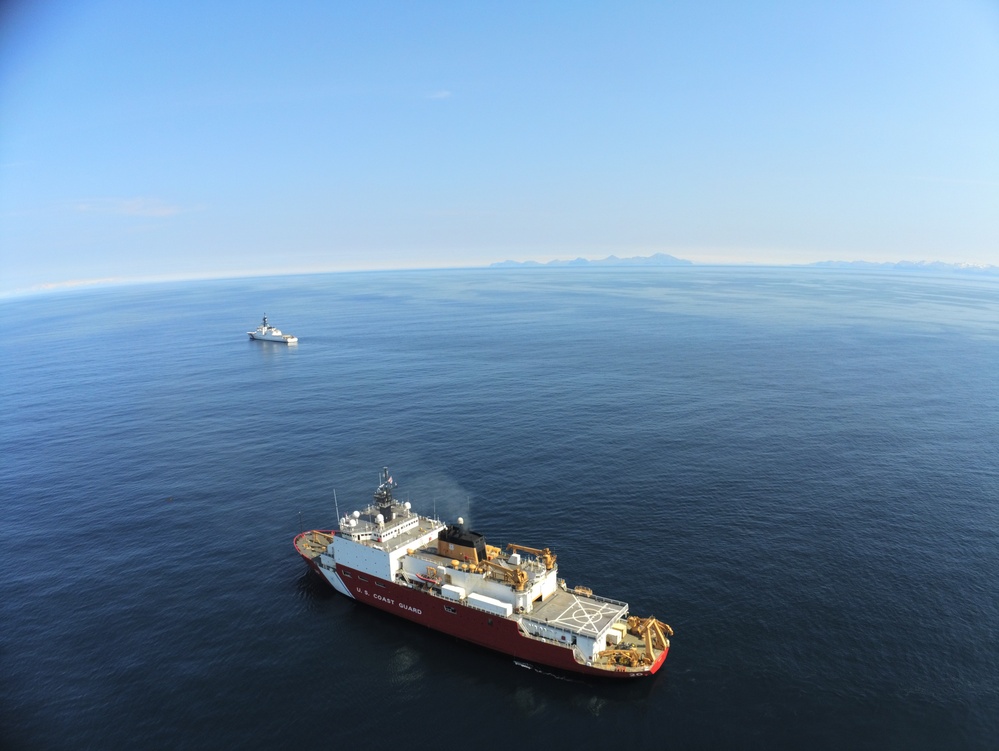
Healy is the United States’ largest polar icebreaker and the Coast Guard’s only icebreaker designed and equipped with scientific instrumentation by the NSF to support Arctic research. The platform is ideally specialized for scientific missions, providing access to the most remote reaches of the Arctic Ocean. Healy is designed to break 4.5 feet of ice continuously at three knots and can operate in temperatures as low as -50 degrees Fahrenheit.
 Chuck Hill's CG Blog