
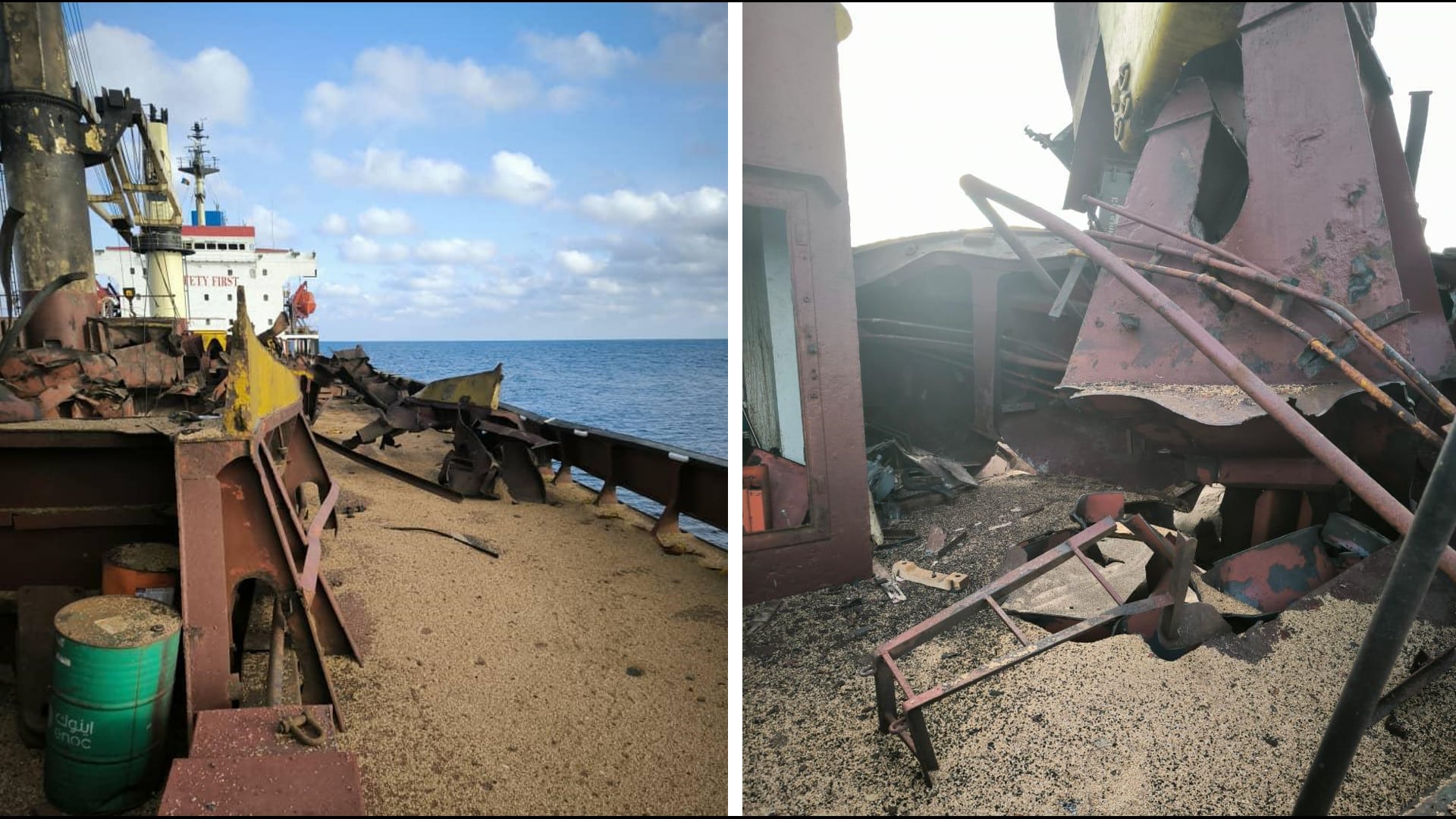
The MV Aya was hit by a Russian Kh-22 (AS-4 Kitchen) missile.
A Turkish operated merchant vessel, the MV Aya, has been hit by a supersonic anti-ship missile in the Black Sea. The Kh-22 missile was launched from a Russian Tu-22M Backfire bomber. The ship was carrying 26,550 tons of grain for Egypt.
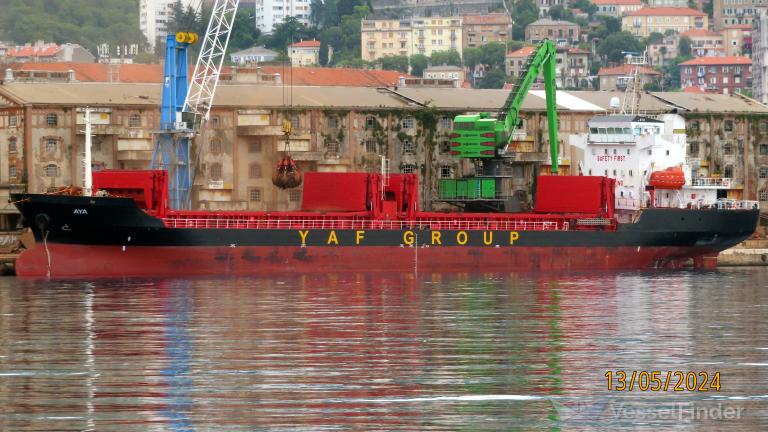
M/V Aya, source: vesselfinder.com
What I find interesting here is that while this relatively small ship was hit by a large, hypersonic missile, the Kh-22, NATO designation AS-4 “Kitchen” with a 1,000 kg (2,205-pound warhead) designed to be used against aircraft carriers, the ship apparently continued its voyage.
As Naval News notes,
“Modern merchant ships have proven very resilient to missiles, although the risk to the vessel and crew remains high. Context is everything. This is demonstrated by the Houthi Movement who have struck a number of vessels with ballistic missiles in the Red Sea, resulting in broadly similar damage.”
The resilience of modern merchant ships should raise a red flag for the Coast Guard, in that the service no longer has the facility to meet the implicit mission requirement of being able to forcibly stop merchant ships regardless of size.
 Chuck Hill's CG Blog
It is important to point out that this ship was struck by the missile from above, with the missile impacting one of the holds, which was full of compressed wheat. Had the missile struck the side of the ship, especially near the waterline and in engine room at the stern, this would have had a completely different outcome.
The fact is that missiles where the damage is done is an important determinant of the effect.
Most weapons simply aim for center of mass and how the weapon approaches the target determines where on the target it is most likely to hit.
Unless at very close range, gun projectiles are going to hit randomly virtually anywhere above the waterline. Only a very small percentage will hit at or below the waterline.
Bombs and ballistic missiles which fall from the sky are almost certainly going to hit the deck.
Surface skimming cruise missiles that fly an altitude sufficient to avoid hitting waves are probably going to hit about 20 feet above the waterline.
Torpedoes always hit below the waterline.
Torpedoes that home on an active sonar return will also aim for the center of mass. If they hit the side of a large ship it would result in flooding one or two compartments but might not result in stopping it.
If a heavy weight torpedo explodes at an optimum depth under the keel of a ship, it is likely to sink it.
If we sink a ship with a toxic cargo in the wrong place, it could be an environmental disaster, so we may just want to disable it. This might be the case in either a terrorist attack or during enforcement of a blockade.
This is the thinking that has led me to think the Coast Guard needs a weapon that can selectively target the propulsion and steering of a ship. Using a torpedo, it appears easier to target the propeller(s) and rudder rather than the engine room.
New details emerge on merchant ship struck by Russian missile – Marine Log