

Miami-class cutter USCGC Tampa photographed in harbour, prior to the First World War. Completed in 1912 as the U.S. Revenue Cutter Miami, this ship was renamed Tampa in February 1916. On 26 September 1918, while operating in the English Channel, she was torpedoed and sunk by the German Submarine UB-91. All 131 persons on board Tampa were lost with her, the largest loss of life on any U.S. combat vessel during the First World War. Official U.S. Navy photo NH 1226 from the U.S. Navy Naval History and Heritage Command
1918 The Imperial German Navy submarine UB-91 torpedoed and sank CGC Tampa with a loss of all hands. Tampa was steaming alone to Milford Haven, Wales, after being detached from ocean escort duty when attacked. On board were 111 Coast Guardsmen, four U.S. Navy personnel, and 15 British passengers, bringing the total of men lost that night to 130. One body was recovered and buried at sea while the bodies of two of the Coast Guard crew washed ashore in Wales and were buried in a small church yard in Lamphey, Pembrokeshire, Wales. One body was returned to the family in the U.S. after the war while one, who was never identified, is still interred in Lamphey to this day. Local residents care for the grave.
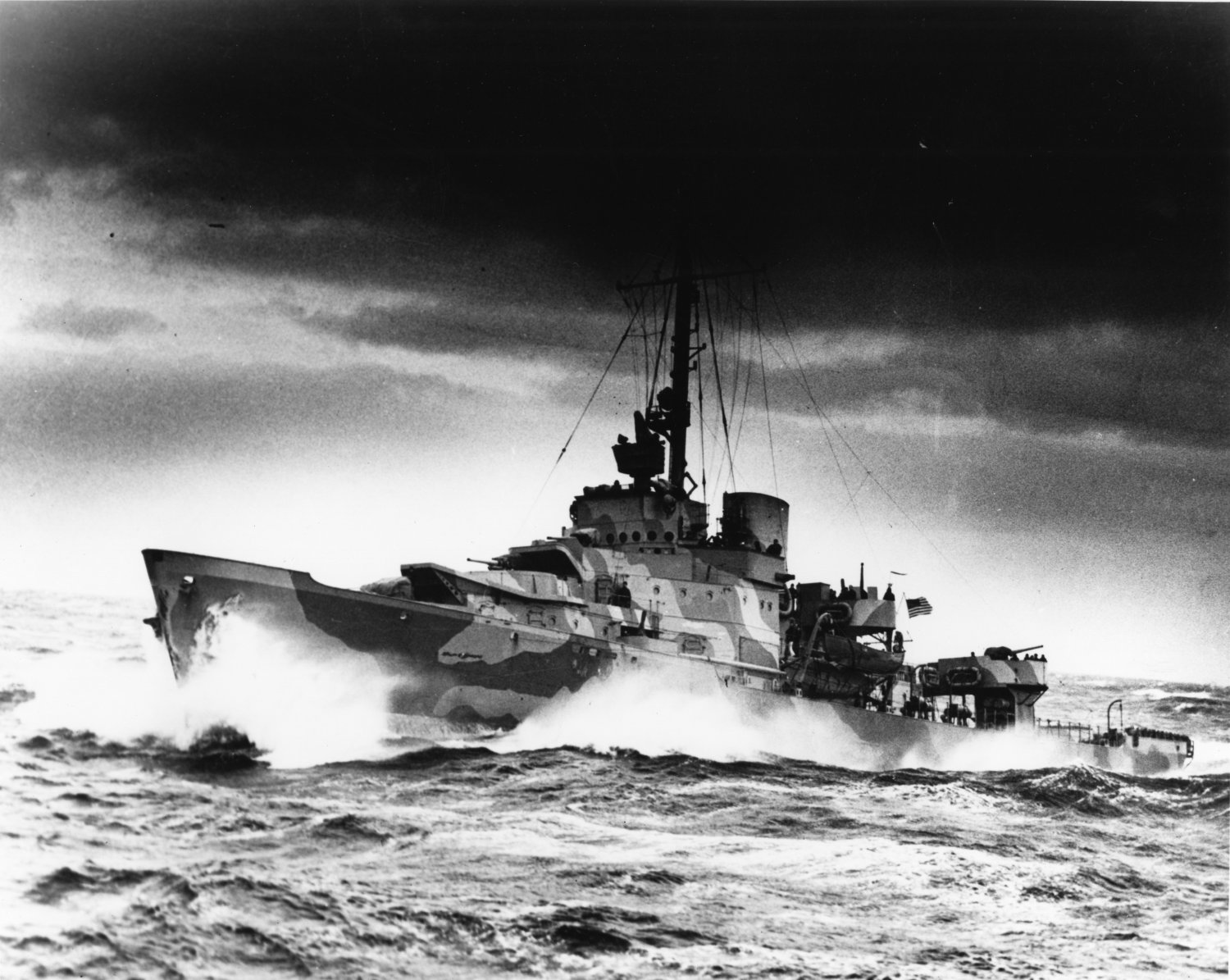
USCGC Ingham (WPG-35) underway in heavy seas, circa 1941-1944, location unknown.
US Coast Guard photo # 2000225945
1942 CGC Ingham rescued eight survivors from the torpedoed SS Tennessee.
1994 Coast Guard forces departed for Haiti in support of Operation Restore Democracy.
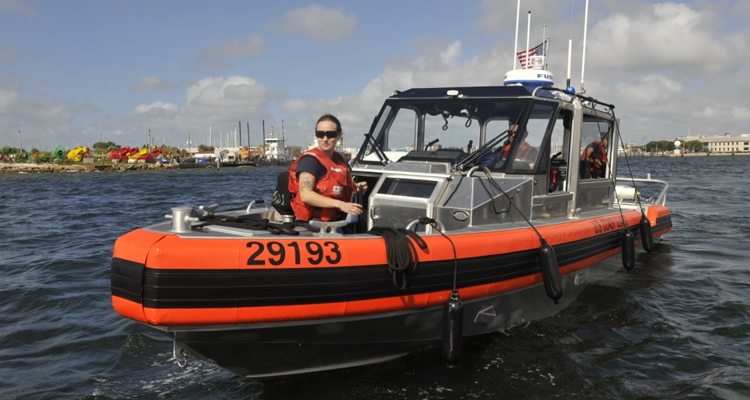
A boat crew from Coast Guard Station St. Petersburg, Florida, conducts training near the station on a new 29-foot response boat-small II Aug. 25, 2014. The Coast Guard placed a delivery order for 20 additional boats Jan. 12, 2018. U.S. Coast Guard photo by Seaman Meredith Manning.
2011 The U.S. Coast Guard awarded a delivery order on this date to Metal Shark Aluminum Boats for the production of 38 Response Boats-Small (RB-S). “The RB-S will have an approximate length of 28 feet, be capable of at least 40 knots, a minimum range of 150 nautical miles and accommodate a crew of four. The RB-S will also have a standardized communications and navigation suite as well as an increased emphasis on ergonomics and crew comfort. The current RB-S fleet was originally procured in 2002, following the attacks of September 11, 2001. In addition to bringing a higher level of standardization to the Coast Guard’s small boat fleet, the RB-S has proven to be a tremendous asset in a wide variety of Coast Guard missions, especially ports, waterways and coastal security.”

Coast Guard Academy Cadets climb the rigging of Coast Guard Cutter Eagle (WIX 327) while underway July, 30, 2024. The Eagle serves as a classroom at sea for Academy Cadets and future leaders in the Coast Guard. (U.S. Coast Guard photo by Petty Officer 3rd Class Matt Thieme)
2014 CGB Eagle began the first phase of a four-year project to extend the cutter’s service life and recapitalize major ship systems at the Coast Guard Yard in Curtis Bay, Maryland. The scheduled work included lead ballast replacement, berthing area renovations, and inspection and maintenance of the rudder, hull and rigging. On this same day the Yard also marked the completion of the Mission Effectiveness Project (MEP) to modernize the Coast Guard’s medium endurance cutter fleet.

The Coast Guard Cutter Sapelo transfers 38 Haitian migrants to the Coast Guard Cutter Bear Sept. 9, 2013, north of the Dominican Republic as part of the repatriation process, which included a second transfer of the migrants, who repatriated, to the Coast Guard Cutter Vigilant and turned the migrants over to authorities in Cap-Haitien, Haiti, Sept. 12, 2013. The 38 migrants originally belonged to a group of 41 migrants interdicted by the Coast Guard Cutter Sapelo Sept. 7, 2013, near Mona Island, Puerto Rico. Three of the migrants, of Dominican Republic nationality, in the group were taken into custody by Customs and Border Protection authorities in Puerto Rico. (U.S. Coast Guard photo)
2014 CGC Bear returned to its homeport in Portsmouth, Virginia following a two-month long patrol in the Western Caribbean Sea. During the patrol, Bear’s crew coordinated with multiple countries in Central and South America, along with partner agencies to stem the flow of illegal drugs into the United States. The unified effort resulted in the interdiction of multiple suspected drug smugglers and vessels transporting approximately 3,519 kilograms of cocaine. In addition to its seizures, the crew of Bear saved two Nicaraguan fishermen that were stranded at sea for over two weeks. Bear’s interdictions were a part of Operation Martillo, which is an international effort to counter illicit trafficking in the Caribbean Sea.
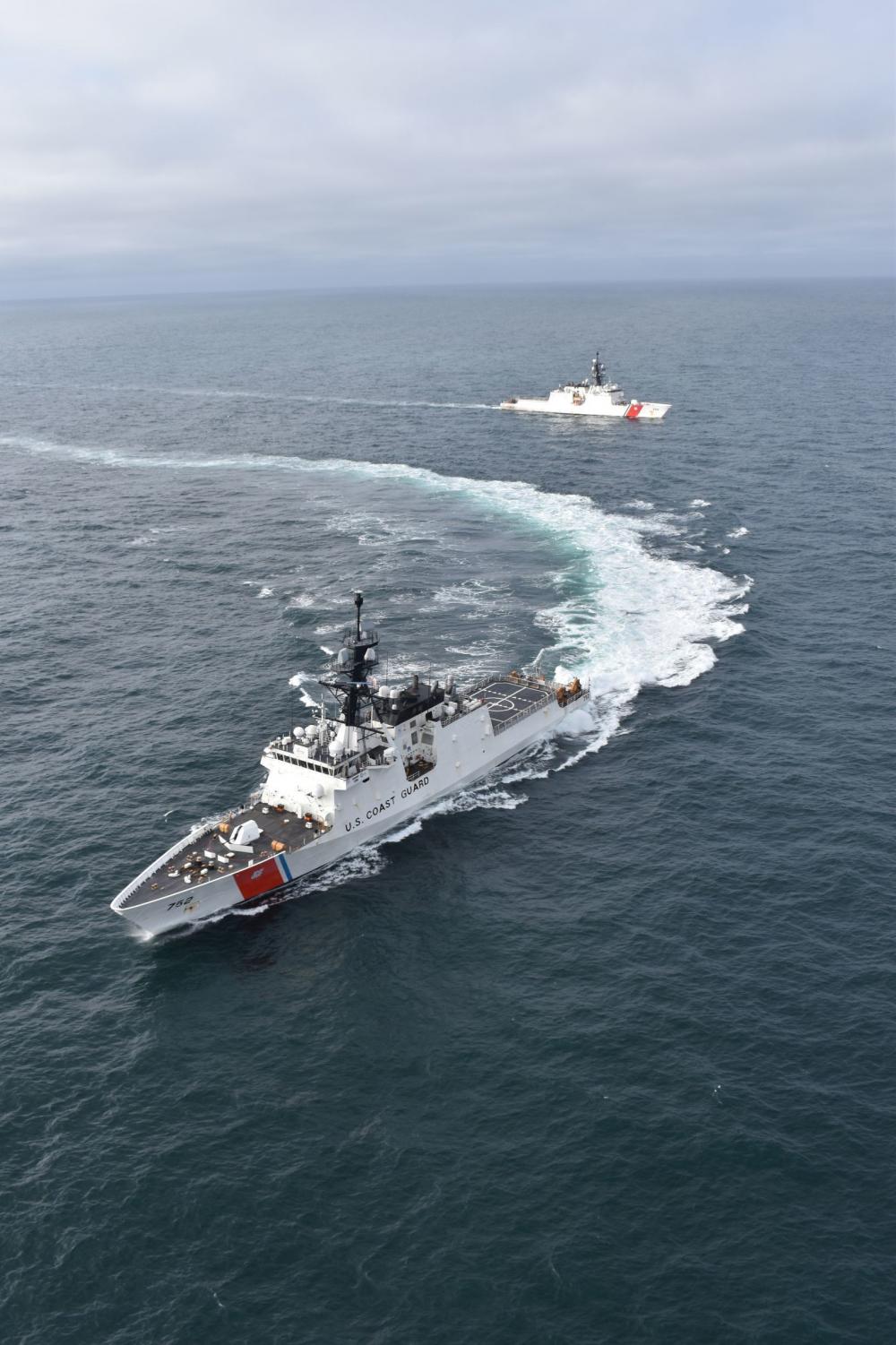
U.S. Coast Guard Cutters Stratton (WMSL 752) and Kimball (WMSL 756) steam in formation while patrolling the U.S.-Russian Maritime Boundary Line (MBL), in the Bering Sea, Sept. 26, 2022. This marked the first time two national security cutters jointly patrolled the MBL above the Arctic Circle. (U.S. Coast Guard courtesy photo).
2022 CGC Stratton (WMSL 752) and CGC Kimball (WMSL 756) jointly patrolled the US-Russian maritime boundary line in the Arctic Circle. Stratton and Kimball performed a series of tactical maneuvers following standard NATO phraseology. The operation furthered US national security strategy and projected US sovereignty in the Arctic Circle. Following the evolution, Kimball turned south to transit the Bering Strait and Stratton turned north towards the Chukchi Sea to continue on its patrol throughout the Arctic Ocean.
 Chuck Hill's CG Blog