

Based on the Coast Guard Historian’s timeline, https://www.history.uscg.mil/research/chronology/
With inspiration from Mike Kelso

These are the remnants of Transcontinental Air Mail Route Beacon 37A, which was located atop a bluff in St. George, Utah, U.S.A. With concrete arrows indicating the direction to the next beacon, a rotating light tower, and a shed that usually held a generator and fuel tanks, these beacons were once situated every 10 miles on air routes across the United States beginning around 1923.
1926 An airways division, headed by a chief engineer, was set up as a part of the Lighthouse Service, its work covering the examination of airways and emergency landing fields and the erection and maintenance of aids to air navigation.
1943 Coast Guard-manned USS LST-203 was stranded in Southwest Pacific but there were no casualties. While on the beach, a storm caused her to broach. Declared total loss. Struck from the Naval Register, 6 March 1944.
1976 Coast Guard personnel were required to change to the new “Bender Blues” uniforms by this date.
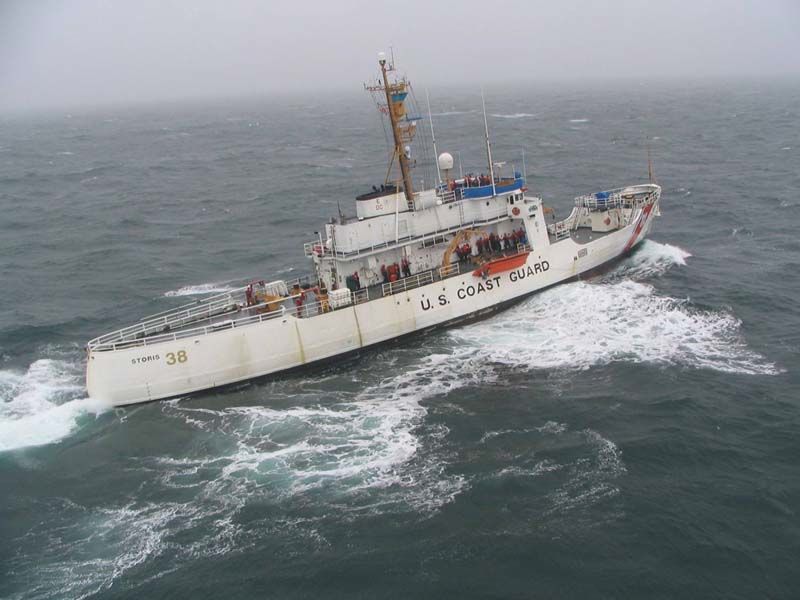
USCGC Storis (WMEC-38)
1991 CGC Storis became the oldest commissioned cutter in the Coast Guard when the CGC Fir was decommissioned. Storis‘s crew painted her hull number “38” in gold in recognition of her status.
1996 Operation Frontier Shield commenced. It was the largest counter-narcotics operation in Coast Guard history to date.
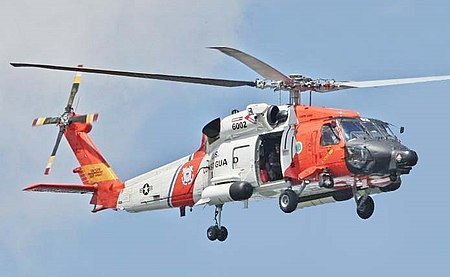
HH-60J Air Station Astoria
2009 The U.S. Coast Guard Acquisition Directorate’s HH-60 Conversion Project held a ribbon cutting ceremony at Coast Guard Air Station Elizabeth City, North Carolina, in honor of the Medium Range Recovery Helicopter achieving Initial Operational Capability (IOC).
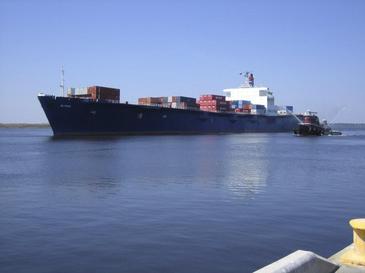
2015 El Faro, a 735-foot ro-ro cargo ship, was en-route to San Juan, Puerto Rico, from Jacksonville, Florida with a crew of 33 on board. At approximately 0730, watchstanders at the Coast Guard Atlantic Area command center in Portsmouth, Virginia, received an Inmarsat satellite notification stating El Faro was beset by Hurricane Joaquin, had lost propulsion and had a 15-degree list. The crew reported the ship had previously taken on water, but that all flooding had been contained. Watchstanders at CG 7th District command center in Miami immediately launched an HC-130 out of Air Station Clearwater to search for El Faro while two Hurricane Hunter aircrews attempted to locate and establish communications with the merchant vessel on October 2. Ultimately, Coast Guard assets used in the search included aviation assets from Air Stations Clearwater and Elizabeth City, CGC Northland, Resolute, and Charles Sexton, along with Navy and Air Force assets and three commercial tugboats. The search was called off on October 7 after search crews located a deceased person in a survival suit in the water and a heavily damaged lifeboat with markings consistent with those on board El Faro. Additional items located by search crews included a partially submerged life raft, a survival suit, life jackets, life rings, cargo containers, Styrofoam, packaged food, and an oil sheen.
 Chuck Hill's CG Blog