

Based on the Coast Guard Historian’s timeline, https://www.history.uscg.mil/research/chronology/
With inspiration from Mike Kelso

Keeper Richard Etheridge (on left) and the Pea Island Life-Saving crew in front of their station, circa 1896.
1896 The crew of the Pea Island (North Carolina) Life-Saving Station, under the command of Keeper Richard Etheridge, performed one of their finest rescues when they saved the passengers and crew of the schooner E.S. Newman, after that ship ran aground during a hurricane. Pushed before the storm, the ship lost all sails and drifted almost 100 miles before it ran aground about two miles south of the Pea Island Lifesaving Station. Etheridge, a veteran of nearly twenty years, readied his crew. They hitched mules to the beach cart and hurried toward the vessel. Arriving on the scene, they found Captain S. A. Gardiner and eight others clinging to the wreckage. Unable to fire a line because the high water prevented the Lyle Gun’s deployment, Etheridge directed two surfmen to bind themselves together with a line. Grasping another line, the pair moved into the breakers while the remaining surfmen secured the shore end. The two surfmen reached the wreck and tied a line around one of the crewmen. All three were then pulled back through the surf by the crew on the beach. The remaining eight persons were carried to shore in this fashion. After each trip two different surfmen replaced those who had just returned. For their efforts the crew of the Pea Island Life-Saving Station were awarded the Gold Lifesaving Medal in 1996. (From Wikipedia: Five months after Etheridge had taken charge of Pea Island Station, arsonists burnt the station to the ground…“In the following days, the Newman’s captain searched for and found the piece of the side that held the vessel’s name and donated it to the crew as an offering of his thanks. For a century, this would be the only award the Pea Island crew received for their efforts. The 1896 Pea Island crew voted to give the wooden sideboard of the Newman to Theodore Meekins, the young surfman who first spotted the distress signal and who swam out to the wreck several times during the rescue. (Fifth from left in photo.)”)
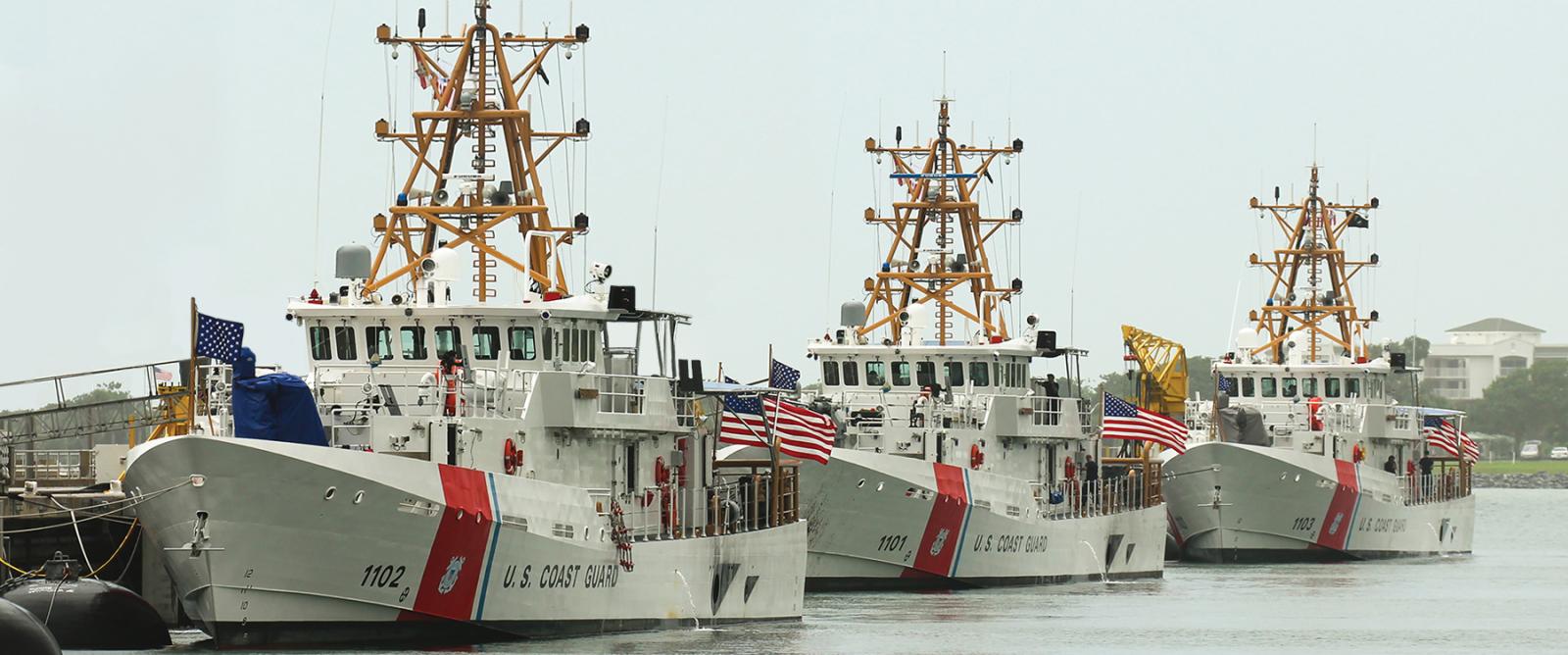
The first three fast response cutters—the USCGC Richard Etheridge (WPC-1102), Bernard C. Webber (WPC-1101), and William Flores (WPC-1103).
U.S. COAST GUARD
1897 Property saved at Cape Hatteras, North Carolina. During a severe storm the surf threatened to wash away a fish house, with valuable nets and other gear. Surfmen saved the property and took it to a place of safety. They also assisted the Cape Hatteras lighthouse keeper to remove the lighthouse’s Fresnel lens to a secure place as the lighthouse was in danger of being knocked down by the sea.
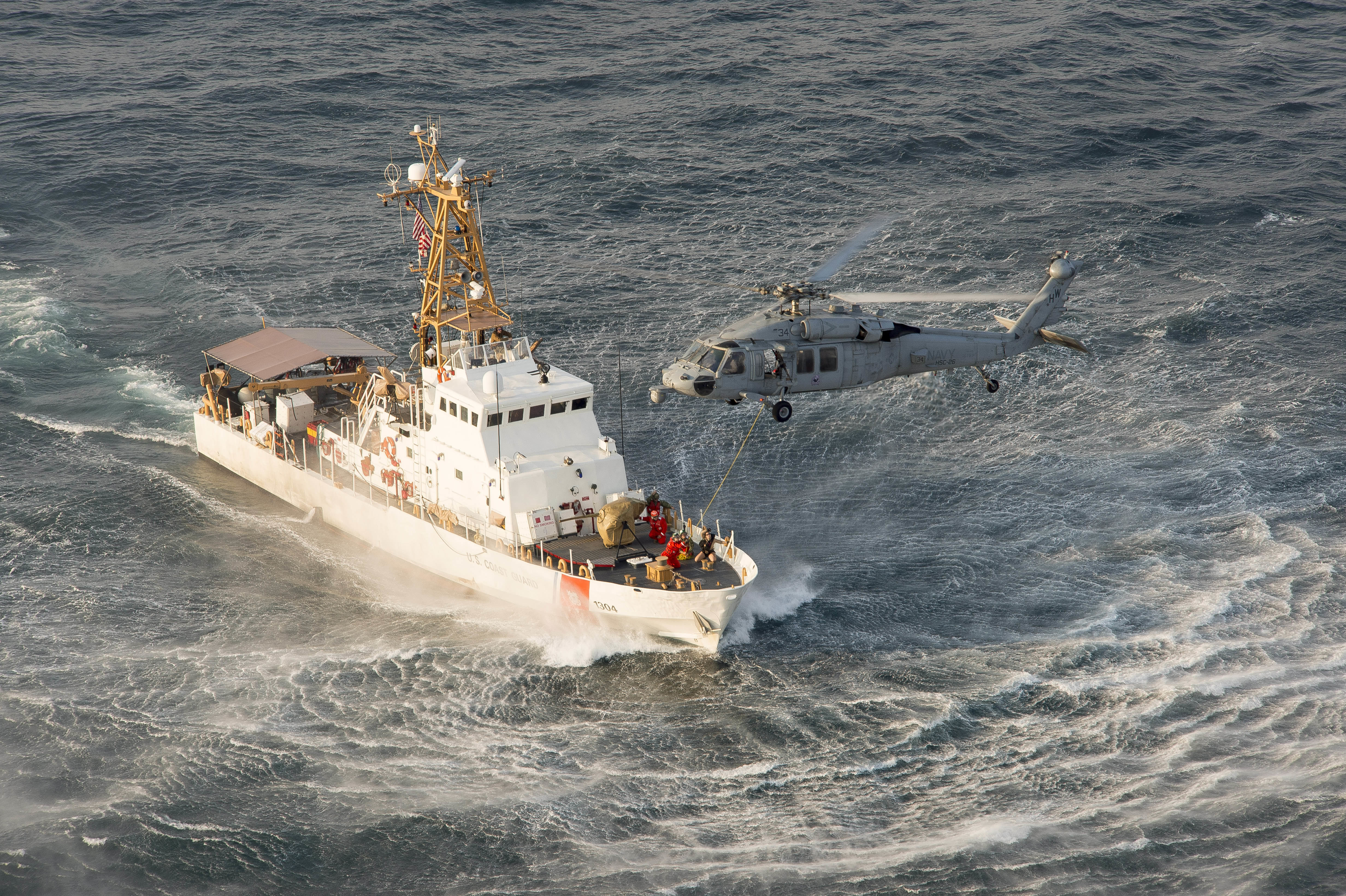
141219-N-DX365-258
BAHRAIN (Dec. 19, 2014) Helicopter Sea Combat Squadron (HSC) 26, Det. 1, conducts a vertical onboard delivery with the U.S. Coast Guard Cutter Maui (WPB 1304). HSC-26 is a forward deployed naval force asset attached to Commander, Task Force 53 to provide combat logistics and search and rescue capability throughout the U.S. 5th Fleet area of responsibility. (U.S. Navy photo by Mass Communication Specialist 1st Class Joan E. Jennings/Released)
2013 CGC Maui, operating in the Persian Gulf as part of Patrol Forces Southwest Asia and assigned to Combined Task Force 152, rescued five Iranian mariners after they were fount adrift in a life raft in the northern waters of the Persian Gulf. Maui’s crew later transferred the survivors to an Iranian Coast Guard vessel.
 Chuck Hill's CG Blog