

Based on the Coast Guard Historian’s timeline, https://www.history.uscg.mil/research/chronology/
With inspiration from Mike Kelso

USRC Eagle under full sail, in a painting by Patrick O’Brien. She was a topsail schooner, standard in revenue cutters of her period.
1814 The crew of USRC Eagle, which had been driven ashore near Negros Head, New York in an encounter with the British brig HMS Dispatch, dragged the cutter’s guns up a bluff in an effort to continue the battle. The New York Evening Post gave an account of what happened next to the out-gunned cutter and its crew:
“During the engagement between the Cutter EAGLE and the enemy, the following took place which is worthy of notice. Having expended all the wadding of the four-pounders on the hill, during the warmest of the firing, several of the crew volunteered and went on board the cutter to obtain more. At this moment the masts were shot away, when the brave volunteers erected a flag upon her stern; this was soon shot away, but was immediately replaced by a heroic tar, amidst the cheers of his undaunted comrades, which was returned by a whole broadside from the enemy. When the crew of the Cutter had expended all their large shot and fixed ammunition, they tore up the log book to make cartridges and returned the enemy’s small shot which lodged in the hull. The Cutter was armed with only 6 guns, 4 four-pounders and 2 twos with plenty of muskets and about 50 men. The enemy being gone and provisions scarce the volunteers from this city left Captain Lee and his crew and arrived here on Thursday evening the 13th instant, in a sloop from Long Island. . .We have since learned that Captain Lee succeeded in getting off the Cutter and was about to remove her to a place of safety when the enemy returned and took possession of her. She was greatly injured, but it is expected that the enemy will be able to refit her to annoy us in the sound.”
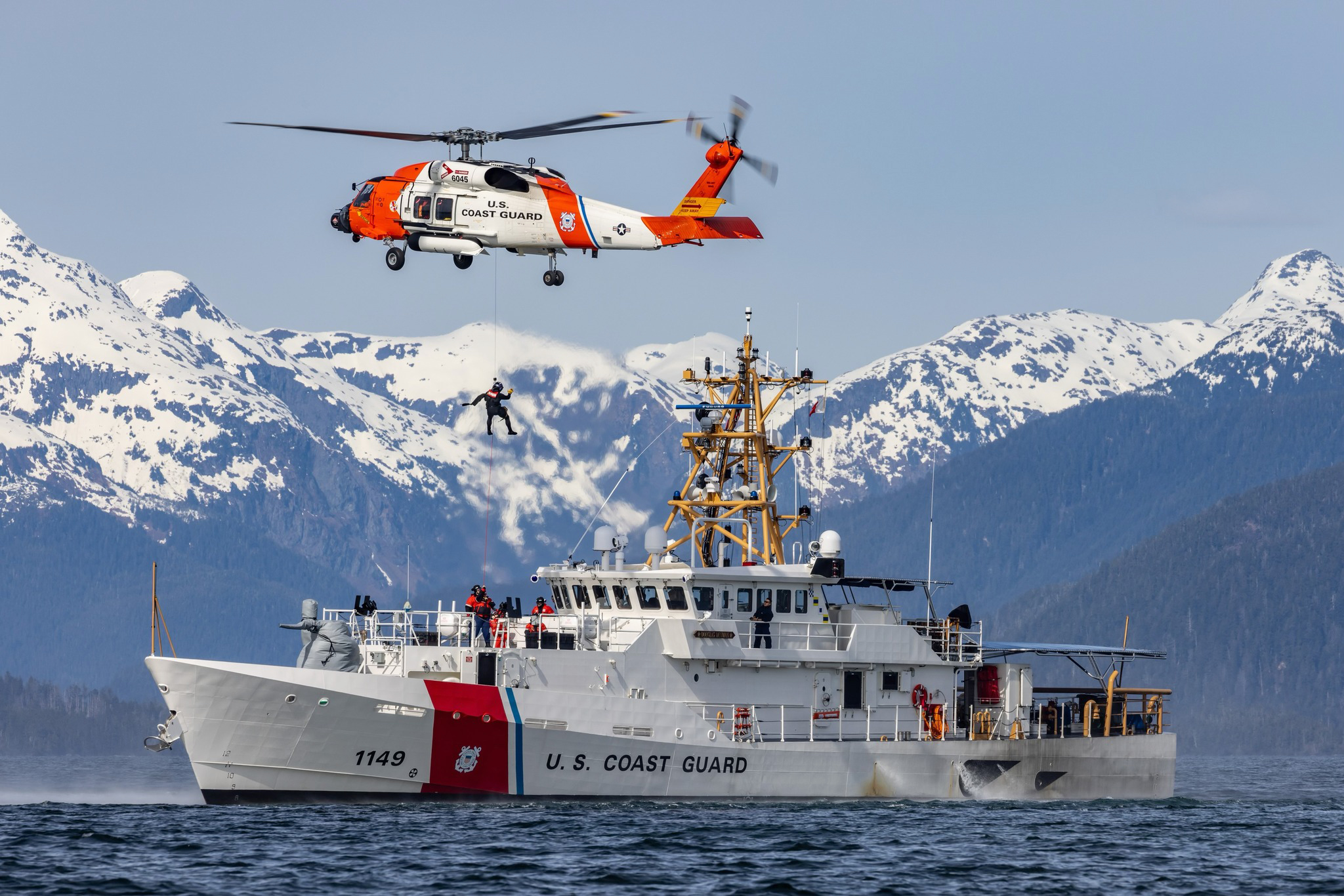
Crews assigned to Coast Guard Air Station Sitka, the Coast Guard cutter Douglas Denman, Sitka Mountain Rescue and the Sitka Fire Department participate in the first day of a weeklong search and rescue exercise in Sitka, Alaska, May 9, 2023.
1977 The Coast Guard commissioned AIRSTA Sitka.
1989 An earthquake registering 7.1 on the Richter Scale hit Northern California, killing 67 people. Coast Guard units assisted state and local agencies in rescue and relief operations.
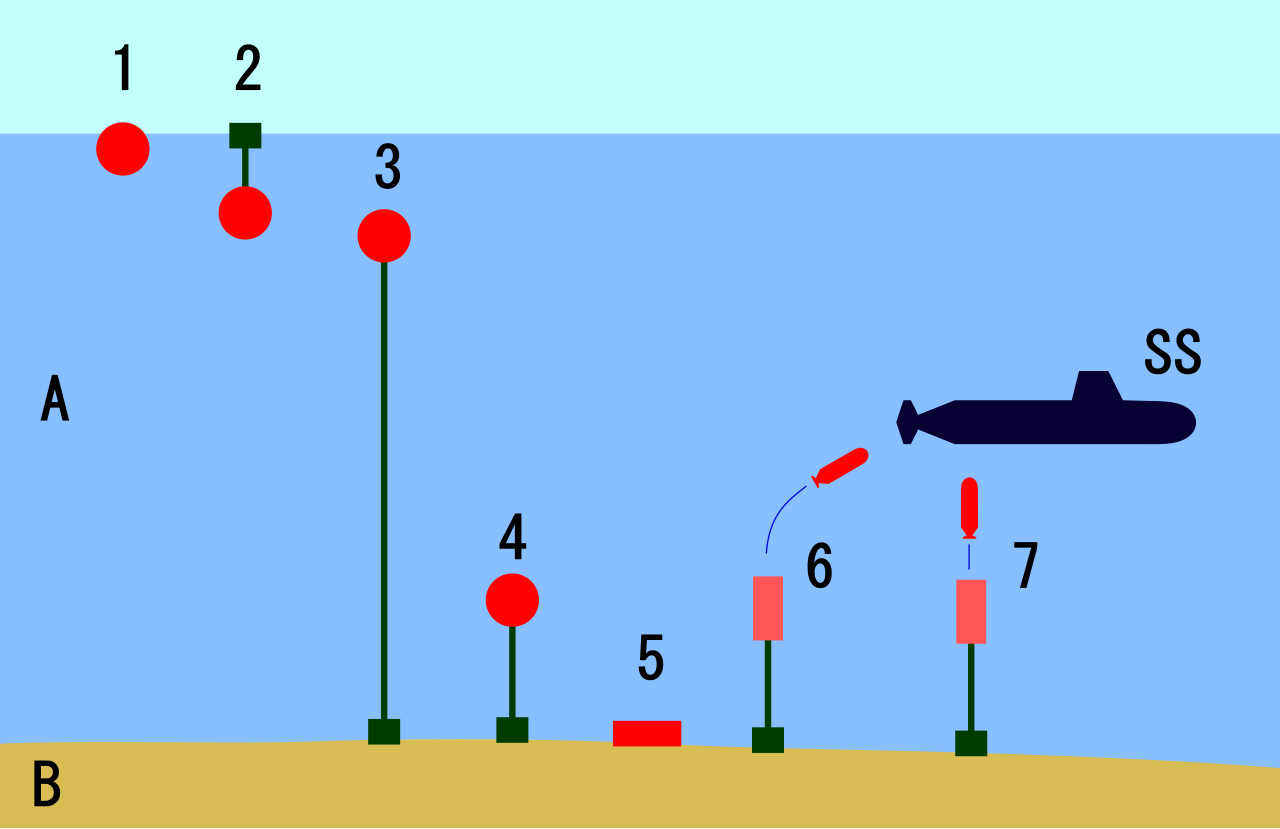
Types of Naval Mines
2014 U.S. and Canadian military personnel and government civilian agencies participated in Exercise Frontier Sentinel 14 (FS 14) from October 17-24, 2014. This full-scale exercise is the final phase of a three-part scenario that focuses on maritime homeland security. FS 14 was a combined U.S. Coast Guard Atlantic Area, Canadian Joint Task Force Atlantic, and U.S. Navy Fleet Forces Command exercise designed to test the coordinated response against a maritime threat to North American ports. “This exercise tests the ability of U.S. Coast Guard, Navy, Canadian forces, and civilian agencies to successfully respond to a complex maritime threat to the homeland,” said VADM William Lee, Coast Guard Atlantic Area commander. “Exercises such as Frontier Sentinel allow us to strengthen partnerships with our Canadian and Navy counterparts in a realistic setting, which will enable us to improve our interoperability, so we are prepared to respond to any and all maritime threats to the homeland.” Phases one and two of FS 14 occurred in August and September and focused on maritime threats in the waters of the Atlantic Ocean, including Halifax, Nova Scotia. Phase three of the exercise will focus on the coordinated detection, assessment and response to a mine threat in the Delaware Bay. The exercise is limited to specific areas in Delaware Bay and should not significantly impact vessel traffic or bay operations. Frontier Sentinel is an annual exercise series, initiated in 2006, established to improve the collaborative information exchange, planning and coordinated response between operational-level commands of the Tri-Party, which consists of U.S. Coast Guard, U. S. Fleet Forces Command, and Canadian Joint Task Force Atlantic, in response to security and defense threats in the maritime domain.
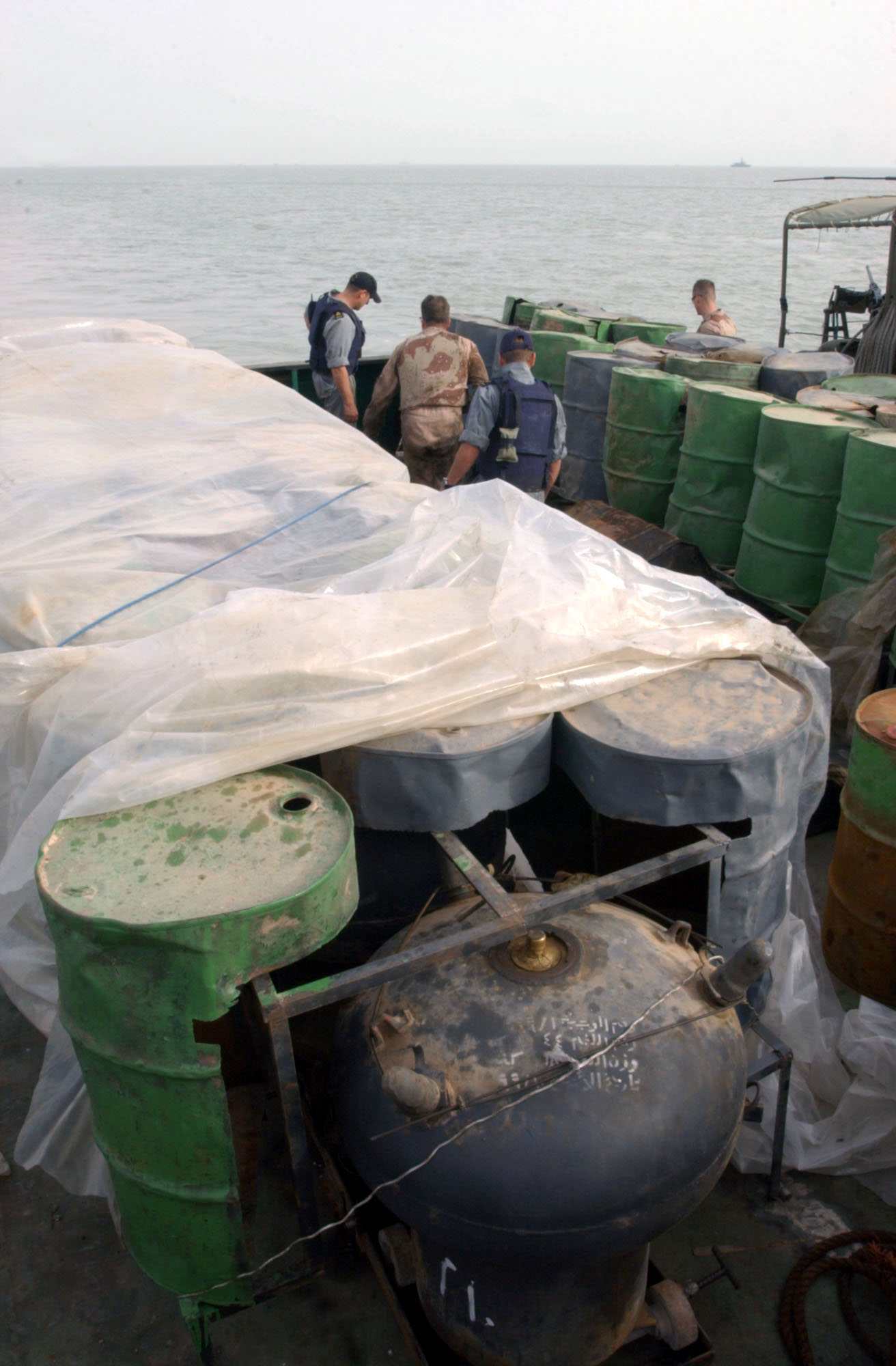
030321-N-4655M-029
The Arabian Gulf (Mar. 21, 2003) — Coalition Navy Explosive Ordnance Disposal (EOD) team members inspect camouflaged mines hidden inside oil barrels on the deck of an Iraqi shipping barge. The shipping barge was intercepted and inspected by Coalition Maritime Interdiction Operation (MIO) and Vessel Board Search and Seizure (VBSS) teams from the patrol craft USS Chinook (PC 9) in the early hours of Operation Iraqi Freedom. Operation Iraqi Freedom is the multi-national coalition effort to liberate the Iraqi people, eliminate Iraq’s weapons of mass destruction and end the regime of Saddam Hussein. U.S. Navy photo by PhotographerÕs Mate 2nd Class Richard Moore. (RELEASED)
2015 The Coast Guard issued a certificate of inspection to the LNG-powered M/V Isla Bella. The 736-foot, 3,100 TEU, U.S.-flagged vessel is the first container ship in the world capable of operating on liquefied natural gas. Isla Bella was the first of two Marlin-class containerships built by NASSCO in San Diego for operation by TOTE Services in the Jones Act trade between Jacksonville, Florida and Puerto Rico.
 Chuck Hill's CG Blog