

Based on the Coast Guard Historian’s timeline, https://www.history.uscg.mil/research/chronology/
With inspiration from Mike Kelso

1883 At a quarter before 4 o’clock In the morning the two surfmen on patrol from the Plum Island Station (Second District), below Newburyport, Massachusetts, discovered a vessel ashore on the south breaker at the entrance of Newburyport Harbor, about half a mile northeast of the station. A signal was made to her that she was seen and the men hurried to the station and gave the alarm. The boat reached her shortly after 4 o’clock. She was the schooner Forest Maid with a crew of seven men bound on a fishing cruise. While going out over the bar, the wind being light, she had been carried by the strong ebb tide on to the shoal. The first thing done by her crew was to let go an anchor to hold her, but finding she continued to drive farther on they veered away. They were disappointed, for she soon fetched up hard and fast with ninety fathoms of cable out. As the water was still falling nothing could be done until the flood tide. The life-saving crew remained on board and when the tide began to rise at 8 o’clock, commenced operations by heaving in on the cable. The wind freshened considerably while they were at work, raising quite a swell, which caused the schooner to pound heavily. They persevered, however, gaining a little every time she lifted on the seas, so that by 9 o’clock the schooner was safely afloat and on her way back into the harbor, apparently none the worse for the accident.

1965 Secretary of the Navy Paul Nitze requested additional Coast Guard patrol boats for patrol duties in Vietnam.
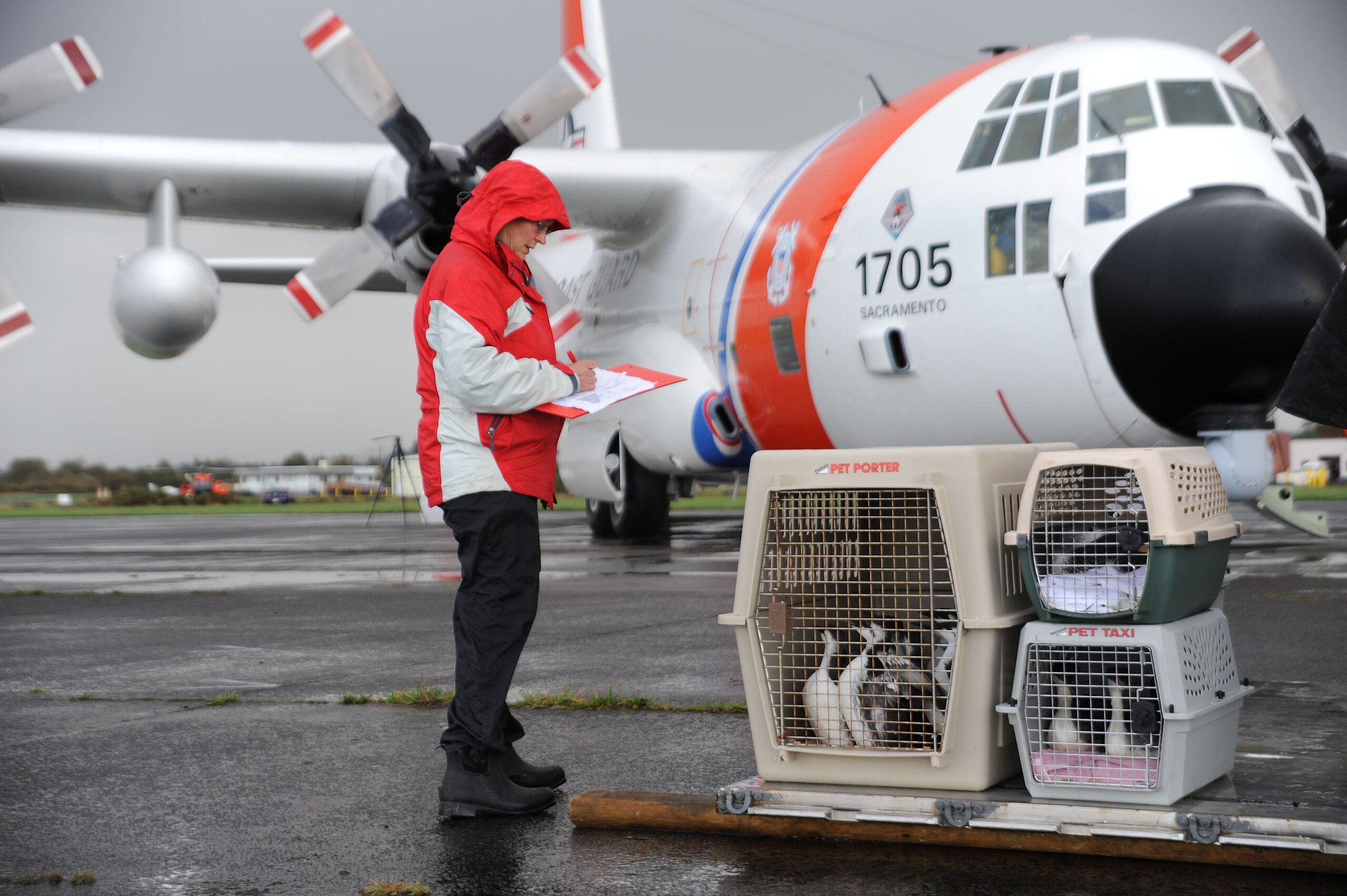
1705, the C-130 Hercules involved in 2009 mid-air collision. U.S. Coast Guard photo by Petty Officer 3rd Class Kelly Parker.
2009 At 19:10 local time on 29 October 2009, Coast Guard Air Station Sacramento Lockheed HC-130H Hercules CG 1705 collided in mid-air with a U.S. Marine Corps Bell AH-1W Super Cobra helicopter. The location of the accident was 15 mi east off San Clemente Island, California. The Hercules was carrying a crew of seven and the Cobra a crew of two people; there were no survivors. Eyewitnesses reported seeing a fireball in the sky. Debris from the collision was reported at the scene. The Hercules was on a Search and Rescue mission to search for a sailboat in distress while the Super Cobra was on a training flight. Two Sikorsky CH-53E helicopters along with USCGC Edisto, USCGC Petrel and USCGC Blackfin were sent to search the area. USCGC Blacktip, USCGC George Cobb and USCGC Jarvis later joined the search. The search for survivors was cancelled on 1 November 2009 after searching 644 square miles of ocean, including approximately 50 miles of floating debris. The effort was converted to a recovery operation. All nine individuals in the crash, including seven aboard the Coast Guard plane and two aboard the Marine helicopter were presumed dead (submitted by Lorne Thomas; 12-27-2023).
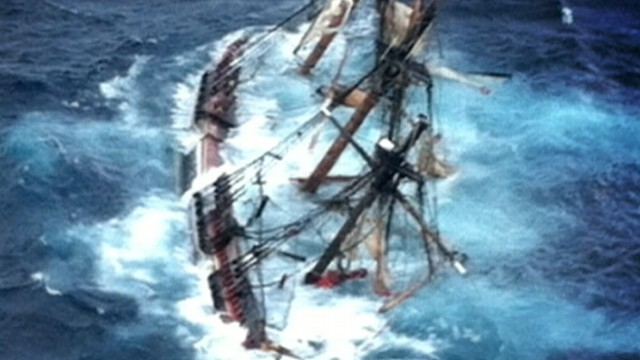
Super Storm Sandy, 2012 Hurricane sinks HMS Bounty, 14 rescued –ABC News
2012 In the early morning hours while caught in the impact zone of Hurricane Sandy more than 90 miles off the coast of Hatteras, NC, HMS Bounty lost power and eventually capsized spilling her 16 crew members in to the sea. C-130 and MH-60 aircraft were launched from Air Station Elizabeth City, NC and braved the hurricane conditions to rescue 14 crew members who had made it into life rafts. Another crew member was later recovered unresponsive and the Captain was never found.

2014 An Air Station Clearwater HC-130 aircraft discovered a vessel with 33 persons aboard seven nautical miles east of Boca Raton Inlet, Florida. Coast Guard Sector Miami diverted CGCs Shrike and Robert Yered and notified local government agencies. As assets arrived on scene, the persons aboard the vessel began jumping into the water. Robert Yered assumed On Scene Commander for all responding units and began recovering the persons in the water. Thirty-three Cuban migrants were safely recovered and were embarked by Robert Yered.

The U.S. Coast Guard Cutter Healy (WAGB 20) cuts a channel through the multi-year pack ice and snow as Healy transits the Arctic Ocean to the North Pole, September 27, 2022. This is the third time the icebreaker has traveled to the North Pole since its commissioning in 1999. U.S. Coast Guard photo by Deborah Heldt Cordone, Auxiliary Public Affairs Specialist 1.
2015 CGC Healy returned to its homeport of Seattle after completing four months of Arctic operations. The crew’s return marks the completion of an Arctic expedition which culminated in the crews’ historic arrival at the North Pole and was the first time a U.S. surface vessel has reached 90°N unaccompanied. The crew conducted two separate missions that included operations in the Bering Sea, Chukchi Sea, and Arctic Ocean. Coast Guard Research and Development Center members joined the crew of Healy for the third consecutive year to continue their research of Arctic technologies including: remotely operated vehicles, small unmanned aerial systems, an autonomous underwater vehicle and an unmanned surface vehicle. The crew departed Dutch Harbor, Alaska on August 9 for Geotraces, an international effort to study the distribution of trace elements in the world’s oceans to establish the effects of these elements on global climate change.

Members of U.S. Coast Guard free a sea turtle from a fishing net. US Coast Guard photo
2015 CGC Campbell returned to its homeport of Kittery, Maine on Thursday at 2 p.m. after a 50-day patrol of the North Atlantic. During the patrol, which spanned an off-shore area from Maine to New York, Campbell was involved in multiple rescues, including towing two disabled fishing vessels over 150 nautical miles offshore. On September 21, 2015, Campbell responded to a report of a sea turtle entangled in fishing gear. Campbell launched their small boat, and the rescue team was able to free the 6-foot long leatherback sea turtle from the fishing line. During the patrol, Campbell traveled to Canadian waters to participate in a joint training exercise with the Canadian Armed Forces and Royal Canadian Mounted Police. On October 26, 2015, Campbell honored a former shipmate by conducting a burial at sea ceremony for a retired Coast Guard Chief Quartermaster. Additionally, as part of Campbell’s primary mission they conducted 52 living marine resource boardings resulting in the issuing of 17 violations.
 Chuck Hill's CG Blog