

Based on the Coast Guard Historian’s timeline, https://www.history.uscg.mil/research/chronology/
With inspiration from Mike Kelso

USCGC Chincoteague (WAVP-375) in 1964, date unknown. US Coast Guard photo
1956 CGC Chincoteague, manning Ocean Station Delta in the North Atlantic, received a distress message that the German freighter Helgs Bolten was taking on water and wished to abandon ship as soon as possible. After reaching the scene some hours later, the cutter found that the high winds and 25-foot seas made it impossible to launch lifeboats. Two inflatable lifeboats, therefore, were passed by shot line to the freighter, and the 33 crewmen aboard were removed to the cutter unharmed. Chincoteague then stood by the drifting vessel for seven days, while commercial tugs made salvage attempts. All of the survivors returned on board the cutter to Norfolk, Virginia, while a tug towed Helg Bolten to the Azores.
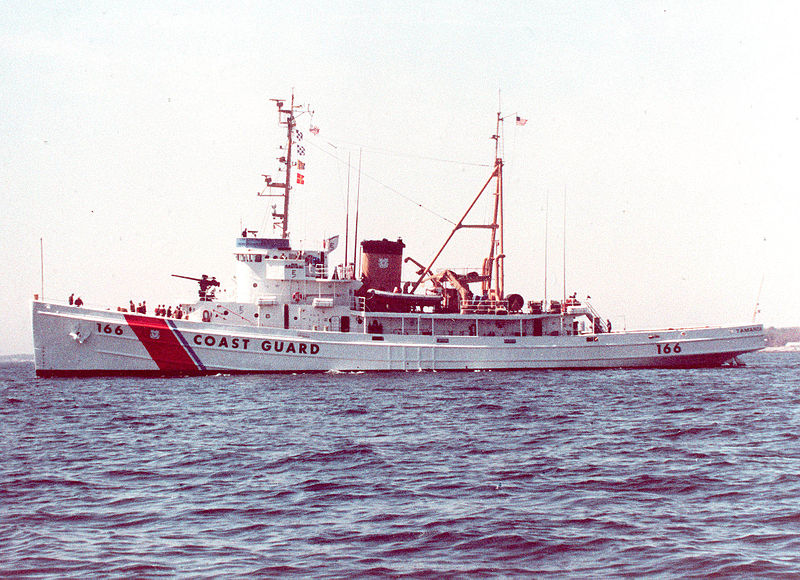
USCGC Tamaroa (WMEC-166), underway 1 May 1990, one year before she would sail into a vicious Halloween storm that later was dubbed “The Perfect Storm.” Her crew saved seven lives then. US Coast Guard photo.
1991 CGC Tamaroa attempted to rescue the three persons on board the disabled sailing vessel Satori 75 miles south of Martha’s Vineyard during a severe winter storm. Tamaroa launched an RHI which was damaged by the tossing Satori as it drew near the sailing vessel but a Coast Guard HH-3F, CG-1493, also participating in the rescue, hoisted the three on board Satori and the RHI’s crew to safety. Tamaroa was then diverted to rescue the crew of a downed Air National Guard H-60. (See October 31 entry below).

USCGC DILIGENCE
2014 CGC Diligence returned to her homeport of Wilmington, North Carolina following a 45-day patrol in the Caribbean Sea. While on patrol, Diligence served as the operational commander for all Coast Guard assets supporting Operation Southeast Watch in the Windward Pass between Cuba and Haiti. As the operational commander, Diligence maintained an overt presence in the Windward Pass to prevent and respond to any overloaded or unseaworthy vessels with persons attempting to reach the United States shoreline. The crew aboard Diligence also conducted counter-narcotics operations in support of Operation Unified Resolve in San Juan, Puerto Rico. Crew members conducted two inspections of vessels suspected of smuggling narcotics and patrolled the region to counter the flow of illicit traffic. Under Operation Southeast Watch, the Coast Guard worked alongside interagency and international partners to prevent and respond to illegal maritime migration in the Caribbean Sea and Florida Straits. Under Operation Unified Resolve, the service placed special emphasis on targeting the primary and secondary flow of illicit drugs from South America to Puerto Rico and the U.S. Virgin Islands. Operation Unified Resolve initially began as a surge operation, but in October 2013, the Coast Guard made it a standing operation and established a new baseline for drug interdiction operations in support of Puerto Rico and the U.S. Virgin Islands.
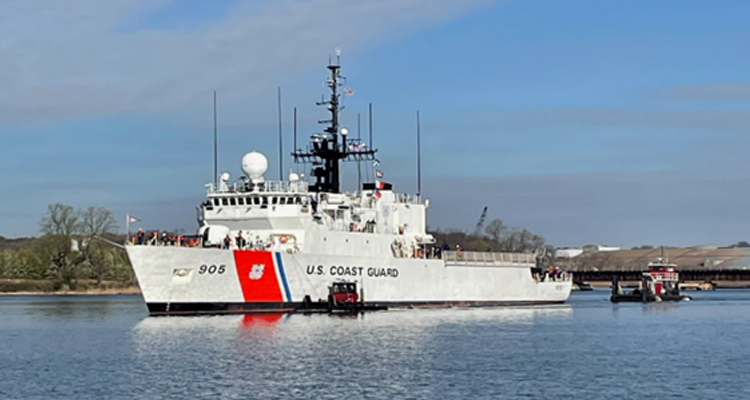
Coast Guard Cutter Spencer approaches the pier at Coast Guard Yard in Baltimore. U.S. Coast Guard photo.
2015 CGC Spencer returned to its homeport of Boston after a 65-day patrol of the Caribbean Sea. Spencer conducted several search and rescue cases as well as counter narcotics and migrant interdiction operations. As part of Operation Martillo, Spencer intercepted four go-fast vessels suspected of trafficking drugs, and directly contributed to the seizure of 1,000 kilograms (2,204 pounds) of marijuana and 1,677 kilograms (3,697 pounds) of cocaine worth approximately $50 million. In addition, 11 suspected narcotic smugglers were taken into custody and were transferred to the offices of the United States Attorneys for prosecution. In Colón, Panama, Spencer’s boarding teams partnered with the National Aero-Naval Military Service of Panama to conduct a three-day joint boarding of a freighter suspected of smuggling narcotics. In mid-October while sailing the passage between Cuba and Mexico, Spencer’s crew rescued 24 passengers from a disabled vessel that was caught in 12-15-foot seas. Spencer’s crew was able to safely disembark the Cuban migrants as their vessel ran out of fuel and the sea state worsened. Martillo, which is Spanish for hammer, was a U.S., European, and Western Hemisphere effort to target illicit trafficking.
 Chuck Hill's CG Blog