

Based on the Coast Guard Historian’s timeline, https://www.history.uscg.mil/research/chronology/
With inspiration from Mike Kelso
November 1
1843 Secretary of Treasury Spencer issued new “Rules and Regulations for the governing of the Revenue Cutter Service” that centralized control of personnel, promotion and discipline issues under the Revenue Marine Bureau, but left direct superintendence and direction of the individual cutters with the local Collectors of Customs.
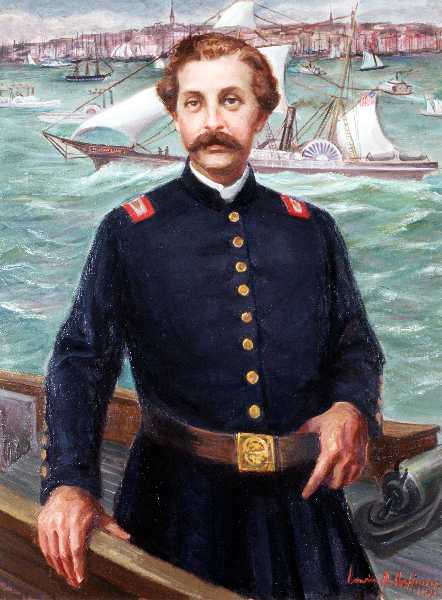
1848 The Revenue cutter C. W. Lawrence weighed anchor off Washington, D.C. and set sail down the Potomac River. The cutter was commanded by Captain Alexander V. Fraser, the first chief of Revenue Marine Bureau, who left that position to take command of the new brig-rigged cutter. He was ordered to proceed on an epic voyage around Cape Horn via the Hawaiian Islands to San Francisco where the cutter arrived safely on October 31 the following year.
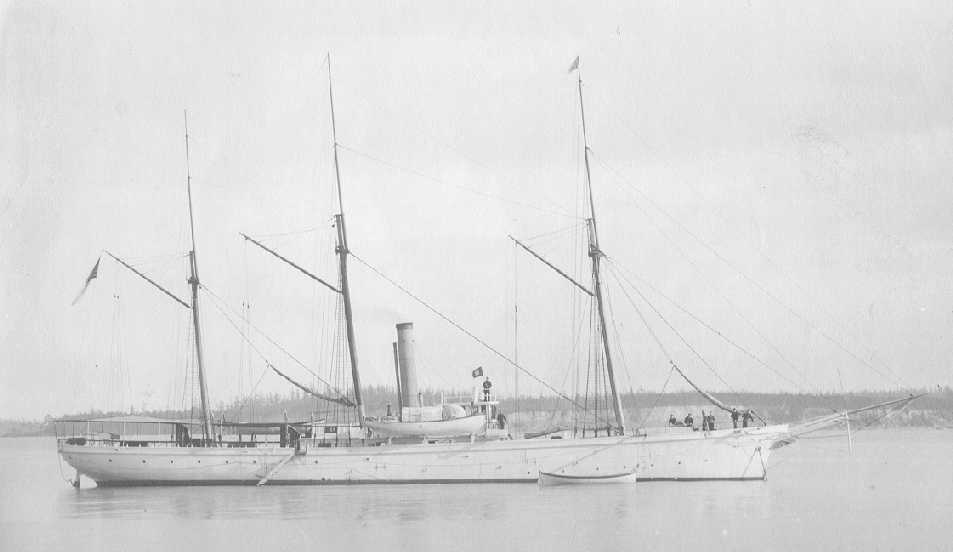
The United States Revenue Cutter Grant, undated photograph.
1903 The first wireless message was received on board a Revenue cutter. On this date in 1903 USRC Grant received a message transmitted by a shore station installed in the U.S. Customs building at Port Townsend, WA. The experimental use of a wireless set to coordinate the movements of a cutter at sea with shore-based stations proved to be a success and led to the wide-spread use of radio by all cutters. The equipment used ashore and on board Grant was installed by the Pacific Wireless Telegraph Company.
1941 President Franklin D. Roosevelt’s Executive Order 8929 transferred the Coast Guard to the Navy Department.
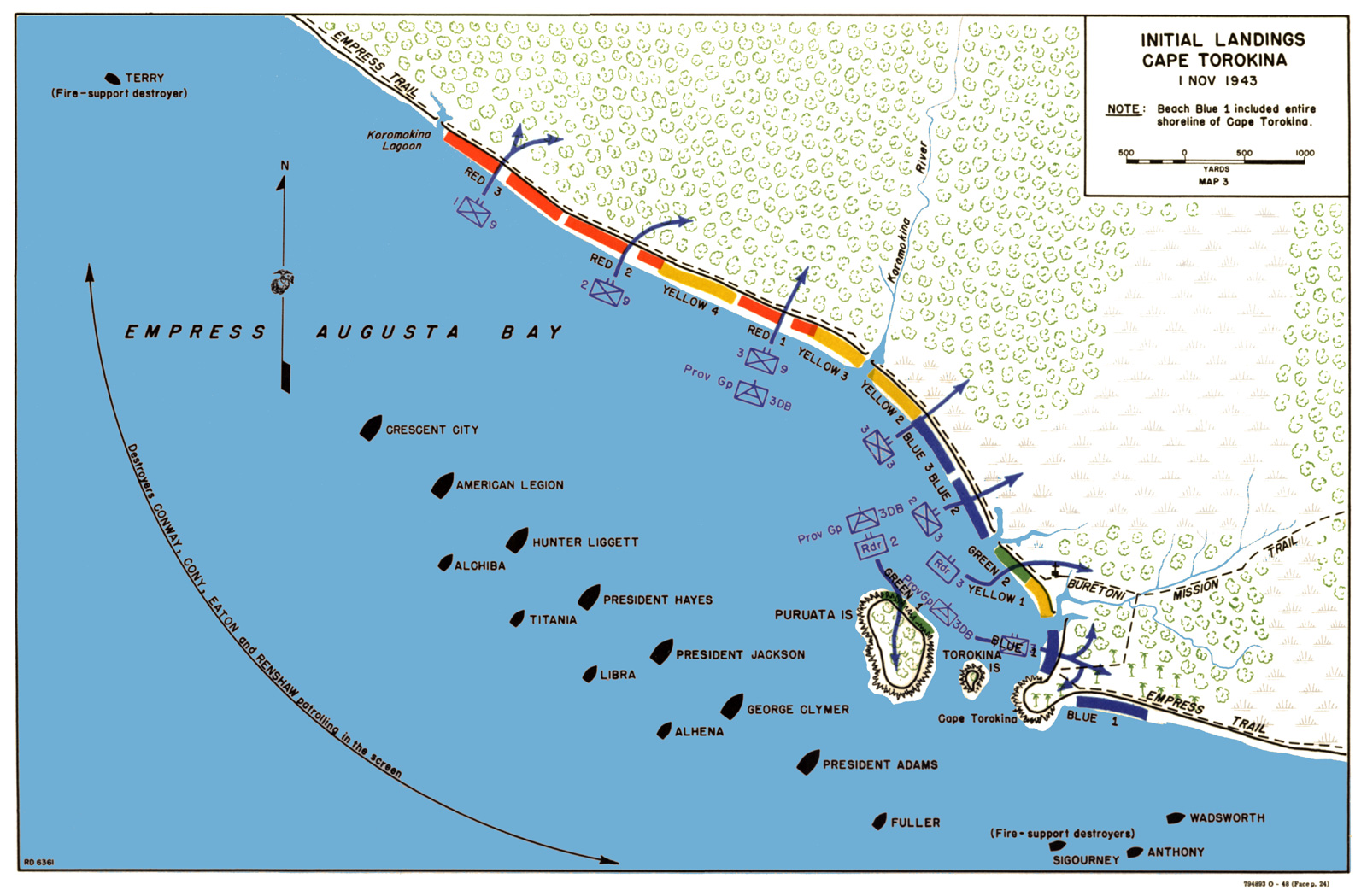
Map depicting the initial US landings on Bougainville, 1 November 1943
1943 The invasion of Bougainville, Solomon Islands, commenced. Coast Guard units participated in the landings.
1949 The authority to reestablish the Women’s Reserve of the Coast Guard Reserve (SPARS), approved by the President on August 4, 1949, became effective.
1976 A multi-agency task force investigation led by the San Luis Obispo Sheriff’s Department, and including the Los Angeles Police Department, DEA, Customs and the Coast Guard resulted in the seizure of the Dong Phat on this date in 1976. CGC Cape Hedge seized the vessel and arrested the four persons on board after the vessel delivered contraband to a shore-side connection. ON the beach other members of the task force arrested 10 men and seized 200 boxes of Thai sticks with a street value estimated in excess of $30 million.
1984 The largest marijuana bust to date in West Coast history took place when CGC Clover seized the 63-foot yacht Arrikis 150 miles southwest of San Diego. The yacht was loaded with 13 tons of marijuana. (I was PACAREA Current Ops when this happened. Our intel people made it happen.)
2013 The Coast Guard completed Arctic Shield 2013. Arctic Shield focused on Western Alaska and the Bering Strait and consisted of a three-pronged approach of operations, outreach and an assessment of the Coast Guard’s capabilities in the Arctic. Several cutters were deployed in support of the operation, including CGCs Polar Star, Healy, Waeshe, Naushon, and SPAR. The crews aboard the various vessels conducted the Coast Guard’s statutory missions while providing an operational presence and command and control capability in an area where the Coast Guard lacked the permanent infrastructure of a coastal sector. Coast Guard C-130 Hercules airplane crews were strategically positioned at Eielson AFB in Fairbanks and a forward operating location with MH-60 Jayhawk helicopter crews was established at the Alaska National Guard hangar in Kotzebue to conduct search and rescue, law enforcement, and maritime domain awareness flights. Arctic Shield capability assessments included the deployment of a vessel of opportunity skimming system aboard the cutter SPAR and a Canadian coast guard vessel. Healy conducted their science missions and partnered with the Coast Guard Research and Development Center to evaluate equipment. Personnel tested two small unmanned aircraft systems, an unmanned underwater vehicle, a remotely operated vehicle and a Helix skimmer equipped for oil recovery on ice. Polar Star tested the overall readiness of the icebreaker. Naushon completed a historic patrol to the region and proved that a Coast Guard patrol boat could operate in the area “in the right season and with proper support,” according to RADM Thomas Ostebo, 17th District Commander.
 Chuck Hill's CG Blog