

Based on the Coast Guard Historian’s timeline, https://www.history.uscg.mil/research/chronology/
With inspiration from Mike Kelso
November 7
1950 The Coast Guard announced that it would open a limited number of Organized Reserve enlistments to male veterans of other services and to males without previous military service in an effort to bring Coast Guard port security training units up to authorized strength without delay. Heretofore, such enlistments had been offered only to former Coast Guardsmen.

Mara Hope, Water sprayed on fire at Mara Hope, Tanker ship, Port Neches
1984 The tank ship Mara Hope suffered a fire in her engine room that quickly got out of control. She had lain idle at the Coastal Marine Shipyard on the Neches River for more than a year, but the owners of the Liberian tank ship had crewed the vessel and were working to reactivate the ship when the fire broke out. Coast Guard personnel and a 32-footer from MSO Port Arthur soon arrived on scene as did a 41-footer from Station Sabine. Local firefighters also assisted. It took almost three days to get the blaze under control. The ship was declared a total loss. There were no serious casualties.
November 8

U.S. COAST GUARD MANNED COMBAT TRANSPORT LEONARD WOOD CARRIES FIGHTING MEN AND VITAL WAR MATERIALS TO THE ENEMY-HELD INVASION SHORES
1942 Operation Torch, the Allied landings in Vichy-French-held North Africa, commenced. Coast Guard-manned Navy vessels participated in the assault, including the attack transports USS Leonard Wood, Joseph T. Dickman, and Samuel Chase. Coast Guardsmen also manned the landing craft on the Navy’s USS Arcturus, Charles Carroll, Joseph Hewes, William P. Biddle, and Exceller.
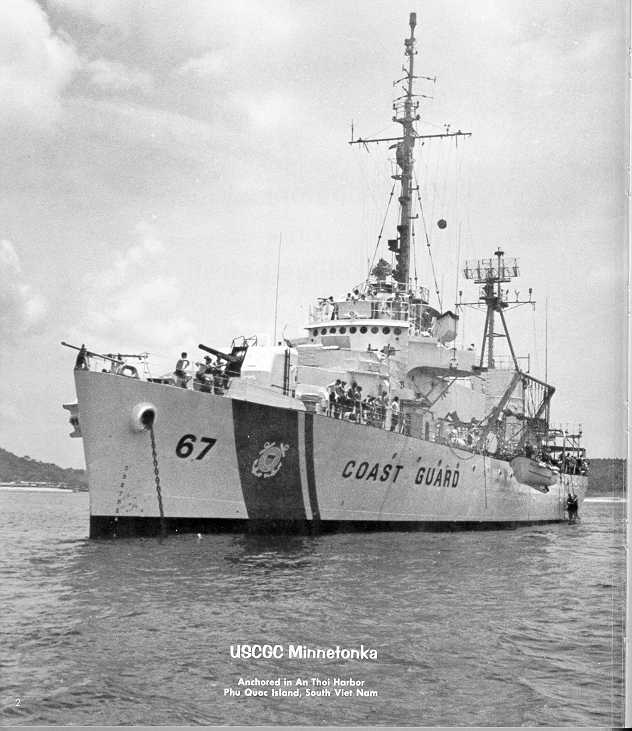
1957 After making contact with CGC Minnetonka on Ocean Station November Pan Am Flight 90944 Romance of the Skies was not heard of again. Wreckage of the aircraft was later found approx 90 miles of the ocean station. No survivors were found.
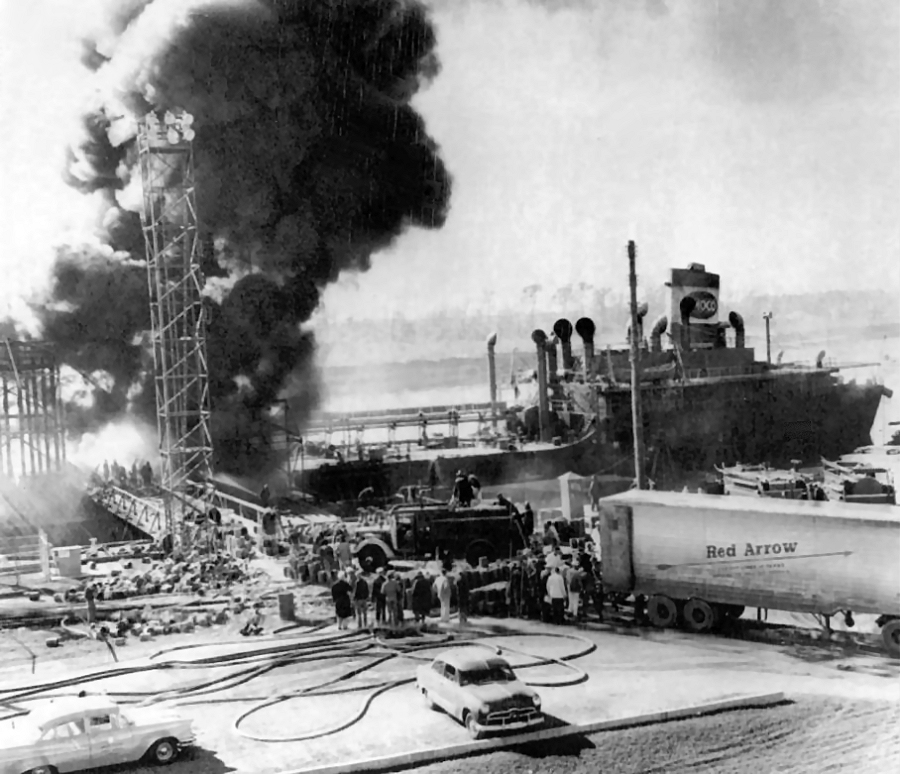
AMACO Virginia Ablaze
1959 The tanker Amoco Virginia, with a cargo of aviation gasoline, exploded and caught fire at Houston, Texas. U.S. Coast Guard units in the Galveston-Houston area assisted local and Federal agencies in extinguishing the blaze. For 10 more days, Coast Guard air and surface units controlled a dangerous situation by spreading foam to reduce the fire hazard of leaking aviation gas, directing harbor traffic, pumping out the damaged vessel, and moving her to a safe dock.
“… foam to fight was on its way. At about 7:00 A.M. the U.S. Air Force at Ellington Air Force Base sent ten 55-gallon drums of foam to the scene and another ten barrels at 9:30 A.M. The Coast Guard Houston Port Captain, with approval from the Eighth Coast Guard District office in New Orleans, bought more chemical foam from commercial sources. A veritable air lift was begun to bring foam into Houston through Ellington Air Force Base with the first plane in the airlift arriving at Ellington at 11:59 A.M. Later that afternoon Air Force and Navy aircraft arrived with foam at almost ten minute intervals. This foam air lift continued for seven hours, stopping at about 7:00 P.M. when the Houston Civil Defense spokesman advised no further need for foam. The fire had been brought for the second–but final– time under control. This foam air lift consisted of 47 flights, hauled more than a half million pounds of foam, involved more than 400 Air Force and Navy personnel, and used some 42 Air Force and Navy vehicles.”
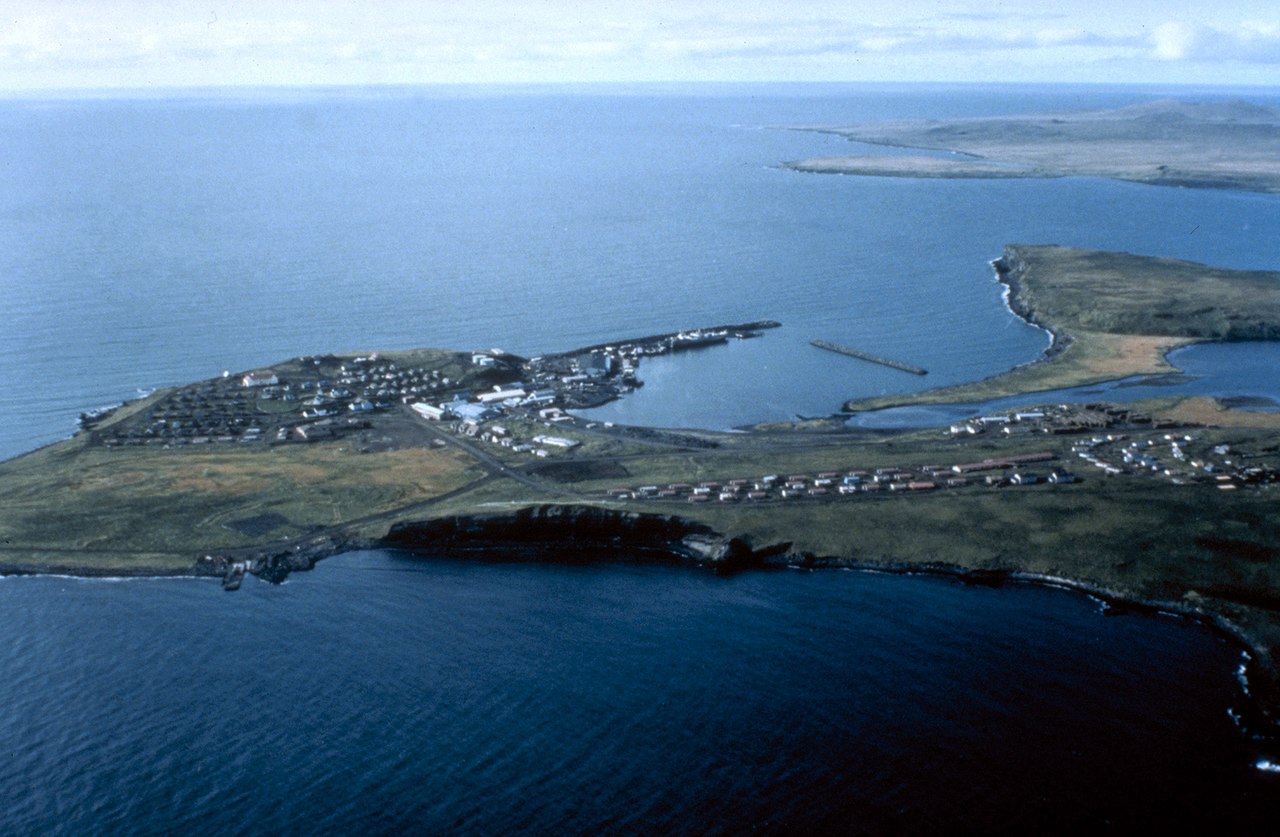
Aerial view of St. Paul. U.S. Army Corps of Engineers, photographer not specified or unknown – U.S. Army Corps of Engineers Digital Visual Library.
1979 The crew of Coast Guard LORAN Station St. Paul Island, Alaska, rescued the crew of the Japanese factory fishing vessel Ryuyo Maru NR Two which had run aground near Tolstoi Point on St. Paul Island during a storm. The Coast Guardsmen used a makeshift breeches buoy to affect the rescue of all of the 81 crewmen aboard the fishing vessel.
 Chuck Hill's CG Blog