

Based on the Coast Guard Historian’s timeline, https://www.history.uscg.mil/research/chronology/
With inspiration from Mike Kelso

USCGC Itasca as HMS Gorlsston
1929 CGC Itasca slid down the ways of the General Engineering and Drydock Company in Oakland, California. Ms. Jean Lyans christened the new 250-Lake Class cutter. Ms. Lyans was nominated for the task by Representative Homer Hoch, of Kansas, a “great friend of the Coast Guard.” The Lake-Class cutters, ten in all, were designed in-house by the Coast Guard and were propelled by a turbine-driven electric motor. All ten were transferred to the Royal Navy under Lend Lease in the spring of 1941.


The U.S.S. Serpens Monument at Arlington National Cemetery is dedicated to those who lost their lives when the U.S.S. Serpens was destroyed. The 14,250-ton ammunition ship exploded off Lunga Baech, Guadacanal, British Solomon Islands on the night of Jan. 29, 1945 and was the largest single disaster suffered by the U.S. Coast Guard in World War II. (U.S. Army photo by Rachel Larue/released)
1950 The Serpen’s monument in Arlington National Cemetery was dedicated on November 16, 1950. The monument was placed on the gravesite of those who lost their lives on the night of January 29, 1945 when USS Serpens was destroyed off Lunga Beach, Guadalcanal. This was the largest single disaster suffered by the Coast Guard in World War II.
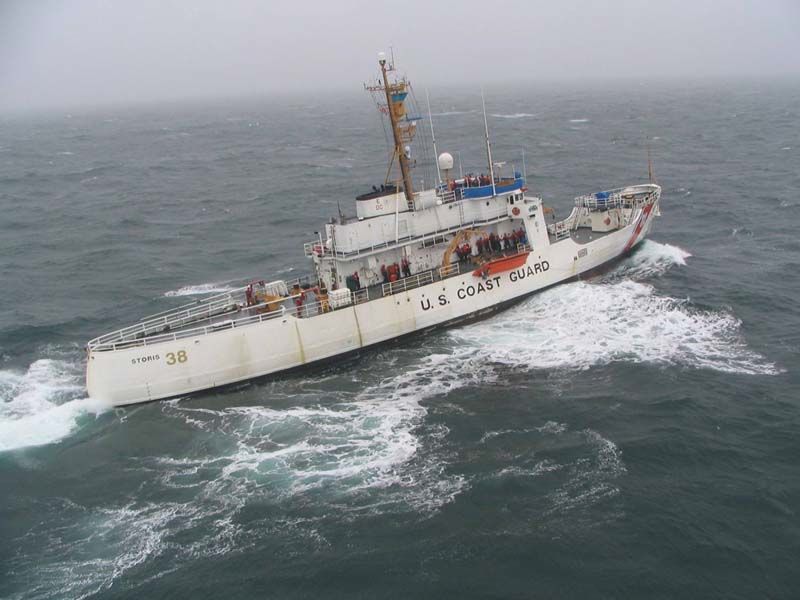
USCGC Storis
1992 CGC Storis became the cutter with the longest service in the Bering Sea, eclipsing the U.S. Revenue Cutter Bear which had held that distinction since 1929. Bear was decommissioned in 1929 after serving in the Bering Sea for 44 years and two months.
 Chuck Hill's CG Blog