

Based on the Coast Guard Historian’s timeline, https://www.history.uscg.mil/research/chronology/
With inspiration from Mike Kelso
1906 At the second International Radio Telegraphic Convention, which was held in Berlin, the attendees agreed to adopt the wireless signal “SOS” as the internationally recognized signal for distress at sea. Their thinking was that three dots, three dashes and three dots could not be misinterpreted.
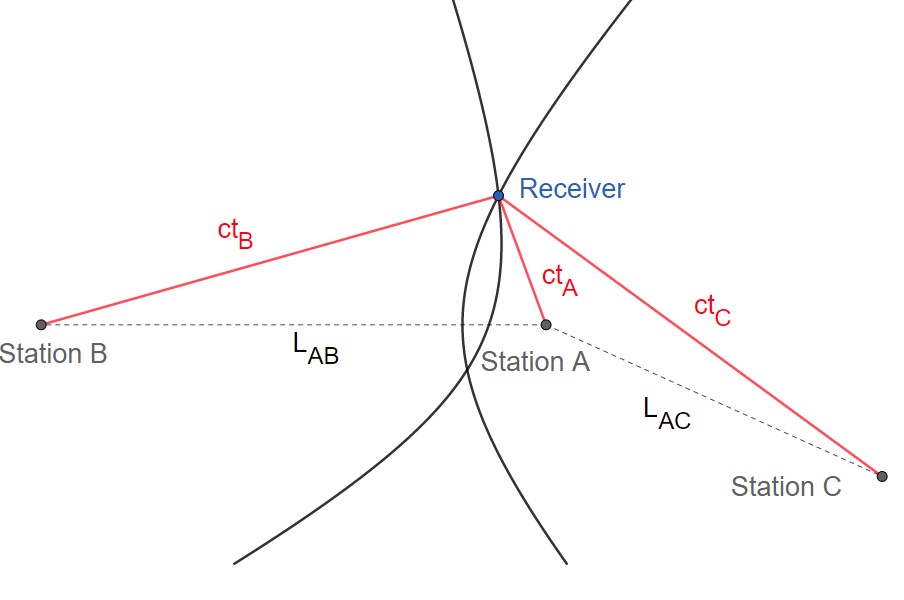
Hyperbolic navigation example (Image: Wikipedia)
1953 A great boon to ocean navigation for aircraft surface vessels was the completion of four new LORAN stations in the Far East. The stations were built at Mikayo Jima, Ryuku Islands; Bataan and Cantanduanes Islands, Philippines; and Anguar, Palau Island in the Carolinas chain.
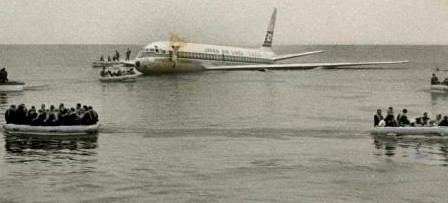
Japan Airlines Flight 2 in the water just short of San Francisco International Airport runway. 22 November 1968. US Coast Guard photo.
1968 A DC-8 with 107 persons on board disappeared from the radar during final approach to San Francisco International Airport. Visibility was 3/4-mile in fog and the ceiling was 300 feet. A Coast Guard helicopter located the aircraft in the water 6,100 yards from the runway with people on the wings boarding life rafts. Within seven minutes, two additional helicopters and a Coast Guard boat were on the scene. All 107 persons were saved.
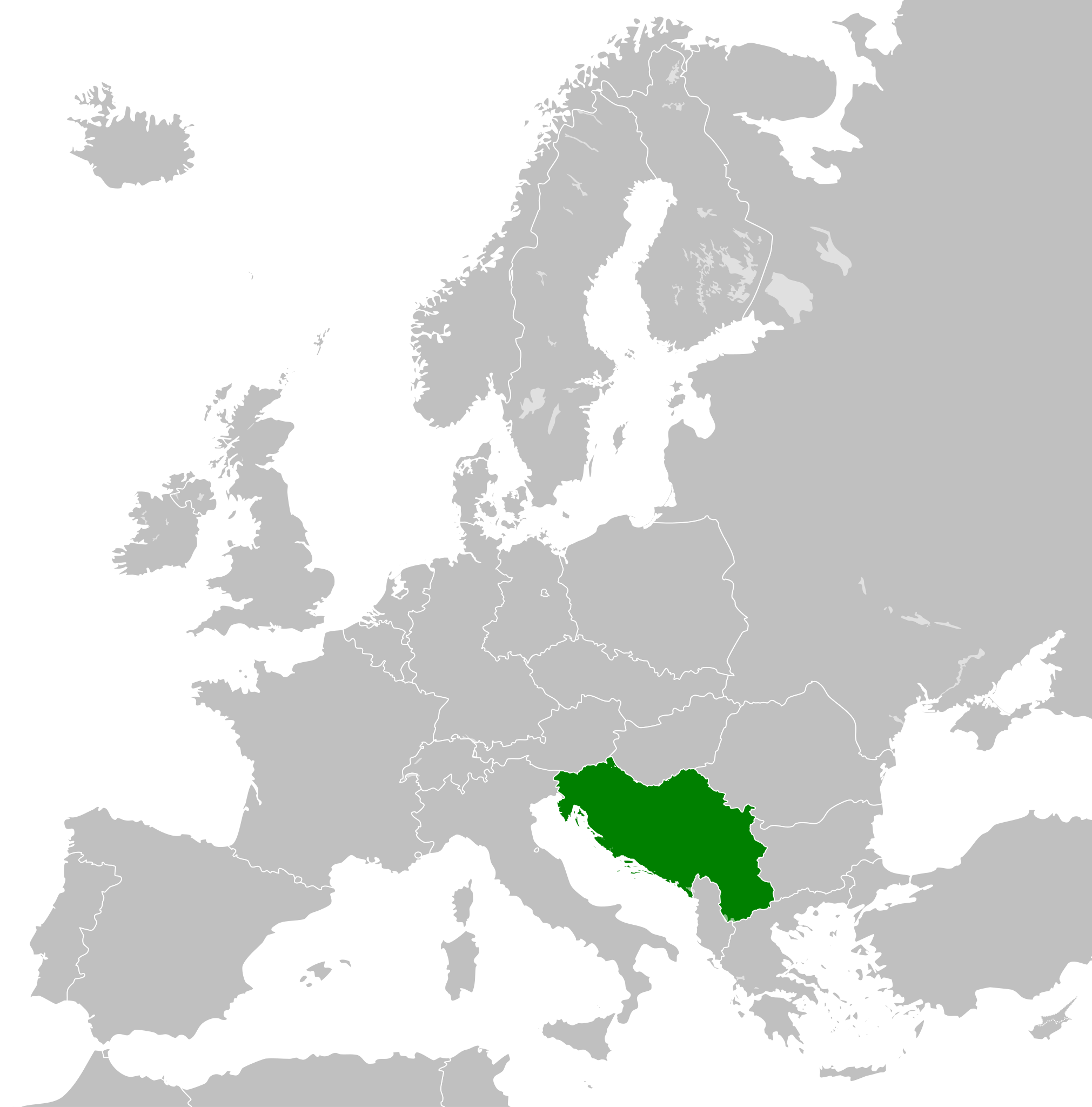
Map of Socialist Federal Republic of Yugoslavia as it was from 1945-1992. Surrounding countries accurate from 1956-1990.
1993 NATO began enforcing United Nations’ Resolutions 713 and 757 that set in place an embargo against the former Federal Republic of Yugoslavia (Serbia and Montenegro). Four Coast Guard LEDETs were deployed to Southern Europe to support the operation and were placed aboard NATO warships.

SAN FRANCISCO. The Coast Guard Cutter Waesche transits through the San Francisco Bay for the first time en route to its homeport of Alameda, Calif., Feb. 28, 2010. (U.S. Coast Guard photo by Petty Officer 3rd Class Kevin Metcalf)
2015 CGC Waesche returned to its homeport at Coast Guard Island in Alameda after a 106-day deployment. Waesche departed Alameda in August on its 18,000-mile deployment ranging from the coast of Southern California to the Arctic Ocean, and the Bering Sea. During this deployment, Waesche’s crew completed two weeks of weapons system testing and certification, patrolled the Arctic in support of Operation Arctic Shield, and enforced federal fisheries laws and safety regulations in the Gulf of Alaska and Bering Sea. Law enforcement personnel aboard the cutter conducted numerous at-sea boardings of fishing vessels to ensure compliance with federal fisheries regulations and conduct spot checks of required safety equipment. The cutter patrolled in the Arctic, furthering national strategic goals by enhancing maritime domain awareness and improving preparedness, prevention, and response capabilities in the region. While in the Bering Sea, Waesche assisted in a search-and-rescue case that resulted in the successful medical evacuation of an ailing fisherman. Waesche crewmembers worked closely with the communities of Dutch Harbor and Barrow, Alaska while in the area. The crew hosted community leaders from Barrow aboard the cutter to discuss the rapidly evolving economic landscape in the Arctic and volunteered during their time ashore to complete several community service projects in the community of Dutch Harbor.
 Chuck Hill's CG Blog