

Based on the Coast Guard Historian’s timeline, https://www.history.uscg.mil/research/chronology/
With inspiration from Mike Kelso
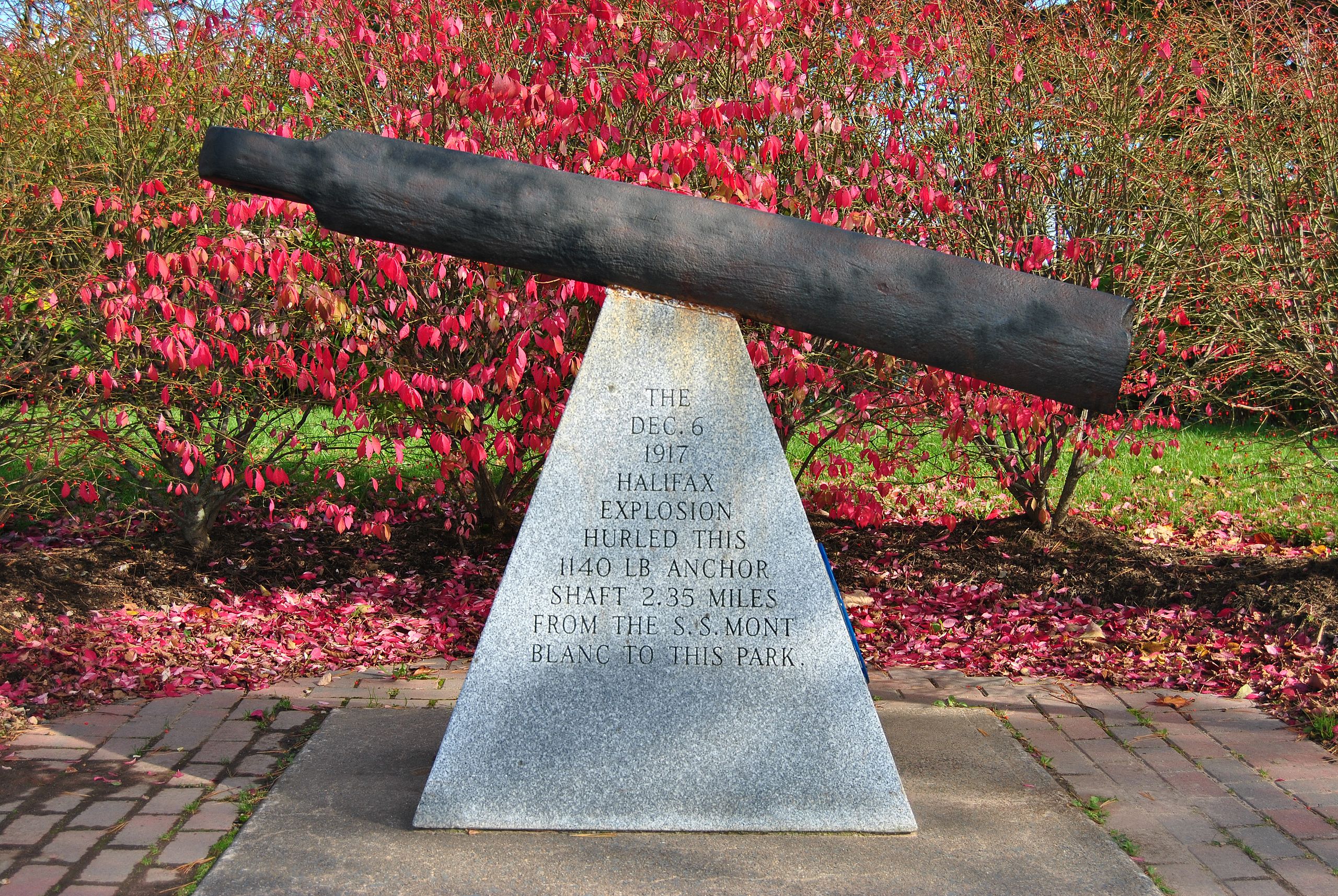
The engraving on the Mont Blanc monument reads: “The Dec. 6 1917 Halifax Explosion hurled this 1140 lb. anchor shaft 2.3 miles from the S.S. Mont Blanc to this park.” This photo is of a cultural heritage site in Canada, number 2582 in the Canadian Register of Historic Places. Photo credit: Vonkiegr8 via Wikipedia
1917 The French freighter Mont Blanc, loaded with 5,000 tons of high explosives, collided with the Norwegian steamer Imo in the harbor of Halifax, Nova Scotia. The resulting fire detonated the munitions, killing 1,635 people and leveling much of Halifax and its environs. Coast Guardsmen from USCGC Morrill landed to provide assistance. This disaster led to the creation of captains of the ports for the major U.S. ports. The Coast Guard was tasked with the new duty.
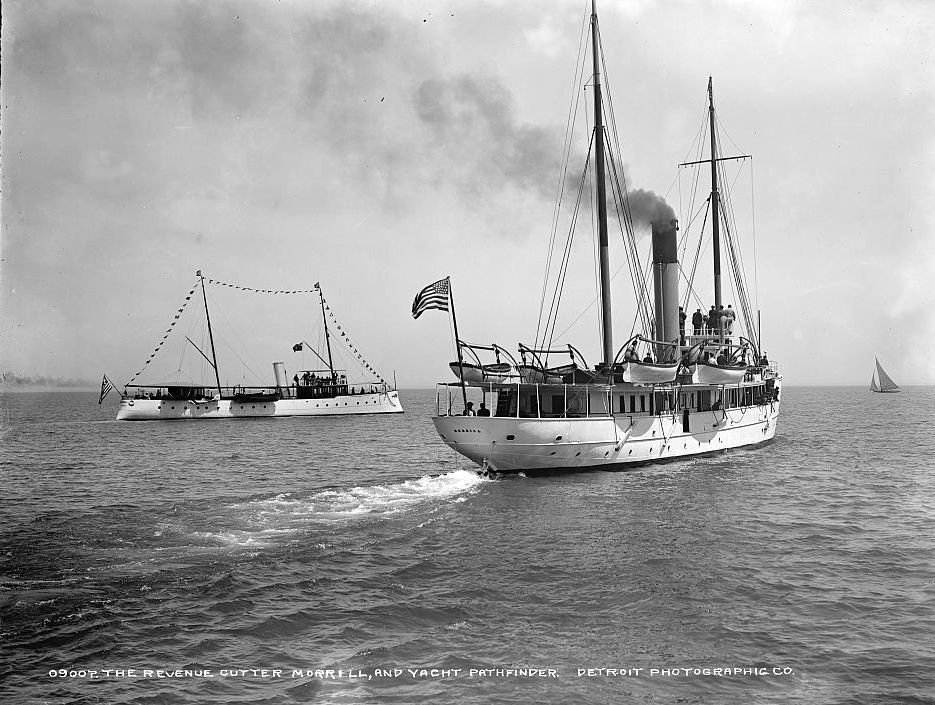
USRC/USCGC Morrill (commissioned 1889, decommissioned 1928)
1918 Surfman L. E. Ashton of Station No. 305 in Nome, Alaska, departed his station with a dog sled and team loaded with medical supplies along with one other surfman on an expedition to assist natives who were suffering from influenza at Cape Prince of Wales, 160 miles from Nome and at villages between the two settlements. He arrived at Cape Prince of Wales on 13 December, where he found 122 natives sick and 157 dead of the illness. He converted the schoolhouse into a hospital and the post office into a dispensary and “otherwise perfected an organization by means of which he was able to care for all the sick.” He began burying the dead January 11 and by February 20 when “the epidemic had spent its force” he returned to his station in Nome, arriving there on March 1, 1919.

Photo: skeezePixabayCC0 1.0
More from “The Most Epic Things the United States Coast Guard Has Ever Done,”
The worldwide flu pandemic of 1918 infected 500 million total, killing somewhere between 50 and 100 million people. Though it wasn’t understood why at the time, this particular strain of flu had proven especially deadly to those in Asian countries, and in isolated areas around the Pacific. We know today that this is because those of European descent have evolved a naturally greater resistance to certain diseases than those in areas that had not had much contact with the outside world.
So, when the flu hit the Inuit natives around Nome, Alaska, it was practically a death sentence. Surfman L. E. Ashton, of Station No. 305 couldn’t just sit back and watch his native neighbors die. So, on his own initiative, Ashton set out with little more than a dog sled, medical supplies and some food on a 150-mile journey to Cape Prince of Wales on the Bering Strait. His goal was to distribute supplies and care for people in the eight villages along his way. An ambitious task; especially when you realize he left on December 6th. In Alaska. When he arrived at Cape Prince a week later, he treated the 122 people who were fatally sick, and helped to bury the 150 dead.
But Ashton didn’t go straight home to warmth. He dog-sledded through the wilderness for the next three months, risking his life in some of the coldest and most brutal conditions on Earth. Ashton delivered much-needed medication to eight different far-flung settlements in Western Alaska, saving dozens, if not hundreds, of people.
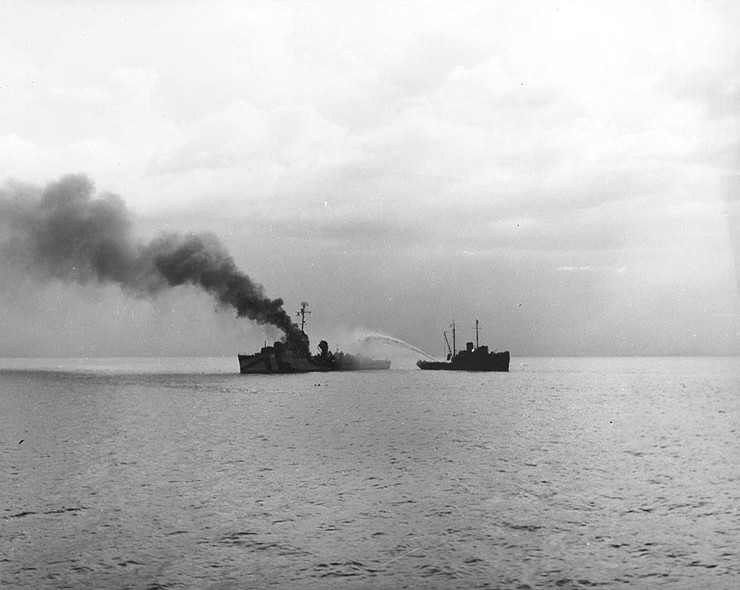
USS Lamson (DD 367) on fire in Ormoc Bay on 7 December 1944, after she was hit by a kamikaze. The tug assisting with firefighting is probably ATR-31.
1944 Coast Guardsmen participated in the landings at Ormoc, Philippine Islands.
1946 The number of Coast Guardsmen on active duty had been dropped to 22,156 in order to meet budgetary requirements. Many lifeboat stations had to be placed in a limited caretaker or inactive status and some vessels tied up because they lacked complements .
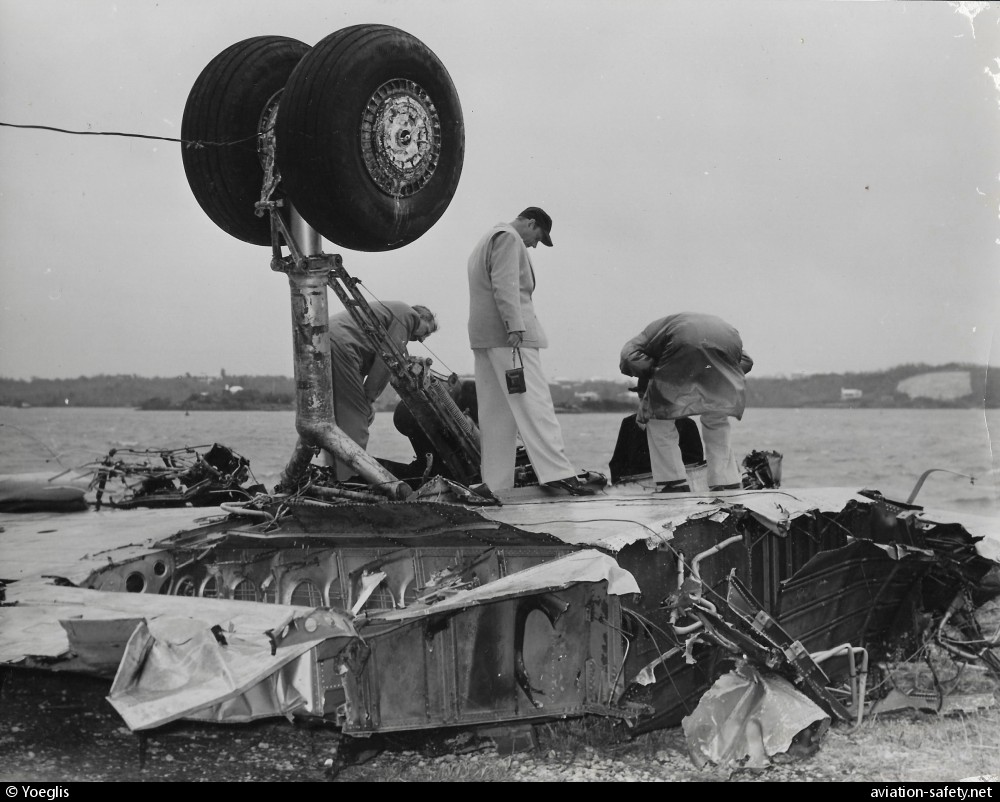
photo (c) Yoeglis; Bermuda-Kindley Field (BDA); 06 December 1952
1952 Coast Guard search and rescue facilities at the Naval Base in Bermuda were instrumental in rescuing four survivors and recovering 17 bodies from a Cubana Douglas DC-4, registered CU-T397, which crashed on take-off from the airport at Kindley Field, Bermuda.
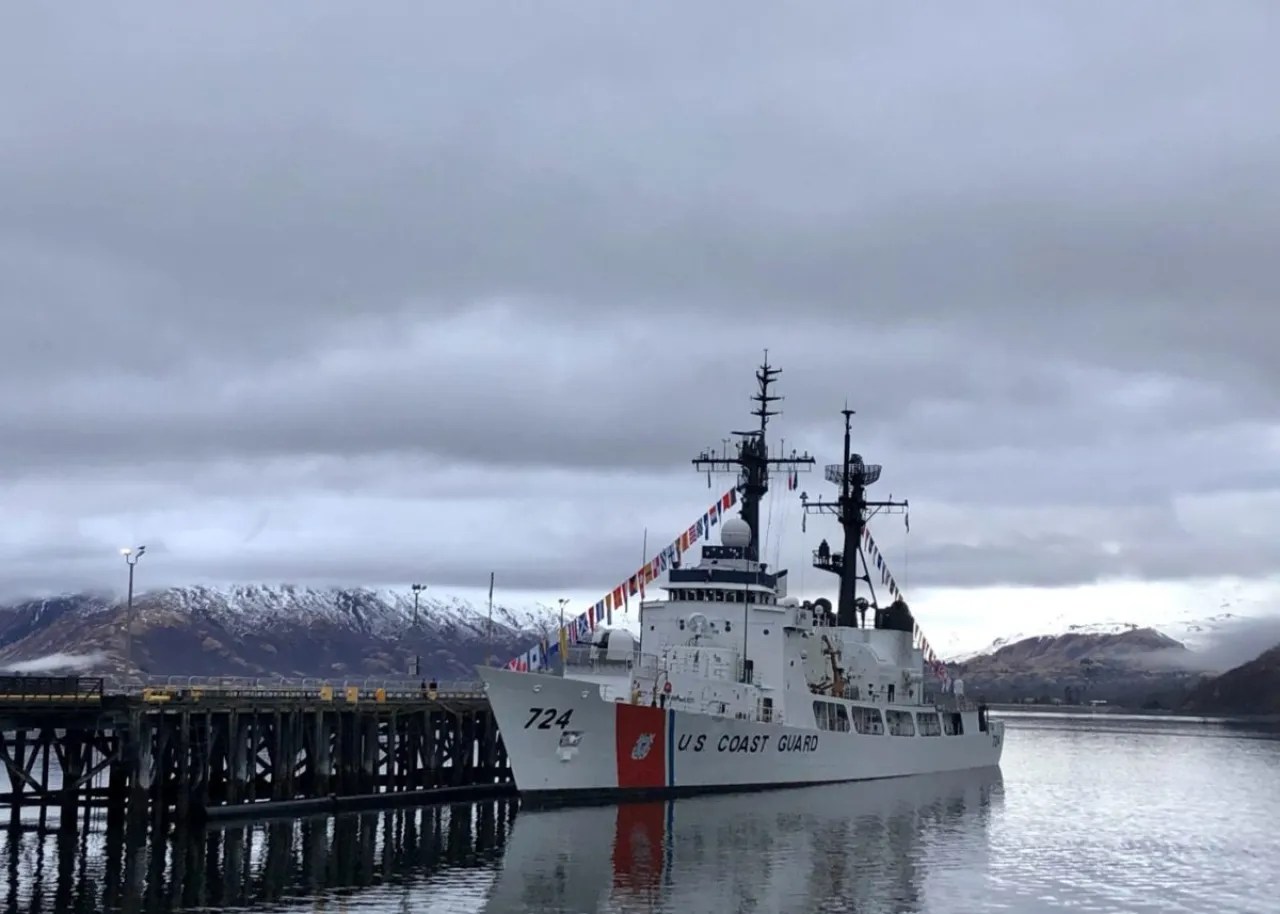
The Coast Guard Cutter Douglas Munro (WHEC 724) is moored at the cutter’s homeport of Kodiak, Alaksa, April 24, 2021. The Douglas Munro was decommissioned during a ceremony following 49-years of service to our nation. U.S. Coast Guard photo by Chief Petty Officer Matt Masaschi
1999 CGC Munro intercepted the vessel Wing Fung Lung loaded with more than 250 Chinese migrants headed for the Guatemala/El Salvador border. After refusing permission to board, Munro tracked the vessel for three days when lookouts spotted flares over the ship. When the Munro’s small boat approached, panicked migrants began jumping into the water. They were pulled to safety and returned to the Wing Fun Lung while boarding parties finally went aboard the crowded vessel. Someone apparently tried to scuttle the vessel and the boarding teams were able to stop the flooding and dewater the engine room. The threat to the Munro crewmen on the vessel was made worse because the migrants had not been fed or had water for more than a day. They were at the point of total rebellion, according to the Munro’s boarding team members. Other boarding teams from CGC Hamilton then arrived and helped to control the situation. The vessel was finally taken into Puerto Quetzal, Guatemala, where the migrants were taken into custody by INS agents. The master of the vessel was arrested.
2013 CGC Mackinaw, loaded with more than 1,200 Christmas trees as 2013’s “Christmas Ship,” arrived at Navy Pier for a two-day event re-enacting an annual Chicago tradition dating from the late 1800s and early 1900s.
2013 Coast Guard Sector Sault Ste. Marie, Michigan, commenced Operation Taconite for the winter season. The annual operation was designed to prevent developing ice from hindering commercial navigation in the ports of Duluth, Minnesota; Superior, Wisconsin; and Thunder Bay, Ontario. Operation Fall Retrieve, the annual operation to remove aids to navigation on the Great Lakes in preparation for the winter icing of the lakes, concluded soon after the start of 2013’s Operation Taconite. Coast Guard Sector Detroit prepared to launch Operation Coal Shovel, the annual ice-breaking operation in the eastern Great Lakes region.
 Chuck Hill's CG Blog