

Based on the Coast Guard Historian’s timeline, https://www.history.uscg.mil/research/chronology/
With inspiration from Mike Kelso
December 7
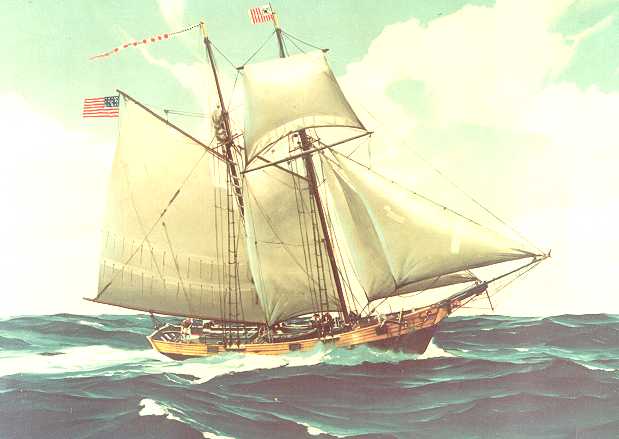
Contemporary painting of a Revenue Marine cutter, which may be of either the Massachusetts (1791), or its replacement, the Massachusetts II. Description from the United States Coast Guard website: “This painting purports to illustrate the first cutter named Massachusetts but it incorrectly shows the cutter flying the Revenue ensign and commission pennant, which were not adopted until 1799, well after the first Massachusetts had left service. Nevertheless, the illustration does show those characteristics typical of most of the first few generations of Revenue cutters: a small sailing vessel steered by a tiller, with low freeboard, light draft, lightly armed, and usually rigged as a topsail schooner.”
1793 The first Revenue Cutter Service court martial occurred on this date aboard the cutter Massachusetts. The offender, Third Mate Sylvanus Coleman of Nantucket, was summarily dismissed from the service for “speaking disrespectfully of his superior officers in public company…insulting Captain John Foster Williams [the commanding officer] on board, and before company…for keeping bad women on board the cutter in Boston and setting a bad example to the men by ordering them to bring the women on board at night and carrying them ashore in the morning…” and for writing an order in the name of the commanding officer.
1830 President Andrew Jackson announced an ambitious plan to add a large number of lighthouses to the federal system, with a total of 51 more lighthouse keepers. In explanation, he supported the practice of offsetting the costs of keeping aids to navigation on the coasts, lakes and harbors “to render the navigation thereof safe and easy” since “whatever gives facility and security to navigation cheapens imports; and all who consume them are alike interested in whatever produces this effect. The consumer in the most inland State derives the same advantage…that he does who lives in a maritime State.”
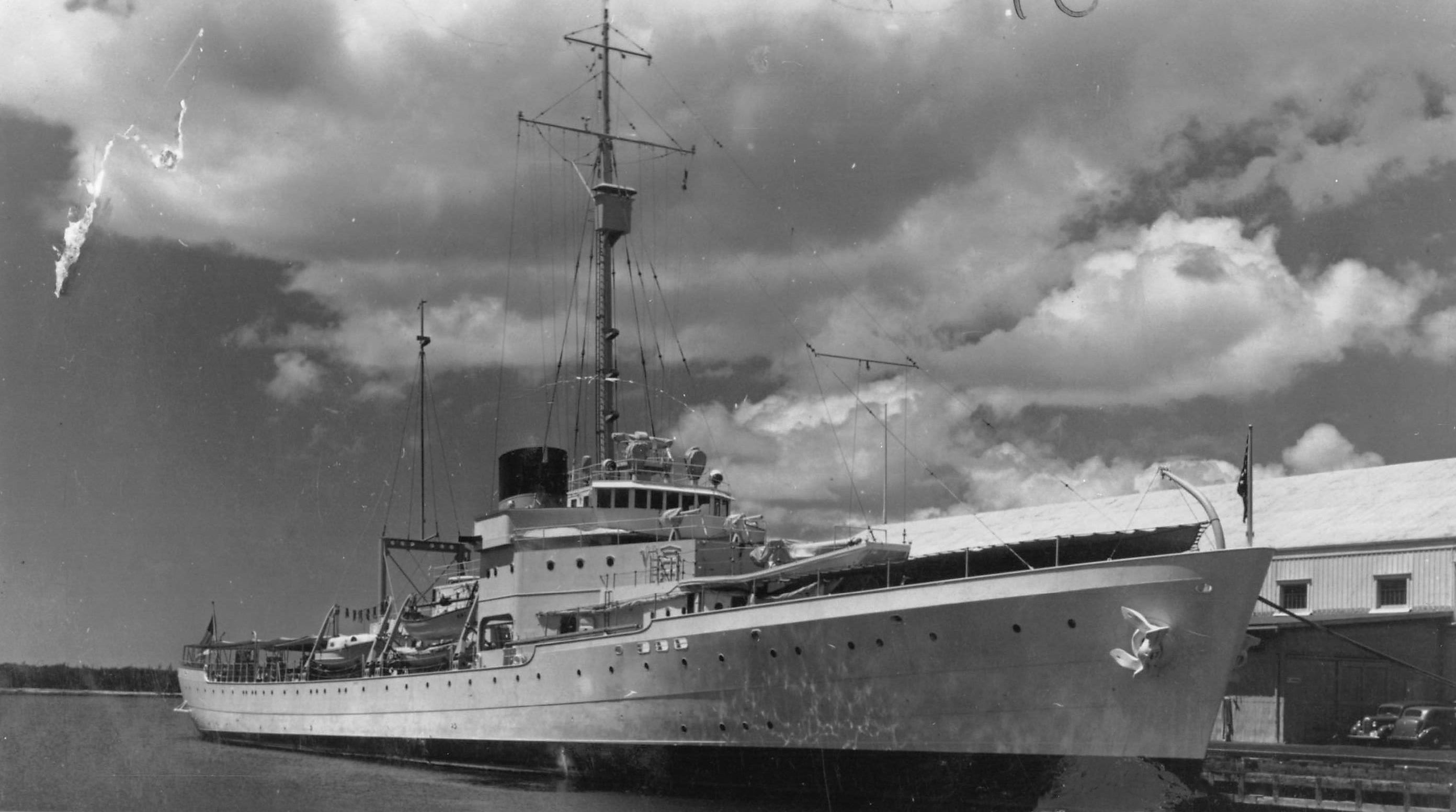
USCGC Taney at Honolulu tied up at Pier 4 in Honolulu Harbor, Hawaii, circa 1940
VIRIN: 220509-G-G0000-002.JPG Photo source: USCG Historian’s Office
1941 The Imperial Japanese Navy launched a surprise attack on Pearl Harbor and surrounding Army Air Force airfields in Hawaii. Stationed in Honolulu were the Coast Guard’s 327-foot cutter Taney, the 190-foot buoy tender Kukui, two 125-foot patrol craft, Reliance and Tiger, two 78-foot patrol boats, and several smaller craft. At the time of the attack, Taney lay at Pier Six in Honolulu Harbor, Reliance and the unarmed Kukui both lay at Pier Four and Tiger was on patrol along the western shore of Oahu. All were performing normal duties for a peacetime Sunday. After the attack commenced Tiger conducted anti-submarine sweeps outside of Pearl Harbor and Taney opened fire on Japanese aircraft that appeared over Honolulu Harbor.

USCGC White Alder, lost now 56 years ago
1968 CGC White Alder sank after colliding with M/V Helena near White Castle, Louisiana. Seventeen Coast Guard personnel were killed.
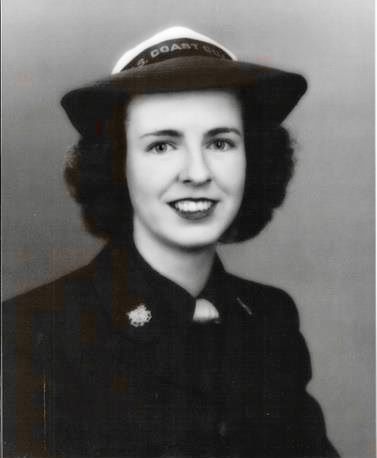
Alice Theresa Jefferson graduated from Stoneham High School in 1940. She then attended Regis College before entering the Coast Guard. In 1943, during World War II, she became a member of SPARs and eventually she was promoted to Commander, the highest rank for a female officer at the time.
1973 The first female enlistees were sworn into the regular U.S. Coast Guard, Y1/c Wanda May Parr and Y2c Margaret A. Blackman, at a ceremony held in Yorktown, VA. On that date as well CWO Alice T. Jefferson became the first woman commissioned officer to be sworn into the regular U.S. Coast Guard. Jefferson was sworn in by Admiral Chester Bender, Commandant, at a ceremony held at Coast Guard Headquarters.
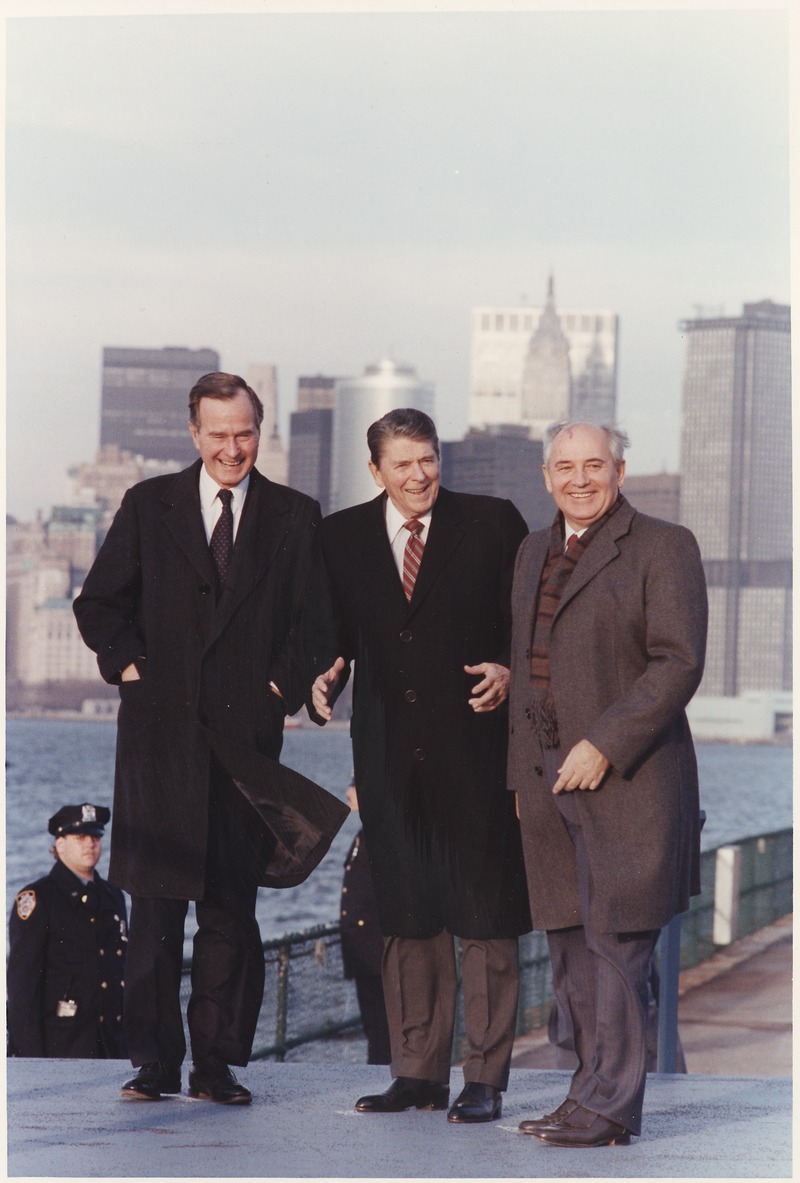
President Ronald Reagan and President-elect George Bush meet with Soviet leader Mikhail Gorbachev on Governor’s Island, December 1988
1988 The Coast Guard hosted an international summit between Soviet President Mikhail Gorbachev, President Ronald Reagan, and President-elect and then-Vice President George H. W. Bush on Governors Island. The summit occurred after Gorbachev had addressed the United Nations. In planning his trip to the UN, Gorbachev requested a meeting with Reagan and the White House selected the Coast Guard base at Governors Island as a meeting site since it was a secure military installation in the middle of New York harbor and just minutes away from the United Nations. The leaders met for lunch at the LANTAREA commander’s [VADM James Irwin] home. The summit was characterized as “just a luncheon” and the meeting was the last time President Reagan and Gorbachev would meet during Reagan’s remaining term.
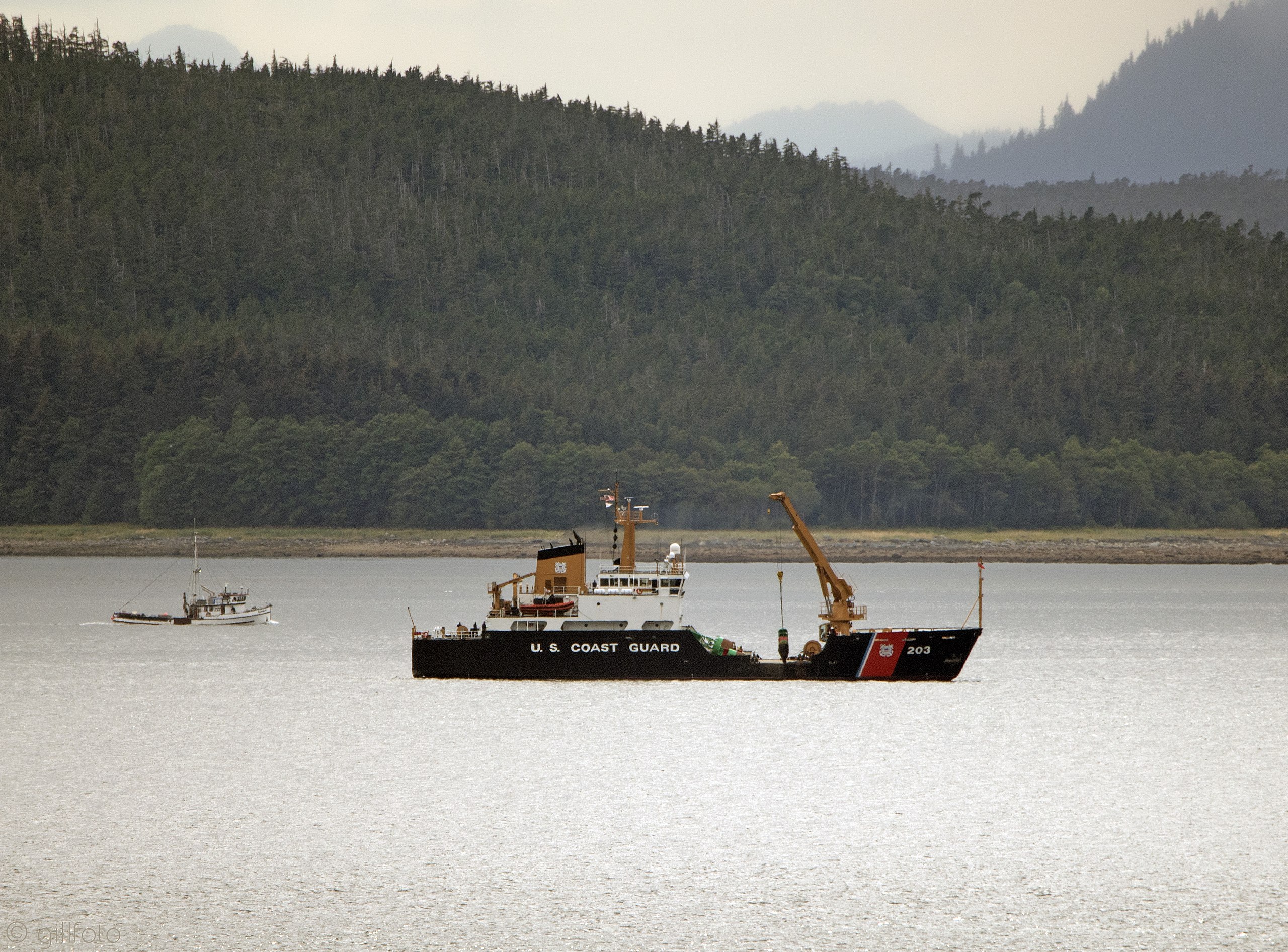
USCGC Kukui (WLB-203) raising the Strauss Rock Buoy, South Shelter Island, Southeast Alaska 24 August 2019. Photo by Gillfoto.
2014 CGC Kukui returned from a 46-day law enforcement patrol where they exercised bilateral agreements and enforced fisheries regulations across the Pacific. The 50-person crew participated in several significant regional operations to further enhance U.S. and international efforts in the protection of the ecologically and economically valuable fish stocks of the Pacific Ocean and participated in a number of multi-national operations, including Operation Kuru Kuru, which was a multinational operation orchestrated by the Pacific Islands Forum Fisheries Agency. Kukui exercised the Tongan bilateral agreement by embarking a Tongan ship rider to patrol that nation’s EEZ. Kukui crewmembers spent patrol time searching for potential EEZ incursions by vessels not transmitting their location or status in accordance with applicable fisheries regulations. Another leg of their patrol included domestic fisheries boardings in the American Samoa EEZ and high seas boardings under the authorities established by the Western Central Pacific Fisheries Commission.

The USCGC Oliver Henry (WPC 1140) crew arrives in Manus, Papua New Guinea, on Aug. 14, 2022, from Guam as part of a patrol headed south to assist partner nations in upholding and asserting their sovereignty while protecting U.S. national interests. The U.S. Coast Guard is participating with partners to support the Pacific Islands Forum Fisheries Agency-led Operation Island Chief and the larger Operation Blue Pacific through patrols in the Western Pacific in August and September 2022. (U.S. Coast Guard photo by USCGC Oliver Henry)
2022 CGC Oliver Henry (WPC 1140) completed a local patrol off Guam and the Commonwealth of the Northern Mariana Islands from 28 November to 7 December 2022, including the first-ever 154-foot Fast Response Cutter port visit to Tinian. The objectives of the patrol included: supporting MSST Honolulu, validating Tinian as a port of free call for future USCG ship visits, and conducting community engagements in CNMI. During the patrol, Oliver Henry’s crew assisted MSST Honolulu’s boarding team in conducting law enforcement operations resulting in seven recreational safety boardings, four uninspected passenger vessel boardings, and two commercial passenger vessel boardings. The purpose of these boardings was to ensure the material condition of the vessels, the suitability and compliance of required equipment, and any required credentials. The team issued four warnings for safety infractions. The team went on to conduct interagency law enforcement operations with Tinian’s Department of Public Safety – Boating Safety Division for two additional recreational safety boardings. The cutter’s crew also teamed up with CNMI Customs & Biosecurity officers and Tinian DPS – BSD officers for two Subject Matter Expert Exchanges to share best practices and learn from each other. While in Saipan and Tinian, the crew held three community events, including hosting 68 students from the Tasi to Table Non-Profit Organization dedicated to engaging youth on fishing methodologies, boating safety, environmental stewardship, and supporting mental health and the Tinian Typhoon Sports Association.
 Chuck Hill's CG Blog