

Based on the Coast Guard Historian’s timeline, https://www.history.uscg.mil/research/chronology/
With inspiration from Mike Kelso
December 26

Coast Guard manned LSTs 202 and 204, Landing at Cape Gloucester, 230 miles (370 km) west of Rabaul and 245 miles (394 km) northeast of Port Moresby.
1943 Landings at Cape Gloucester were conducted by Coast Guard-manned LSTs 18, 22, 66, 67, 68, 168, 202, 204, and 206. The LST-22 shot down a Japanese “Val” dive bomber while LST-66 was officially credited with downing three enemy aircraft. Two of her crew were killed by near misses. LST-67 brought down one Japanese dive bomber while LST-204 shot down two and the gunners aboard LST-68 claimed another. The LST-202 claimed three enemy planes shot down.
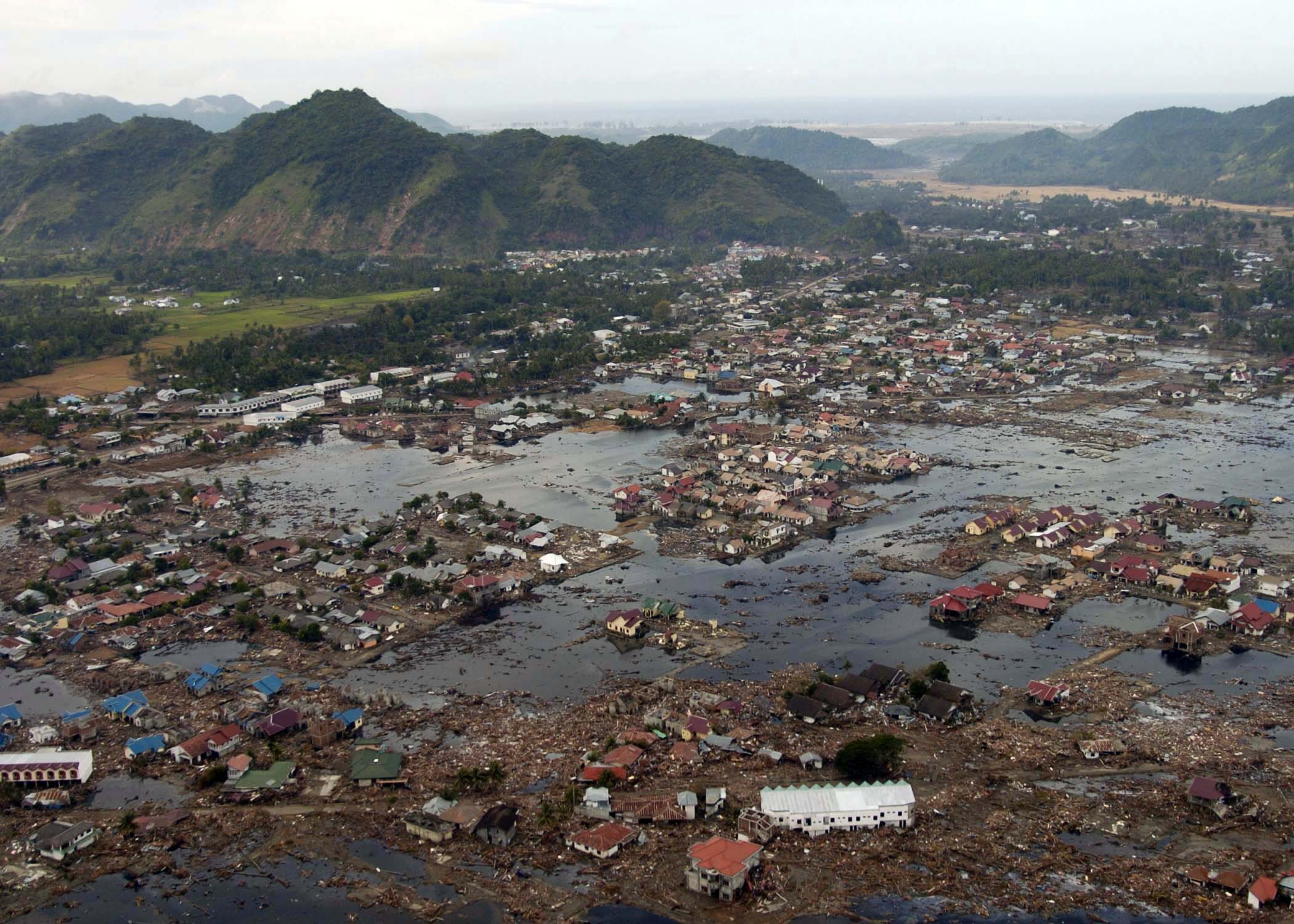
050102-N-9593M-040 Indian Ocean (Jan. 2, 2005) A village near the coast of Sumatra lays in ruin after the Tsunami that struck South East Asia. U.S. Navy photo by Photographer’s Mate 2nd Class Philip A. McDaniel
2004 A 9.1-magnitude earthquake off the coast of the Indonesian island of Sumatra triggered a tsunami that killed around 230,000 people across a dozen countries, reaching as far as East Africa. CGC Munro, deployed as part of Expeditionary Strike Group 5 (ESG-5), along with the other units in the Group, responded. The cutter shuttled more than 80 tons of humanitarian relief supplies from Singapore to USS Bonhomme Richard (LHD-6), also part of ESG-5, for distribution to the victims of the tsunami.

December 27
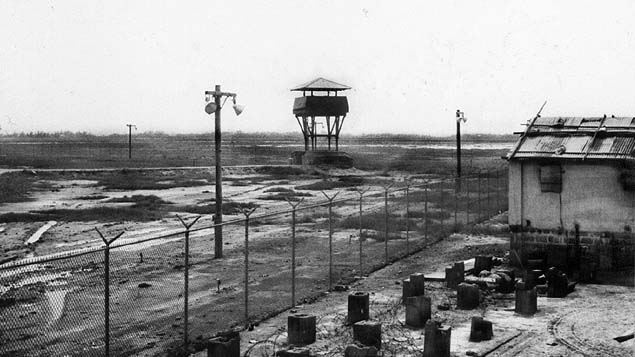
1968 The United States Air Force requested additional LORAN-C coverage in Southeast Asia and by December 27, 1968 the Coast Guard had received authorization to proceed with the project. This led to the construction a LORAN station at Tan My, South Vietnam, that supplemented the other LORAN stations in Southeast Asia first established in 1966 under an operation code-named Tight Reign.

“Coast Guard Cutter Forward and Coast Guard Cutter Bear, homeported in Portsmouth, Virginia, finish an at-sea transfer while underway on a two-month patrol. Coast Guard Cutter Forward returned to homeport on April 10, 2021.” (U.S. Coast Guard photo)
1977 The Coast Guard awarded Tacoma Boat-building Company, Inc., of Tacoma, Washington, a $110,207,245 contract for the detail design and construction of four 270-foot Medium Endurance Cutters.
2012 Watchstanders at Coast Guard Sector Anchorage first received contact from the crew of the tug Aiviq, which was towing MODU Kulluk, a Royal Dutch Shell Company ice-strengthened oil drilling barge, back to its winter port of Seattle. In extremely heavy seas, the tow line parted and Aiviq requested Coast Guard assistance. CGC Alex Haley was diverted from its patrol and, after Aiviq experienced total engine failure, attempted to take both the rig and Aiviq under tow. The line fouled Haley’s port propeller, forcing the cutter to return to Kodiak for repairs. CGCs Hickory and SPAR were dispatched to provide further assistance while Royal Dutch Shell sent three additional tugs to the scene. Coast Guard aircraft rescued the rig’s 18-man crew safely on December 29 and delivered spare engine parts to Aiviq. Despite these efforts Kulluk went aground at Oceans Bay, Alaska, on December 31, 2012. The rig was later refloated and towed to Unalaska. No injuries or pollution incidents were reported and ultimately Kulluk was scrapped.

The AIVIQ, the unfortunate main player in this accident, was selected to tow the KULLUK from Alaska to Seattle. Picture ECO Publicity.
“The Aleutian Low looms over the North Pacific as a climatic warning to mariners navigating the Alaskan waters. This semi-permanent feature is made up of the day-to-day storms that traverse these seas in a seemingly endless procession. With these storms come rain, sleet, snow, the howling winds and the mountainous seas that make the northern Gulf of Alaska and the southern Bering Sea among the most treacherous winter waters in the Northern Hemisphere.”
 Chuck Hill's CG Blog