

Based on the Coast Guard Historian’s timeline, https://www.history.uscg.mil/research/chronology/
With inspiration from Mike Kelso
January 8
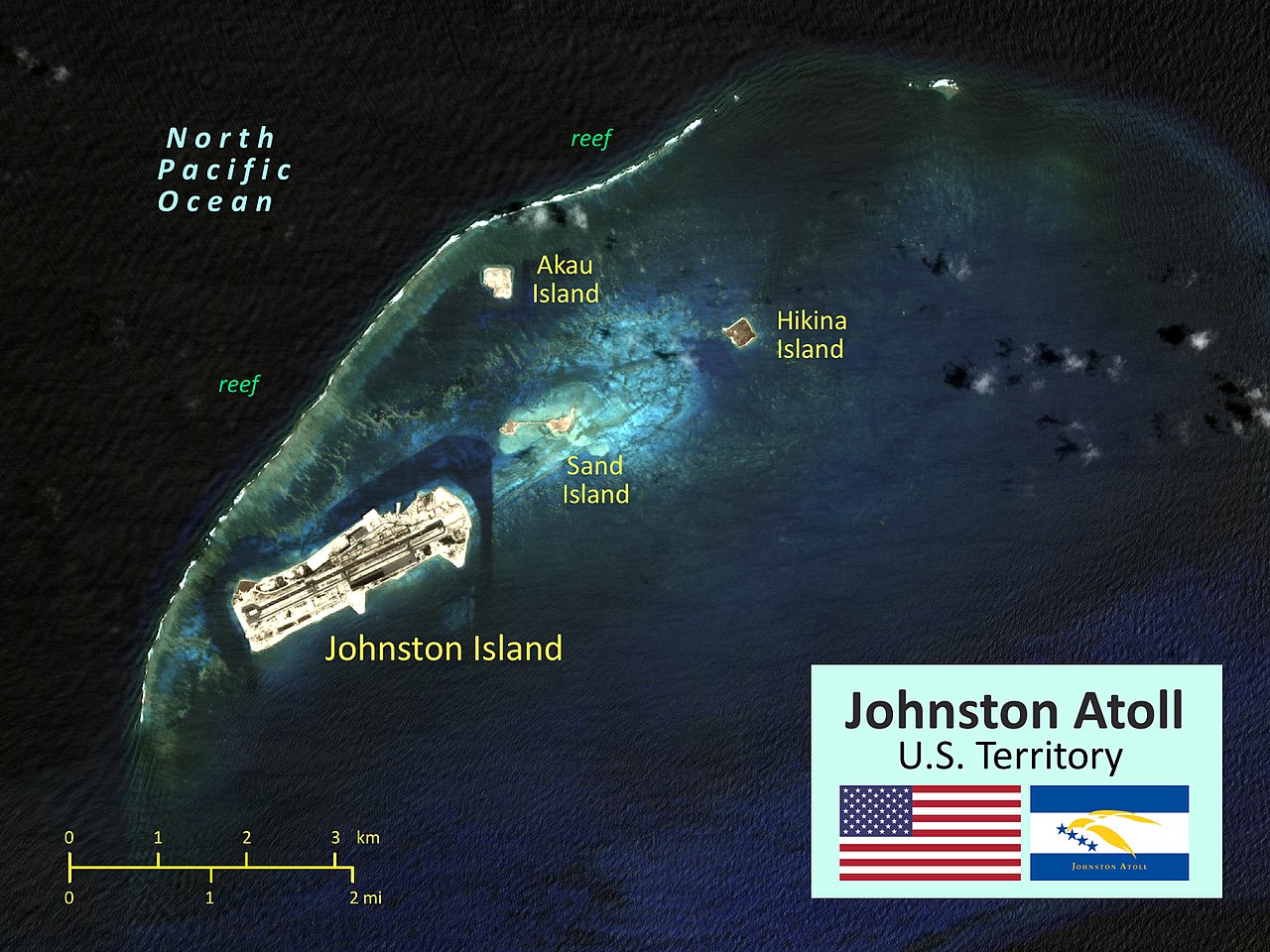
Satellite map of Johnston Atoll (Kalama Atoll), U.S. Territory in the North Pacific Ocean. NASA satellite image modified for mapping. by Wikipedia user Surfsupusa.
1958 The Coast Guard LORAN Station at Johnston Island began transmitting on a 24-hour basis, thus establishing a new LORAN rate in the Central Pacific. The new rate between Johnston Island and French Frigate Shoal gave a higher order of accuracy for fixing positions in the steamship lanes from Oahu, Hawaii, to Midway Island. In the past, this was impossible in some areas along this important shipping route.
(A LORAN station operated from Johnston Atoll until June 30,1992. There was considerable nuclear testing that contaminated Johnston Island and the rest of Johnston Atoll 1958 to 1963 and Bioweapons testing 1965-1968. There was also contamination from Agent Orange storage 1972-1977.)
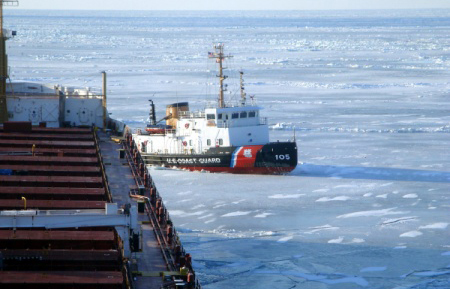
2015 The U.S. and Canadian Coast Guards commenced Operation Coal Shovel seasonal domestic ice breaking operations in the southern part of Lake Huron, Lake St. Clair, the St. Clair and Detroit River systems, Lake Erie, and Lake Ontario. The mission of Operation Coal Shovel was to quickly reopen the Great Lakes maritime transportation system for the movement of commercial vessels that may become beset in the ice. The previous winter of 2013-2014 presented some of the harshest ice conditions ever recorded in the Great Lakes. At one point during March 2014, 92.5 percent of the Great Lakes were covered by ice; this was the highest percentage of ice coverage seen since 1979. Operation Coal Shovel 2013-2014 started in December 2013 and lasted for a total of 128 days.
January 9
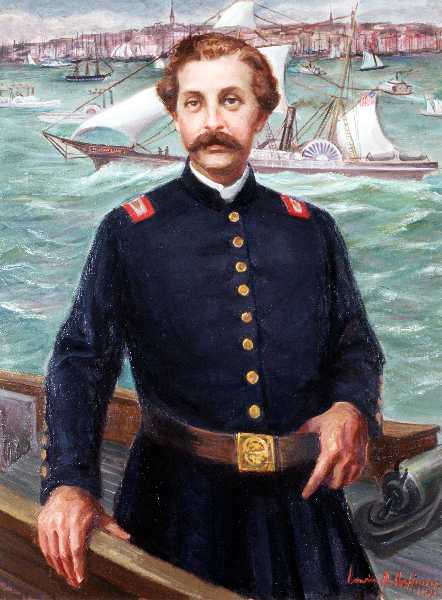
1844 The first published and systematic annual report of the Revenue Marine Bureau was transmitted to Congress on January 9, 1844 by the head of the Bureau, Revenue Captain Alexander Fraser, the service’s first “Commandant.” The report noted that the Revenue Marine consisted of 15 revenue schooners varying in size from 60 to 170 tons. The cutters were stationed at Eastport, Portland, Boston, Newport, New York, Delaware Bay, Baltimore, Norfolk, Charleston, Savannah, Key West, Mobile, New Orleans, and Lake Erie. The report also noted that the number of personnel of the Revenue Marine consisted of 20 captains, 20 first lieutenants, 20 second lieutenants, 20 third lieutenants, 45 petty officers, 7 pilots, 30 stewards, 15 cooks, and 323 seamen.
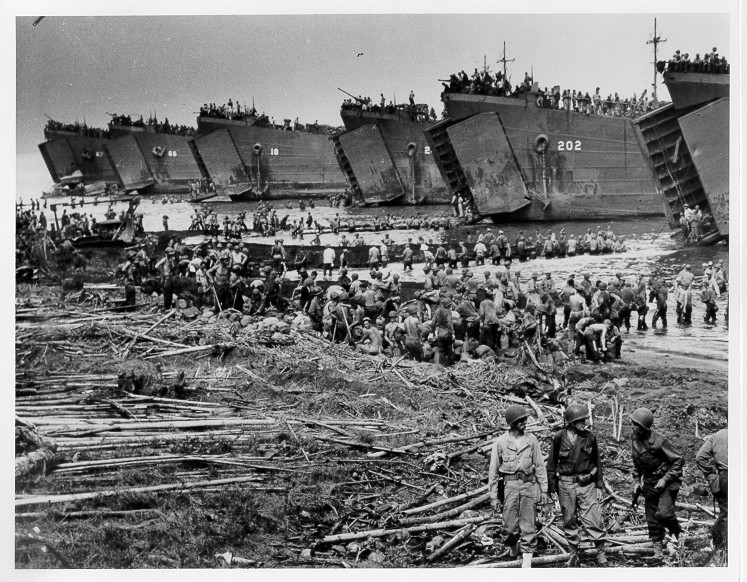
Coast Guard manned LSTs 67, 66.18, 202, and possibly others unload on Leyte. Coast Guard photo.
1945 Coast Guardsmen participated in the liberation of Luzon in the Philippines. Sixteen Coast Guard-manned vessels and seven other Navy vessels with partial Coast Guard crews took part in the offensive.
1952 SS Pennsylvania broadcasted that she had sustained a 14-foot crack in her port side. A tremendous sea was running, and the wind exceeded 55 miles per hour. The master advised that the vessel was foundering and that 45 men were abandoning ship in four lifeboats 665 miles west of Cape Flattery, WA. The Coast Guard used all the facilities at its command in the area, as well as coordinating the use of U.S. Navy, Air Force, and Royal Canadian Air Force facilities in an attempt to locate and rescue the survivors of the vessel. Fifty-one aircraft from all services and 18 surface vessels participated in the search. Some of the debris was located, including one over-turned lifeboat, but no survivors were found.
 Chuck Hill's CG Blog