

Based on the Coast Guard Historian’s timeline, https://www.history.uscg.mil/research/chronology/
With inspiration from Mike Kelso
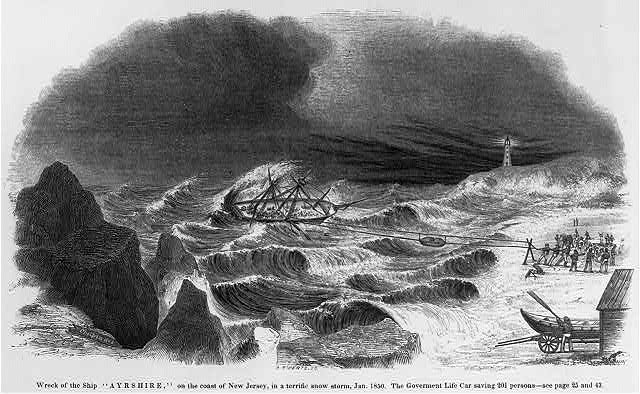
Wreck of Ayrshire Rescue by Life Car
1850 The wreck of Ayrshire on occurred on Squan Beach, New Jersey on this date in 1850. All but one of the 202 persons on board were saved by a life car. This was the first recorded use of a life car in the U.S.
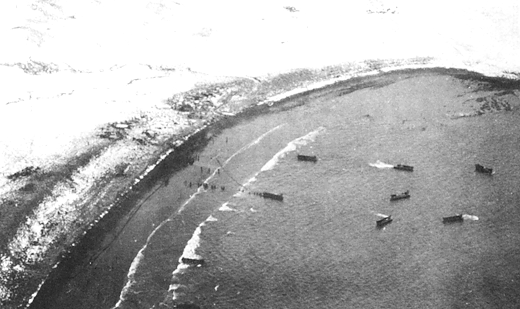
Unopposed US military landing at Constantine Harbor, Amchitka, Aleutians, 12 January 1943.
1943 Coast Guardsmen participated in the landings at Amchitka, Alaska.
“Once on the ground the island was cleared and found to be empty of Japanese military.[6][7] During the first night ashore a “willowaw” (violent squall) smashed many of the landing boats and swept a troop transport aground. On the second day a blizzard wracked the island with snow, sleet, and biting wind. Lasting for nearly two weeks, the blizzard finally subsided enough to reveal to a Japanese scout plane from Kiska the American beachhead on Amchitka.”
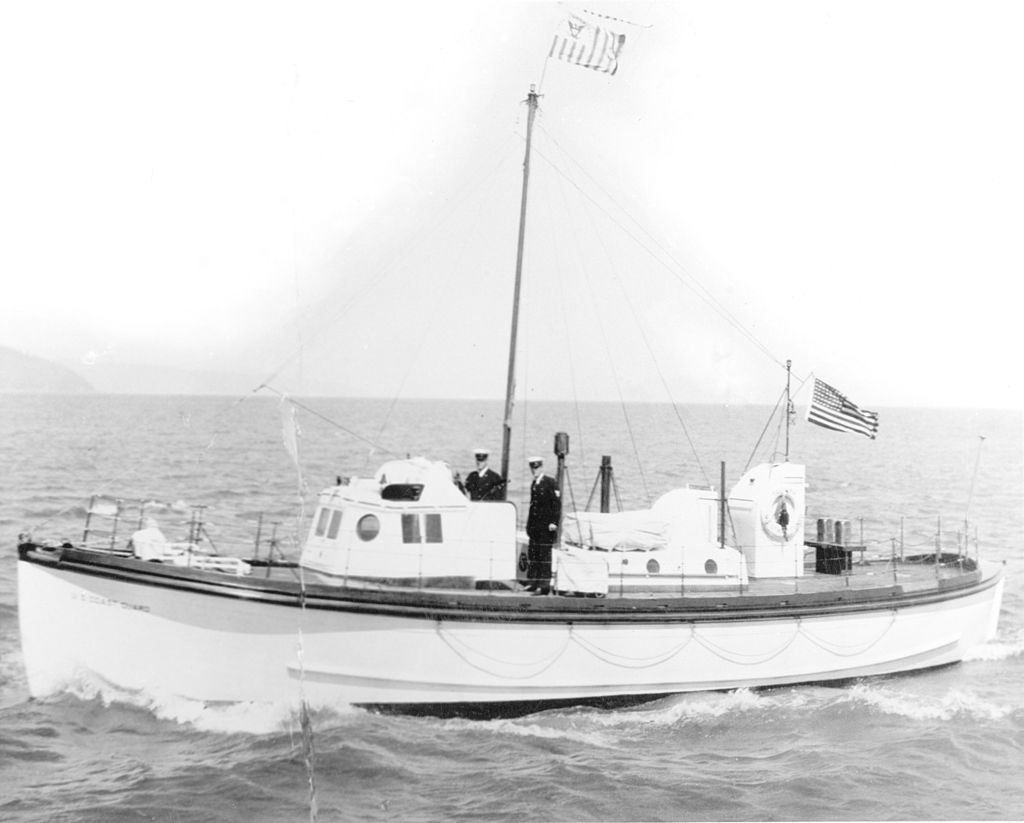
52 foot MLB Triumph (MLB-52301)
1961 Two Coast Guard craft from the Cape Disappointment Lifeboat Station (LBS), CG-40564 and CG-36454, answered a call for assistance from the 38-foot crab boat Mermaid, with two crew on board, which had lost its rudder near the breakers off Peacock Spit. CG-40564 located the Mermaid and took her in tow. Due to adverse sea conditions the crew of CG-40564 requested the assistance of CG-52301 “Triumph,” stationed at Point Adams LBS, which took up the tow upon her arrival on scene. Heavy breakers capsized CG-40564 and battered the CG-36454, but the 36-foot motor lifeboat (MLB) stayed afloat. The crew of CG–36454 then located and rescued the crew of the CG-40564 and made for the Columbia River Lightship. The crew of the CG–36454 managed to deposit safely all on board the lightship before it too foundered. Soon thereafter, a heavy breaker hit Triumph which parted the tow line, set the Mermaid adrift, and capsized the Triumph. The crew of the Mermaid then rescued one of the six crewman on board Triumph. CG-36554 and CG-36535, also from the Point Adams LBS, then arrived on scene and CG–36535 took the Mermaid in tow. Another large breaker hit, snapping the CG-36535’s tow line and sinking the Mermaid. CGC Yocona arrived on scene soon after Coast Guard aircraft UF 2G No. 1273 from Air Station Port Angeles and began searching for survivors. Other CG aircraft, including UF 2G 2131, UF 2G 1240, and HO 4S 1330, arrived and began dropping flares. Foot patrols from the life-boat stations searched the beaches as well and recovered one Coast Guard survivor. Ultimately five Coast Guard crewman, all from MLB CG-52301 Triumph, drowned, as did both of the Mermaid’s crew.
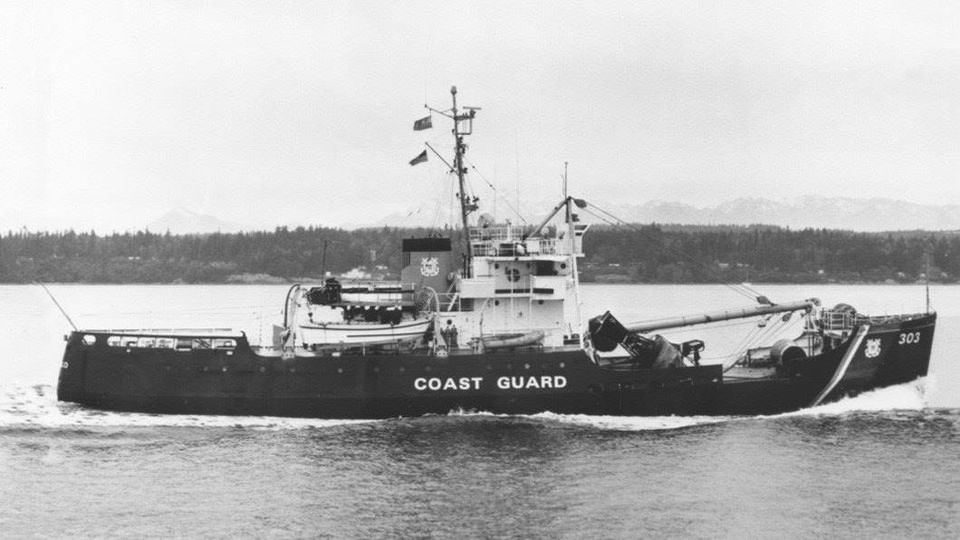
USCGC Tupelo (WLB-303)
1963 CGC Tupelo, four Navy and one Ohio State Highway patrol helicopters, CG-44002D, three ice skiffs and crews from Marblehead Lifeboat Station, Sandusky Light Station, Lorain Lifeboat Station, and a panel truck from Toledo CG Moorings were dispatched to rescue 150 persons reported adrift on an ice floe off Reno Beach, Lake Erie, 10 miles east of Toledo, Ohio during a severe storm that had winds gusting to 40 knots. Four persons, also adrift, reached a breakwater offshore. Tupelo, using ship’s boats, removed four persons from the breakwater and the panel truck crew passed a line to the ice floe and anchored it to the shore. All 150 persons were brought safely ashore without incident. The helicopters searched the surrounding area to ensure that no others were adrift. Commander Ninth Coast Guard District stated that the prompt action of all the commands and agencies involved averted a “serious catastrophe and sent a ‘Well Done’ message to all participants.”
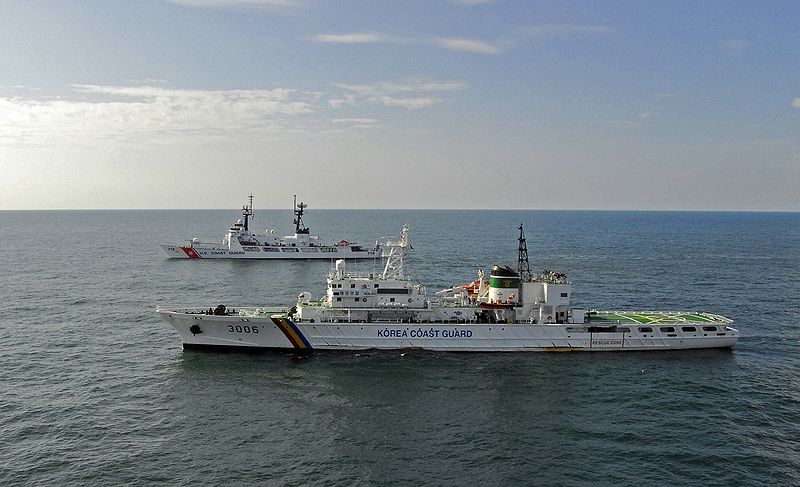
Republic of Korea Coast Guard vessel #3006 in company with U.S. Coast Guard cutter USCGC Boutwell (WHEC-719) during the North Pacific Coast Guard Forum in August 2007. This forum was created to increase international maritime safety and security in the Northern Pacific Ocean and its borders. The Boutwell worked with the Korean coast guard while on their way to Yokosuka, Japan. The Japanese coast guard is one of the six nations involved in the forum.
2009 CGC Boutwell departed Alameda, California, on an around-the-world cruise as part of the USS Boxer Expeditionary Strike Group.
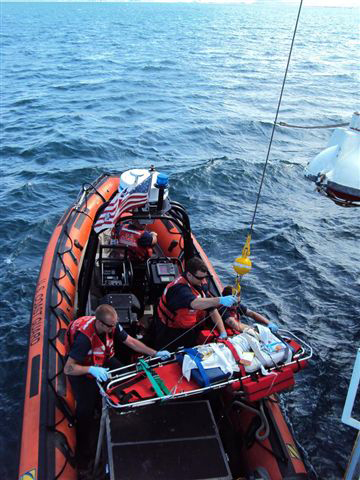
PORT-AU-PRINCE, Haiti – Crews from the Coast Guard Cutters Tahoma and Mohawk evacuate Haitian refugees, some critically injured, from a makeshift clinic at a Haitian Coast Guard Base. The Coast Guard Cutters received additional medical assistance, two doctors and three corpsmen, from the USS Carl Vinson. The additional resources have allowed Coast Guard crews to speed-up the stabilization efforts and movement of those injured. U.S. Coast Guard photo.
2010 A severe earthquake struck Haiti. USCGCs Forward, Mohawk, and Tahoma were the first U.S. assets to arrive on scene at Port au Prince, with Forward arriving the morning of January 13, 2010 and Mohawk arriving in the afternoon. These units provided air traffic control for military aircraft, conducted damage assessments of the port, and ferried supplies and injured people with embarked boats and helicopters. Other Coast Guard assets began arriving soon thereafter to assist in the recovery efforts, including the USCGC Oak and aircraft from AIRSTA Clearwater.
 Chuck Hill's CG Blog