

Based on the Coast Guard Historian’s timeline, https://www.history.uscg.mil/research/chronology/
With inspiration from Mike Kelso
January 21
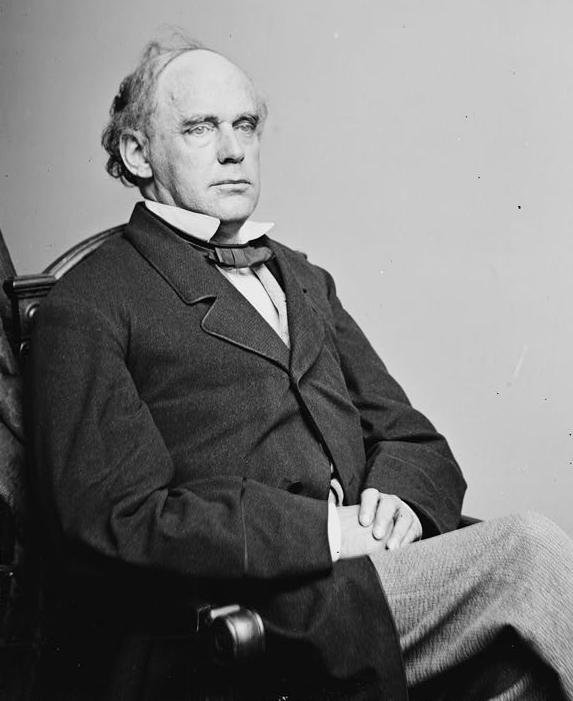
Chase as Lincoln’s Secretary of the Treasury. Library of Congress
1863 Appended to Circular to Collectors, January 21, 1863: “Sir: The question submitted by you [J. Lawrence Boggs, Collector at Perth Amboy, N.J.], whether free colored men are citizens of the United States, and competent therefore to command vessels engaged in our coasting trade, has been submitted to the Attorney General for his opinion, of which the concluding sentence is as follows: ‘And now, upon the whole matter, I give it as my opinion, that the free man of color mentioned in your letter, if born in the United States, is a citizen of the United States, and, if otherwise qualified, is competent, according to acts of Congress, to be a master of a vessel engaged in the coasting trade.’ You will advise the Commander of the Revenue Cutter ‘Tiger’ of this decision of the Attorney General, and direct him to conform to it in all future examinations of vessels engaged in the coasting trade. With great respect, Salmon P. Chase, Secretary.”

Tillamook Rock Lighthouse. An abandoned lighthouse near Tillamook Rock, Oregon, USA.
1881 The light was first shown at Tillamook Lighthouse, located 19 miles south of the Columbia River entrance.

USCGC Point Banks 14 foot Boston Whaler.
1969 CGC Point Banks, while on patrol south of Cam Rahn Bay, received a call for assistance from a nine-man South Vietnamese (ARVN) detachment trapped by two Vietcong platoons. Petty Officers Willis Goff and Larry Villareal took a 14-foot Boston whaler ashore to rescue the ARVN troops. In the face of heavy automatic weapons fire all nine men were evacuated in two trips. For their actions Goff and Villareal were each awarded the Silver Star. The citation stated, “The nine men would have met almost certain death or capture without the assistance of the two Coast Guardsmen.”
1982 “Streamlining” plans were put into place when the Commandant, ADM John B. Hayes, announced in ALCOAST 002/82 his plans to consolidate some operations and streamline others to comply with President Ronald Reagan’s goals of “greater efficiency in federal spending” and in accordance with Congressional appropriation levels. The service eliminated 35 units, including the West Coast Training Center at Alameda, and consolidated all recruit training to TRACEN Cape May.
1984 The tanker Cepheus ran aground near Anchorage, Alaska, on the morning of January 21, 1984, spilling 180,000 gallons of jet fuel into Cook Inlet. MSO Anchorage and the Pacific Strike Team responded to the incident and monitored the offloading of the damaged tanker and cleared its passage out of Alaska. The light jet fuel evaporated with little environmental impact.
 Chuck Hill's CG Blog