

Based on the Coast Guard Historian’s timeline, https://www.history.uscg.mil/research/chronology/
With inspiration from Mike Kelso
February 10
1840 A House resolution was introduced to inquire into transferring the Revenue Marine to the Navy.
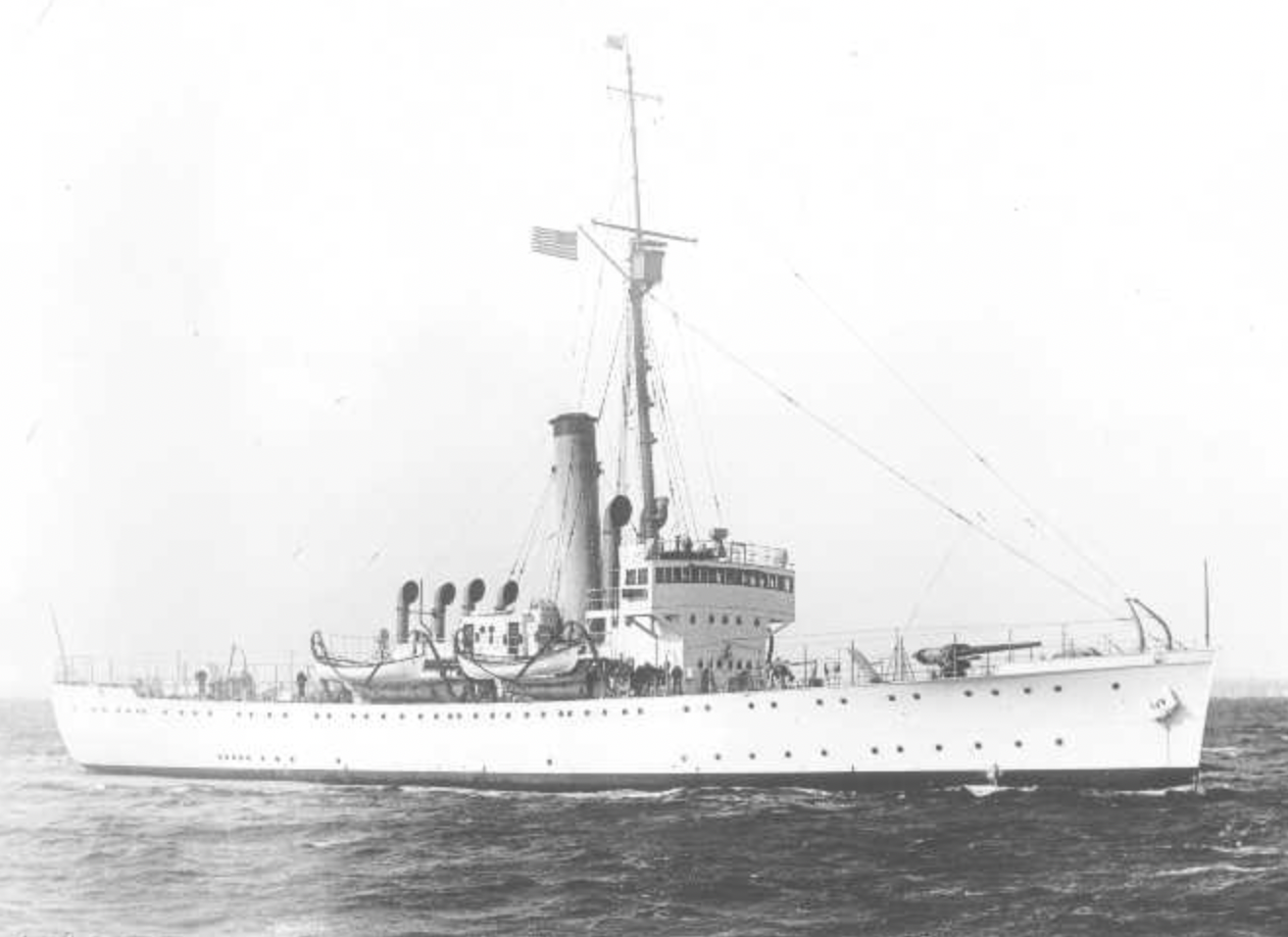
USCGC Tahoe; underway, pre-World War II.
1938 CGC Tahoe departed New Bedford, Massachusetts, to inaugurate the 1938 “International Ice Observation Service” (now referred to as the International Ice Patrol).
As part of the Lend-Lease Act she was transferred to the Royal Navywhere she was renamed HMS Fishguard (Y59) and commissioned on 12 May 1941. In May 1944, the crew of Fishguard boarded U-852 and captured her crew after she was damaged by British aircraft.

USCGC Bibb relieving on Ocean Station. This was photo is post-World War II.
1940 CGCs Bibb and Duane inaugurated the Coast Guard’s participation in the nation’s manned ocean station program when they took their positions on Ocean Stations No. 1 and 2 in the North Atlantic on this date. They also became the first vessels to make radio transmissions as “weather stations.”

Alex Haley, USCG photo
1992 Retired Coast Guard Chief Journalist Alex Haley, internationally noted author, crossed the bar.
1995 The 689-foot tank ship Mormac Star, carrying more than 4.7 million gallons of Jet A fuel and nearly 5.7 million gallons of number 2 diesel fuel, ran aground in Sandy Hook Channel, two miles off the beaches of Sandy Hook, New Jersey, spilling 33,600 gallons. COTP New York responded. Other responding units included Stations New York and Sandy Hook, VTS New York, and the Atlantic Area Strike Team. The spill was successfully contained and the vessel salvaged.
At approximately 1930 on February 10, 1995, the USCG Group New York received a call from the Vessel Traffic Service informing them that the inbound T/V Mormac Star was hard aground next to Sandy Hook Channel between buoys 4 and 6 with her port side extending into the channel. The vessel was carrying 112,000 barrels of Jet A fuel and 135,000 barrels of #2 fuel oil.
Weather on-scene was 35°F, 10 knot west-southwest winds, and three-foot seas.
USCG Marine Inspection Office (MIO) and COTP personnel responded on-scene. The FOSC requested assistance from the USCG Atlantic Strike Team (AST) and two AST members responded by aircraft that had FLIR capabilities. The vessel owner took immediate responsibility and contracted services for booming and open-water recovery. Tank #6 Center (C) (22,000-barrel capacity) was sounded and found to be leaking #2 fuel oil at a rate of approximately 100 barrels per hour. Skimmers operated in the immediate vicinity of the vessel to recover what little product there was on open water. A 90,000-barrel barge was deployed to lighter the tanker enough so that the vessel would refloat naturally. Once tanks #2C and #6C were sufficiently emptied, the vessel refloated and was towed to general anchorage about three miles off Sandy Hook to complete lightering before going to the harbor for repairs. Although hampered by strong currents, divers discovered a two-inch hole in the #6C tank that they patched temporarily. Weather postponed further lightering and the vessel was towed to its original destination in the Arthur Kill to complete lightering.
Federal trustees from the Department of Commerce (DOC), NOAA, and the Department of the Interior (DOI) were briefed on the situation but only the NOAA SSC responded on-scene. Boom was deployed as a precaution at some sensitive areas identified in the Area Contingency Plan, but no shoreline or wildlife impacts were reported.
 Chuck Hill's CG Blog