
Based on the Coast Guard Historian’s timeline, https://www.history.uscg.mil/research/chronology/
With inspiration from Mike Kelso
February 12
1802 Revenue Marine had a total of 38 commissioned officers in service: 9 captains, 10 first mates, 9 second mates and 10 third mates.
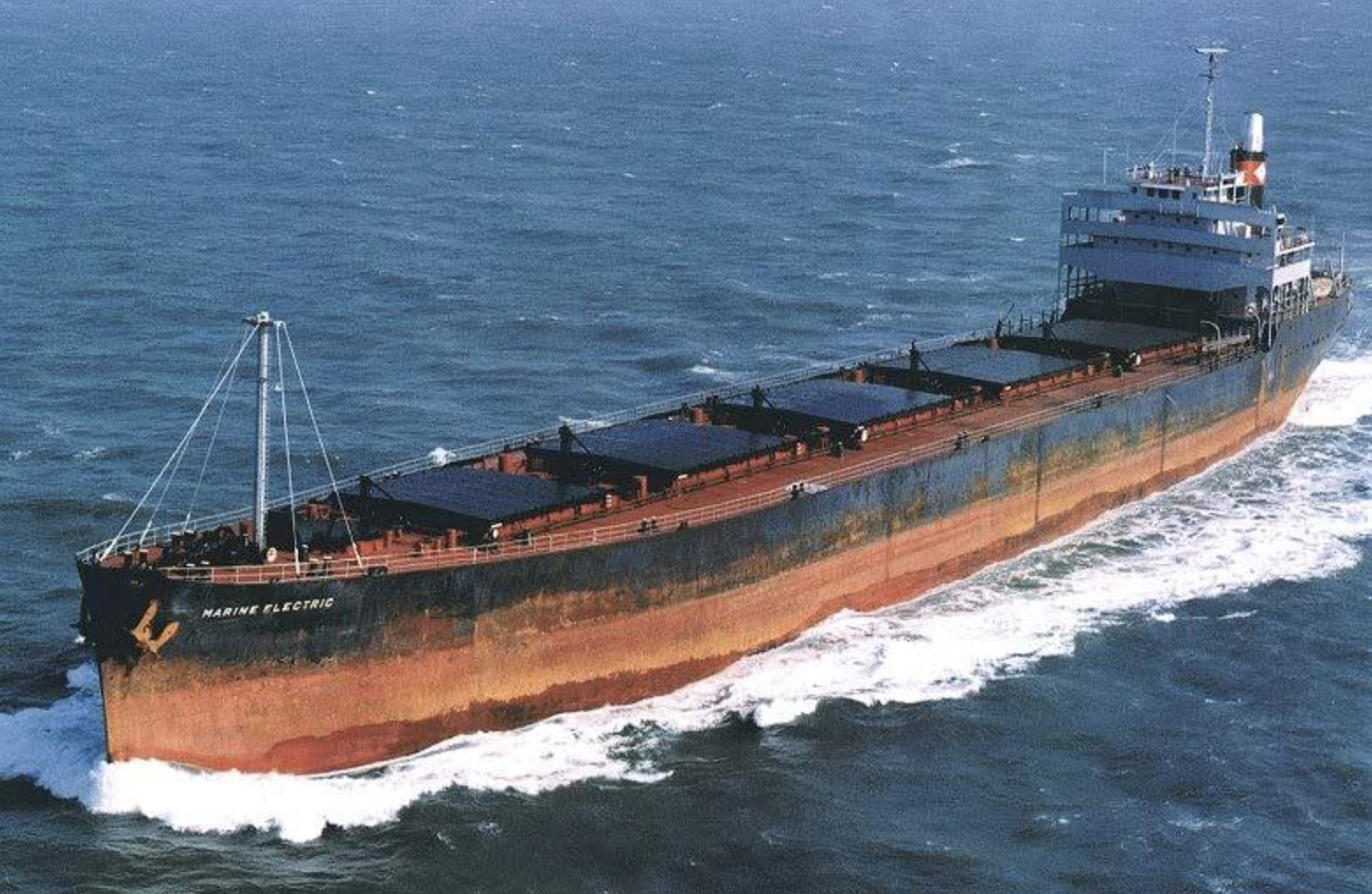
The Marine Electric, a 605-foot cargo ship, as seen underway before its capsizing and sinking on Feb. 12, 1983. The converted WWII-era ship foundered 30 miles off the coast of Virginia and capsized, throwing most of its 34 crew into 37-degree water, where 31 of them drowned or succumbed to hypothermia.
1983 The 605-foot bulk carrier Marine Electric, completed as a tanker in 1944, capsized and sank off Virginia during a gale. Three of the 34 crewmen on board were rescued by Coast Guard and Navy assets.
“Investigations by the Coast Guard, led by Captain Dominic Calicchio and independent examinations of the wreck discovered that the Marine Electric had left port in an un-seaworthy condition, with gaping holes in its deck plating and hatch covers. These had been noted at multiple points by surviving Chief Mate Bob Cusick, who testified that no effort had been made by MTL to rectify the issues.[6] The hatch covers, in particular, posed a problem, since without them the cargo hold could fill with water in the storm and drag the ship under.
Investigators discovered that much of the paperwork supporting MTL’s declarations that the Marine Electric′s seaworthiness was faked. Inspection records showed inspections of the hatch covers during periods when they had in fact been removed from the ship for maintenance; inspections were recorded during periods of time when the ship was not in port. A representative of the hatch covers’ manufacturer warned MTL in 1982 that their condition posed a threat to the ship’s seaworthiness, but inspectors never tested them. Yet the Marine Electric was repeatedly certified as seaworthy.
Part of the problem was that the Coast Guard delegated some of its inspection authority to the American Bureau of Shipping. The ABS is a private, non-profit agency that developed rules, standards and guidelines for ship’s hulls. In the wake of the Marine Electric tragedy, questions were raised about how successfully the ABS was exercising the inspection authority delegated to it, as well as about whether the Coast Guard even had the authority to delegate that role. Also there was a conflict of interest in that the inspection fees paid to the ABS were paid by the ship owners.
In the wake of the Marine Electric sinking, The Philadelphia Inquirer assigned two reporters, Tim Dwyer and Robert Frump, to look into old ship catastrophes. In the series, the writers concluded that government programs designed to strengthen the merchant marine had actually kept unsafe ships afloat. Frump later wrote a book, Until the Sea Shall Free Them, about the sinking.
In the wake of the Marine Board report, and the newspaper’s investigation, the Coast Guard dramatically changed its inspection and oversight procedures. The Coast Guard report noted that the ABS, in particular, “cannot be considered impartial”, and described its failure to notice the critical problems with the ship as negligent. At the same time, the report noted that “the inexperience of the inspectors who went aboard the Marine Electric, and their failure to recognize the safety hazards…raises doubt about the capabilities of the Coast Guard inspectors to enforce the laws and regulations in a satisfactory manner.”
While the Coast Guard commandant did not accept all of the recommendations of the Marine Board report, inspections tightened and 90 old World War II relics still functioning 40 years after the war were sent to scrap yards.(“Disasters at Sea” S01E02 Deadly Neglect 2019). In 2003, Coast Guard Captain Dominic Calicchio was posthumously awarded The Plimsoll Award by Professional Mariner magazine in part because of his role as a member of the Marine Board of Investigation.
Additionally, the Coast Guard required that survival suits be required on all winter North Atlantic runs. Later, as a direct result of the casualties on the Marine Electric, Congress pushed for and the Coast Guard eventually established the now famous Coast Guard Rescue Swimmer program.
1986 Rains began in northern California that lasted for a week, causing severe flooding. Coast Guard units participated in rescue and relief operations.

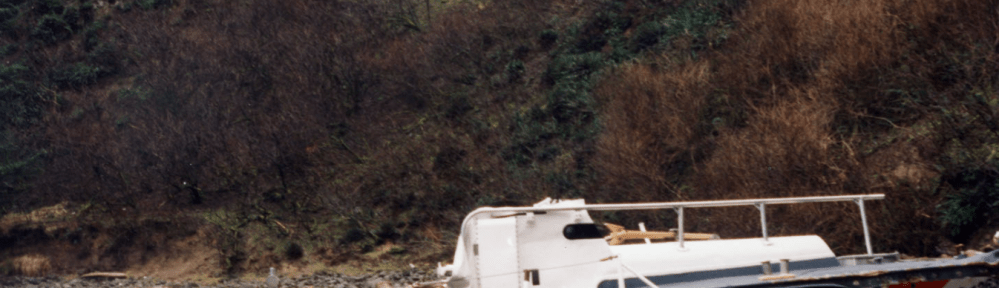
CG 44363 in its final resting place on James Island. U.S. Coast Guard photo
1997 Three of the four crewmembers of MLB-44363 out of the Quillayute River Motor Lifeboat Station were lost in the line of duty when they responded to a distress call from the sailing vessel Gale Runner. They were BM2 David A. Bosley, MK3 Matthew E. Schlimme, and SN Clinton P. Miniken. Staffing levels and high personnel turnover contributed to the incident. A summary of findings is here. Two items stand out.
No member of the boat crew was wearing helmets. Additionally, only SA Wingo and SN Miniken definitively wore their heavy weather belts. SA Wingo assumed that MK3 Schlimme wore his and was clipped in as well, but he was unsure if BM2 Bosley wore his belt.
The autopsy reports for BM2 Bosley, MK3 Schlimme, and SN Miniken all stated that the cause of death was blunt force injuries to the head.
 Chuck Hill's CG Blog