

Based on the Coast Guard Historian’s timeline, https://www.history.uscg.mil/research/chronology/
With inspiration from Mike Kelso
February 13

Douglas R5D-3; “OFF TO HEAT AN ICEBERG: A 1,000-pound thermite bomb enclosing a cluster of small bomblets, each capable of burning at a temperature of 4,300 degrees Fahrenheit, rides under the wing of a Coast Guard UF-2G amphibian plane toward an iceberg target in the foggy Grand Banks region of Newfoundland. The temperature of one bomblet equals half the sun’s surface temperature. This bomb was one of twenty cluster bomb of thermite and petroleum types air-dropped on selected icebergs during heat destruction tests made by the International Ice Patrol force in June, at the height of the 1959 heavy ice season. Above the bomb carrier is a large passenger type Coast Guard R5D plane, one of three used on regular ice observation flights out of Argentia, Nfld. The more modern R5Ds this year replaced old World War II B-17 bomber type planer with plexiglass noses where ice observation instruments and carries a crew of about seven. Ice is observed from many windows. Averaging 6 to 8 hour ice observation flights, the R5D patrols an area of about 14,000 square miles in the Grand Banks region. The R5D plane here wears one of the new paint schemes currently being tested for easy air visibility by the U.S. Coast Guard on its various planes. In place of the dull silver gray and orange trim formerly used, the new dress is made of glowing fluorescent colors–orange nose, wing tips, tail and body strip with black edgings, and main body in brilliant white.”; Photo No. 5854; 17 July 1959; photographer unknown.
1960 A Coast Guard R5D aircraft from Honolulu dropped a pump to the Japanese training vessel Toyama Maru, which had radioed that it was taking on water and was in danger of sinking off Palmyra Island. The pump controlled flooding until the arrival of CGC Bering Strait, whose crew made repairs to the Japanese vessel, using 2,500 pounds of sand and cement parachuted by a Honolulu-based SC-130B plane.
1963 The Bureau of Customs requested Coast Guard assistance to search the M/V Holland Diepe in Tacoma, Washington, for narcotics. Narcotics agents had previously apprehended three Chinese crew members of the vessel in a Seattle hotel. COTP Seattle provided a search party of two officers and eight enlisted men, who were joined by 10 Customs agents. Two-man teams searched assigned areas of the vessel. A first search of seven hours uncovered a considerable quantity of raw opium. The search party then departed, as if the search were ended, but 45 minutes later they boarded the vessel once more, lined up the crew in the mess hall, and searched them and the ship again. This search, lasting three hours, uncovered more opium, both raw and prepared for smoking, a small quantity of heroin, and several opium pipes. A total of six pounds of opium was seized. WPB 82336 conducted waterside surveillance during the search.
1969 The National Transportation Safety Board issued its “Study of Recreational Boat Accidents, Boating Safety Programs, and Preventive Recommendations”.
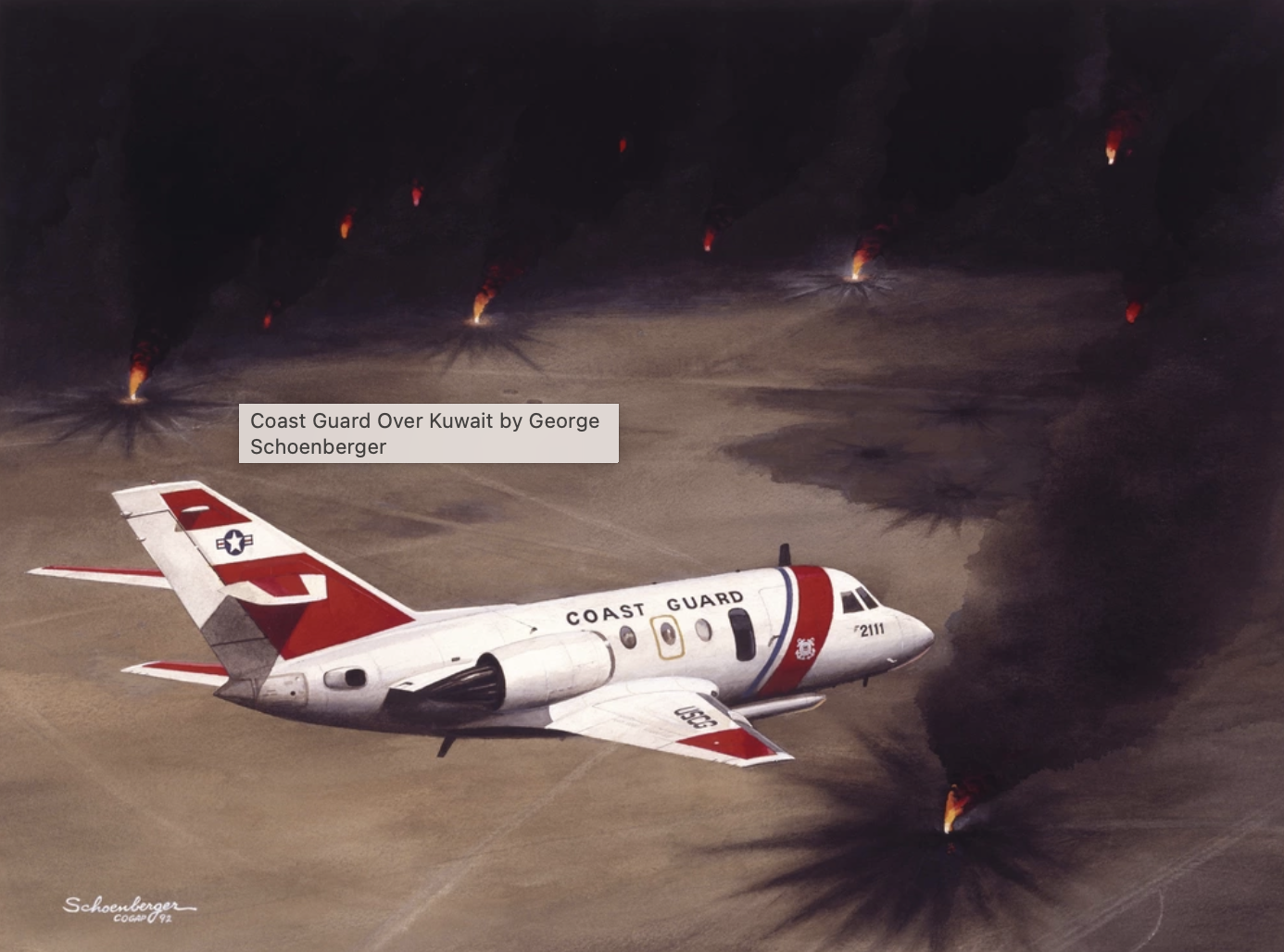
In response to the Iraqi action of firing oil wells and pumping stations in Kuwait, two HU-25A Falcon jets from Air Station Cape Cod, equipped with Aireye technology, which precisely locates and records oil as it floats on water], departed for Saudi Arabia. The Falcons mapped over 40,000 square miles in theatre and located every drop of oil on the water. This was used to produce a daily updated surface analysis of the location, condition and drift projections of the oil. The Aviation Detachment was deployed for 84 days, flew 427 flight hours and maintained an aircraft readiness rate of over 96 percent.
1991 During Operation Desert Storm, two HU-25A Falcon jets from Air Station Cape Cod, equipped with AIREYE technology, departed for Saudi Arabia for service with the Inter-agency oil spill assessment team. They were accompanied in flight by two C-130 aircraft from Air Station Clearwater carrying spare parts and deployment packages.
 Chuck Hill's CG Blog