
Based on the Coast Guard Historian’s timeline, https://www.history.uscg.mil/research/chronology/
With inspiration from Mike Kelso
February 25
1799 Congress passed “An act respecting quarantines and health laws”, superseding the Act passed on May 27, 1796 (1 Stat. L., 619). The revenue cutters were again authorized to enforce quarantine laws.

USRC Eagle under full sail, in a painting by Patrick O’Brien. She was a topsail schooner, standard in revenue cutters of her period;
1799 Congress passed “An Act for the augmentation of the Navy” that authorized President John Adams to place the revenue cutters in the naval establishment. This was done in response to the Quasi-War with France and it had the effect of “redefining the maritime character of the Revenue Cutter Service and making it a service with the dual character of a military establishment and of a maritime service” (Irving King, George Washington’s Coast Guard, p. 152).
1825 Congress empowered the Revenue Marine to enforce state quarantine laws.
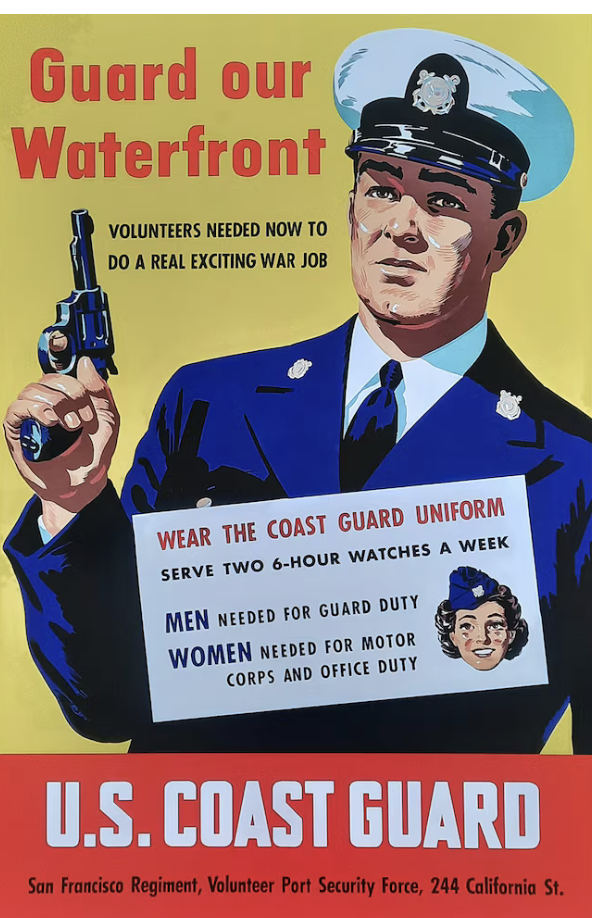
World War II-era Temporary Reserve Recruiting Poster. Photo by Capt. Bob Desh, U.S. Coast Guard retired.
1942 Wartime port security was delegated to the Coast Guard by Executive Order 9074.
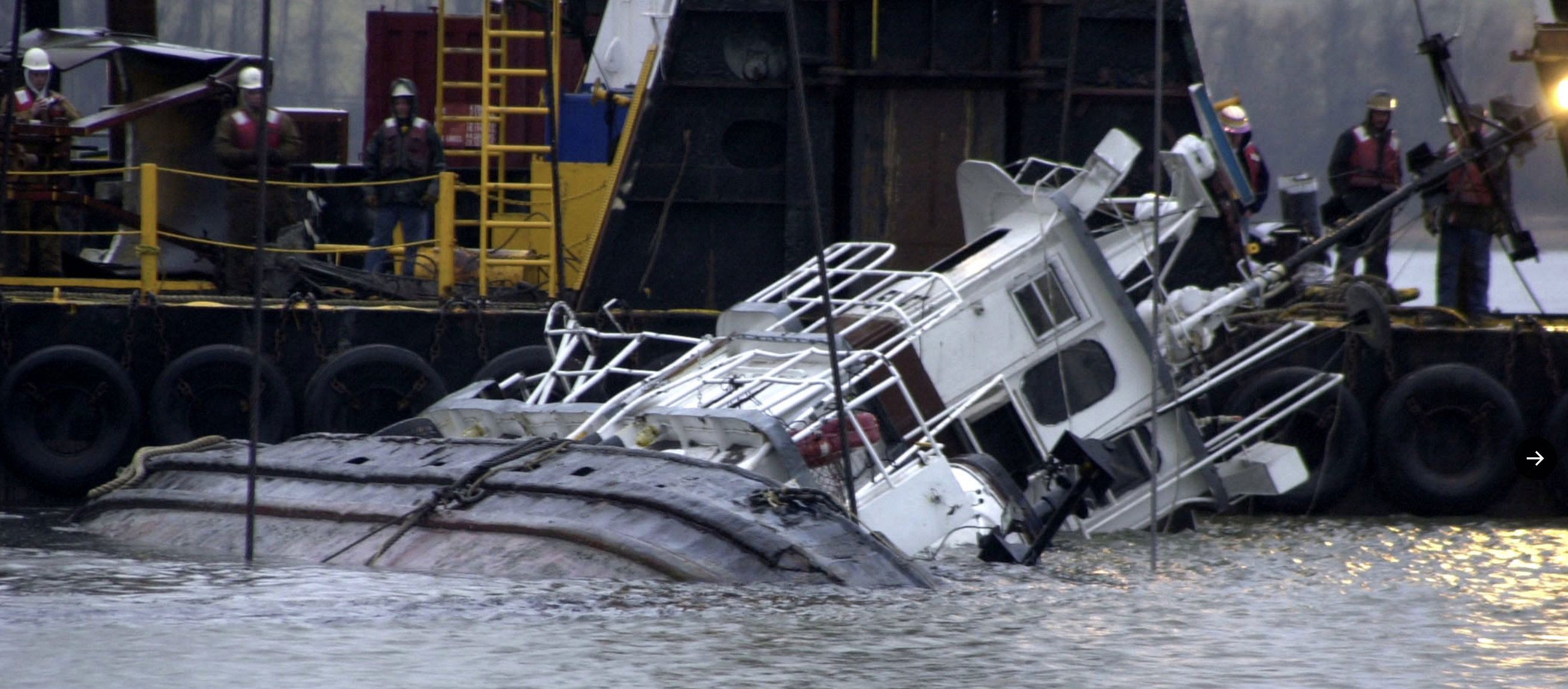
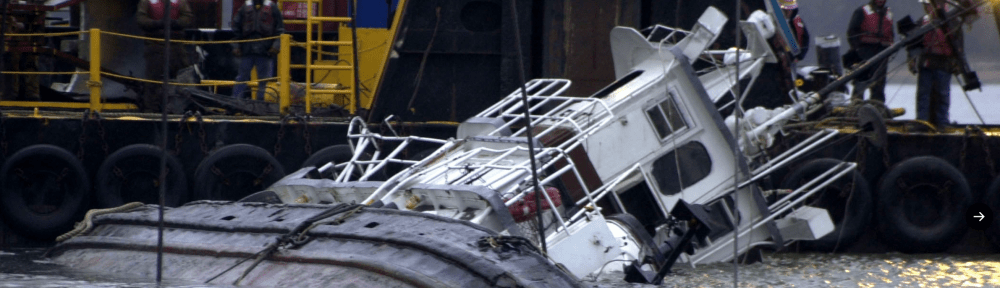
2001 The tugboat Swift sank after colliding with the freighter A.V. Kastner on the Elk River in the upper Chesapeake Bay. USCG units from New Jersey and Philadelphia worked with state police and local rescue agencies to rescue three survivors.
2001 The tugboat Swift sank after colliding with the freighter A.V. Kastner on the Elk River in the upper Chesapeake Bay. Coast Guard units from New Jersey and Philadelphia worked with state police and local rescue agencies to rescue three survivors. Four crewmen perished. The Coast Guard also conducted the marine casualty investigation.
 Chuck Hill's CG Blog