

Based on the Coast Guard Historian’s timeline, https://www.history.uscg.mil/research/chronology/
With inspiration from Mike Kelso
March 21
1791 Hopley Yeaton of New Hampshire was commissioned as “Master of a Cutter in the Service of the United States for the Protection of the Revenue.” He is often listed as the first commissioned seagoing officer of the United States. His commission was signed by George Washington and attested to by Thomas Jefferson. However, seven other commissions for officers of the Revenue Cutter Service were signed on the same date. Yeaton’s claim to being first is tied to the fact that he is at the top of the list of officers. He commanded the Revenue cutter Scammel, stationed in Portsmouth, New Hampshire and the list is based on the cutters’ homeports from north to south. Thus, Yeaton was first on the list, having command of the cutter in the northernmost port.
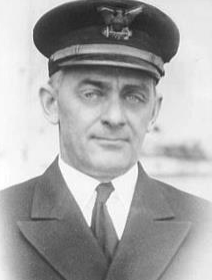
Elmer Stone, Coast Guard Aviator #1
1916 On this date Third Lieutenant Elmer Stone, USCG became the first Coast Guard officer ordered to flight training. He reported on April 1, 1916 to Pensacola Naval Aviation Training School.
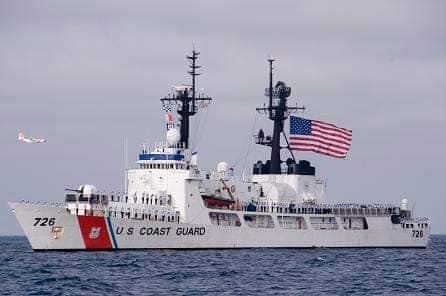
2013 CGC Midgett, returned to its homeport of Seattle, Washington, after its 75-day counter-narcotics patrol in the eastern Pacific Ocean. While on patrol in the eastern Pacific in late February, the crew successfully interdicted a 30-foot fishing vessel that was carrying 1,100 pounds of cocaine hidden inside the vessel. Midgett’s boarding team confiscated the drugs and detained the suspected smugglers. Midgett’s crew also visited Bahia Malaga, Colombia, for a partnership exercise with the Colombian Navy. The ship hosted the Colombian Navy’s chief of staff, pacific operations commander, and several other senior personnel for a tour of the ship. After departing Seattle in early January 2013, Midgett and its 170-member crew first underwent a three-week drill in San Diego that included more than 300 training exercises in navigation, medical response, damage control, engineering, combat systems, seamanship, and anti-terrorism force protection. The crew’s successful performance earned them several battle readiness awards as well as certification by shipboard training teams.

U.S. Coast Guard Cutter Polar Star (WAGB 10) sits moored at the U.S. Antarctic Program’s NSF McMurdo Station in Antarctica during Operation Deep Freeze, Feb. 16, 2025. Operation Deep Freeze is one of many operations in the Indo-Pacific in which the U.S. military promotes security and stability across the region. (U.S. Coast Guard photo by Petty Officer 2nd Class Briana Carter)
2014 CGC Polar Star returned to its homeport of Seattle, Washington, following a 108-day deployment in support of Operation Deep Freeze 2014. Polar Star originally departed Seattle on December 3, 2013 and made port calls in Honolulu, Sydney, Australia, McMurdo Station, Antarctica, and Tahiti, French Polynesia. Having completed a reactivation that began four years ago, this deployment marked the first time in six years that a U.S. icebreaker provided support to Operation Deep Freeze. In January 2014, Polar Star departed Sydney to assist in the rescue effort of two ships, the Russian vessel Akademik Shokalsiky and the Chinese vessel Xue Lon. Both of these vessels were beset in 15 feet of sea ice near Commonwealth Bay, Antarctica. While Polar Star was en route to assist, the shifting ice conditions allowed the two ships to break free from the ice prior to the Coast Guard icebreaker’s arrival. In Antarctica, Polar Star broke a navigable shipping lane through 12 miles of ice in McMurdo Sound, encountering ice up to 10 feet in thickness. The shipping channel was used by the tanker ship Maersk Peary to deliver approximately three-and-a-half million gallons of fuel to McMurdo. The channel was also used by the cargo ship Maersk Illinois to deliver more than 500 containers of supplies to operate McMurdo and South Pole stations for the next 12 months. The crew of the Polar Star also delivered and deployed nearly one mile of fuel hose to Marble Point, an air station 20 miles west of McMurdo. In February 2014, prior to departing Antarctica, Polar Star hosted Coast Guard VADM Peter Neffenger, then-Deputy Commandant for Operations, who visited Antarctica to observe the operations of the U.S. Antarctic Program.
 Chuck Hill's CG Blog