

Based on the Coast Guard Historian’s timeline, https://www.history.uscg.mil/research/chronology/
With inspiration from Mike Kelso
April 7
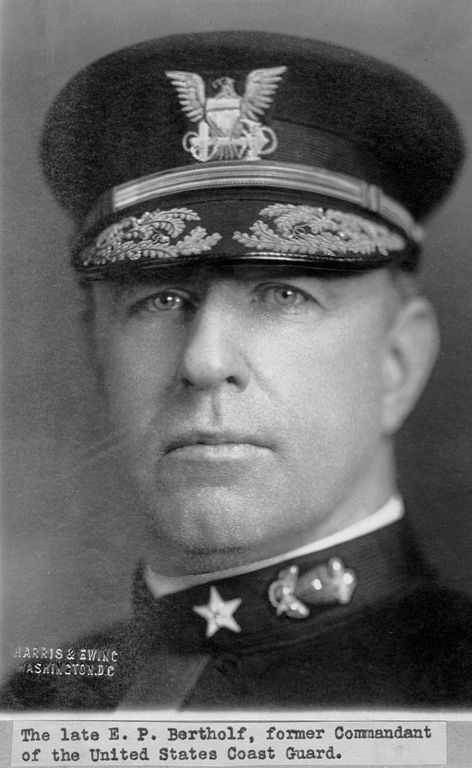
Photograph of Ellsworth P. Bertholf, Commandant of the U.S. Revenue Cutter Service from 1911 to 1915 and Commandant of the U.S. Coast Guard from 1915 to 1919. Coast Guard photo.
1866 The first Commandant of the U.S. Coast Guard, Ellsworth P. Bertholf, was born in New York City. He entered the Revenue Cutter Service as a cadet on September 14, 1885 and graduated from the Revenue Cutter School of Instruction with the Class of 1887.
1938 Congress passed HR 8982, an amendment to the Alien Fishing Act (50 Stat. 639). The amendment clarified the earlier laws on salmon fishing in Alaskan waters by limiting commercial salmon fishing in the vicinity of Bristol Bay, Alaska, to U.S. citizens only. The act was enforced by the Coast Guard.

HMT Bedfordshire one of over 20 Royal Navy trawlers dispatched to the US to escort coastal convoys, sunk by the German submarine U-558 on 11 May 1942 off the coast of Ocracoke Island in the Outer Banks of North Carolina, with the loss of all hands.
1942 A Coast Guard aircraft directed a Royal Navy trawler to a life boat with 24 survivors off the coast of North Carolina.
1952 The breakup of ice in the Missouri River and its tributaries at Bismarck, North Dakota, and above, and on the Big Sioux, created the worst flooding conditions in that area in thirty years. U.S. Coast Guard personnel rendered assistance, utilizing small boats, mobile radio stations, automotive equipment, helicopters, and fixed wing aircraft. The Coast Guard evacuated stranded persons, transported critical relief supplies, evacuated livestock from low ground, transported personnel engaged in levee construction, and generally assisted the Red Cross, local, state, civil, and military authorities.
 Chuck Hill's CG Blog