

Based on the Coast Guard Historian’s timeline, https://www.history.uscg.mil/research/chronology/
With inspiration from Mike Kelso
April 10
1938 The Coast Guard established a “Flood Relief Force” to assist the Red Cross and the victims of flooding of the Alabama and Tombigbee Rivers. The “Force” consisted of 26 motorboats, one communication truck, two portable radio sets, one Grumman JF-2 amphibian aircraft, and 60 enlisted men, all under the command of LCDR Roy Raney and based at Selma, Alabama. On April 10 and 11, the Floor Relief Force was “engaged in removing persons from dangerous positions and in transporting Government and Red Cross officials throughout the flood area.”
2014 CGC Seneca returned to its homeport in Boston after completing a 53-day deployment which included two weeks of training at Joint Expeditionary Base Little Creek, Virginia, and five weeks of fisheries patrols off the coasts of New Jersey, Virginia, and North Carolina. Seneca patrolled the Mid-Atlantic Ocean in support of the Coast Guard Fifth District’s Operation Ocean Hunter. They boarded 26 fishing vessels from March 2 until April 5. During the patrol, Seneca ensured the commercial fishing fleet was in compliance with all federal fisheries regulations and issued two fisheries violations. In addition to law enforcement, Seneca conducted a workup with the Coast Guard Maritime Security Response Team and other deployable specialized forces units. Using Seneca’s flight deck, MSRT members completed 76 vertical insertions and 44 hoists. They also completed 210 climbs where they boarded the cutter from a tactical boat via a caving ladder. Seneca also completed several helicopter in-flight refuels and vertical replenishments with Coast Guard Air Station Elizabeth City, North Carolina.
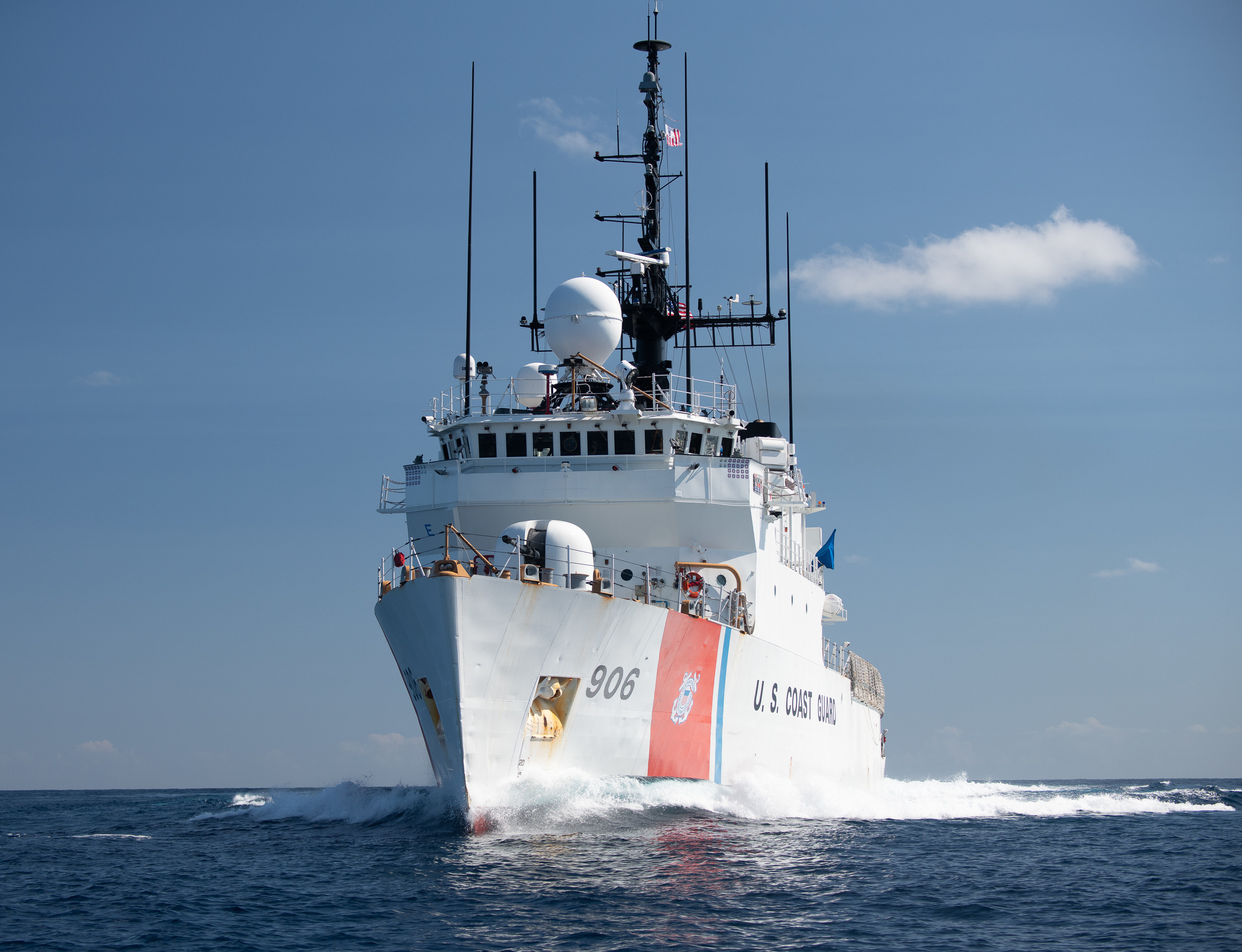
The Coast Guard Cutter Seneca (WMEC-906) crew underway on the Eastern Pacific Ocean, Sept. 22, 2018. The cutter Seneca is the sixth of thirteen 270′ Famous Class medium endurance cutters in the United States Coast Guard fleet. Home ported in Boston’s historic North End, SENECA moors within a short walk of such landmarks as the Old North Church, Faneuil Hall, USS CONSTITUTION, and TD Garden – Home of the Celtics and Bruins. (Coast Guard Photo)
2015 CGC Seneca returned to its homeport in Boston after a 64-day deployment. The crew of Seneca completed Tailored Ships Training Availability (TSTA), served as a primary Search and Rescue Response asset along the eastern seaboard, and conducted fisheries enforcement boardings from South Carolina to Maine. During the patrol, the crew responded to the Motor Vessel Grey Shark, approximately 175 nautical miles off the coast of Cape May, New Jersey which was reported adrift and on fire. Seneca arrived on scene and escorted the vessel until the Eileen Mcallister took the vessel in tow to New York. The cutter’s crew also participated in an international, multi-agency search and rescue exercise in Rhode Island Sound, conducting more than 45 small boat and helicopter hoist evolutions with partners from five Coast Guard units, the New York Air National Guard, and Canadian Forces. For the final mission of the patrol, Seneca hosted Maine Marine Patrol officers for a 24-hour fisheries enforcement operation, targeting lobster fishing boats off the coast of Rockland, Maine.
April 11
1917 With the outbreak of World War I President Woodrow Wilson issued an executive order transferring 30 lighthouse tenders to the War Department. All were subsequently assigned to the Navy Department and 15 lighthouse tenders, four lightships, and 21 light stations also were transferred to the Navy Department. One more tender was transferred on January 31, 1918 making a total of 50 vessels and 1,132 persons. The War Department used those assigned in laying submarine defense nets during the war and in removing these defenses after the war. Other duties performed by these vessels were placing practice targets, buoys to mark wrecks of torpedoed vessels, and other marks for military purposes, as well as being employed on patrols and special duty assignments.
1938 Coast Guard Patrol Boat CG-240, part of the Coast Guard’s Flood Relief Force established to assist flood victims in Alabama, evacuated 102 persons from the vicinity of Hohn Miller’s Plantation, below Camden, Alabama.
1952 Immediately following the crash of a commercial overseas transport aircraft off the San Juan Harbor, Coast Guard forces coordinated with those of the U.S. Air Force and U.S. Navy to rescue 17 of the 69 persons on board.

An aerial port view of the U.S. Coast Guard high endurance cutter RUSH (WHEC-723) underway during Exercise Brim Frost ’85.
1971 Coast Guard cutters Rush and Morgenthau, assigned to Coast Guard Squadron Three in Vietnam, destroy an enemy trawler.

The Former USCGC Morgenthau, now in Vvietnamese service

USCGC Wrangell WPB-1322 and USS Ronald Reagan CVN-76
2003 CGC Wrangell and the USS Firebolt, with embarked Coast Guard Law Enforcement Detachment 406, escorted the first commercially transported humanitarian aid shipment into the Iraqi port of Umm Qasr. The Motor Vessel Manar, owned by Manar Marine Services of the United Arab Emirates, delivered almost 700 tons of humanitarian aid including food, water, first aid, and transport vehicles. This aid shipment was supplied and coordinated by the UAE Red Crescent Society. This was the fourth aid shipment to arrive in Umm Qasr after the launch of Operation Iraqi Freedom.
April 12
1808 Subsistence for Army officers was fixed at 20 cents per ration and later that year it was applied to all officers of the revenue cutters.
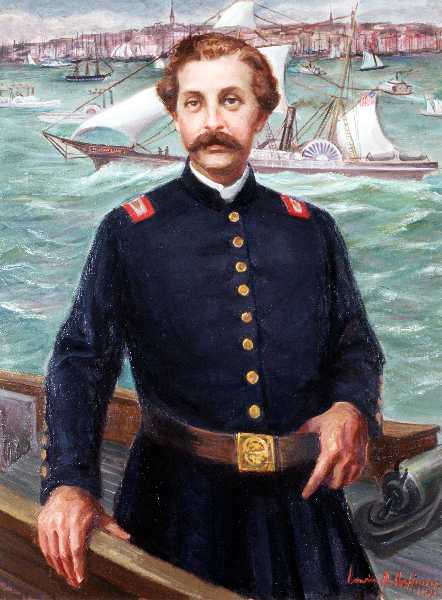
1843 Captain Alexander V. Fraser, Revenue Cutter Service, was appointed Chief of the newly created Revenue Marine Bureau of Treasury. He therefore became, in effect, the service’s first “Commandant”.

Plans of USRC Harriet Lane.
1861 The cutter Harriet Lane fired the first shot from a naval vessel in the Civil War. The cutter fired across the bow of the merchant vessel Nashville when the latter attempted to enter Charleston Harbor without displaying the national flag.
1900 An Act of Congress (31 Stat. L., 77, 80) extended the jurisdiction of the Lighthouse Service to the noncontiguous territory of Puerto Rico and adjacent American waters.
1902 Congress authorized the retirement of officers at 3/4 pay for incapacity. Congress also made all promotions subject to examinations (mental and physical). Additionally, commissioned officers of the Revenue Cutter Service were granted the same pay and allowances “except forage” as officers of corresponding rank in the Army, including longevity pay.

Lt. (j.g.) Beverly Kelley, first woman to command a U.S. military vessel, on the bridge of the 95-foot cutter Cape Newagen. (U.S. Coast Guard photo)
1979 LTJG Beverly Kelley assumed command of CGC Cape Newagen, thereby becoming the first woman to command a U.S. warship.
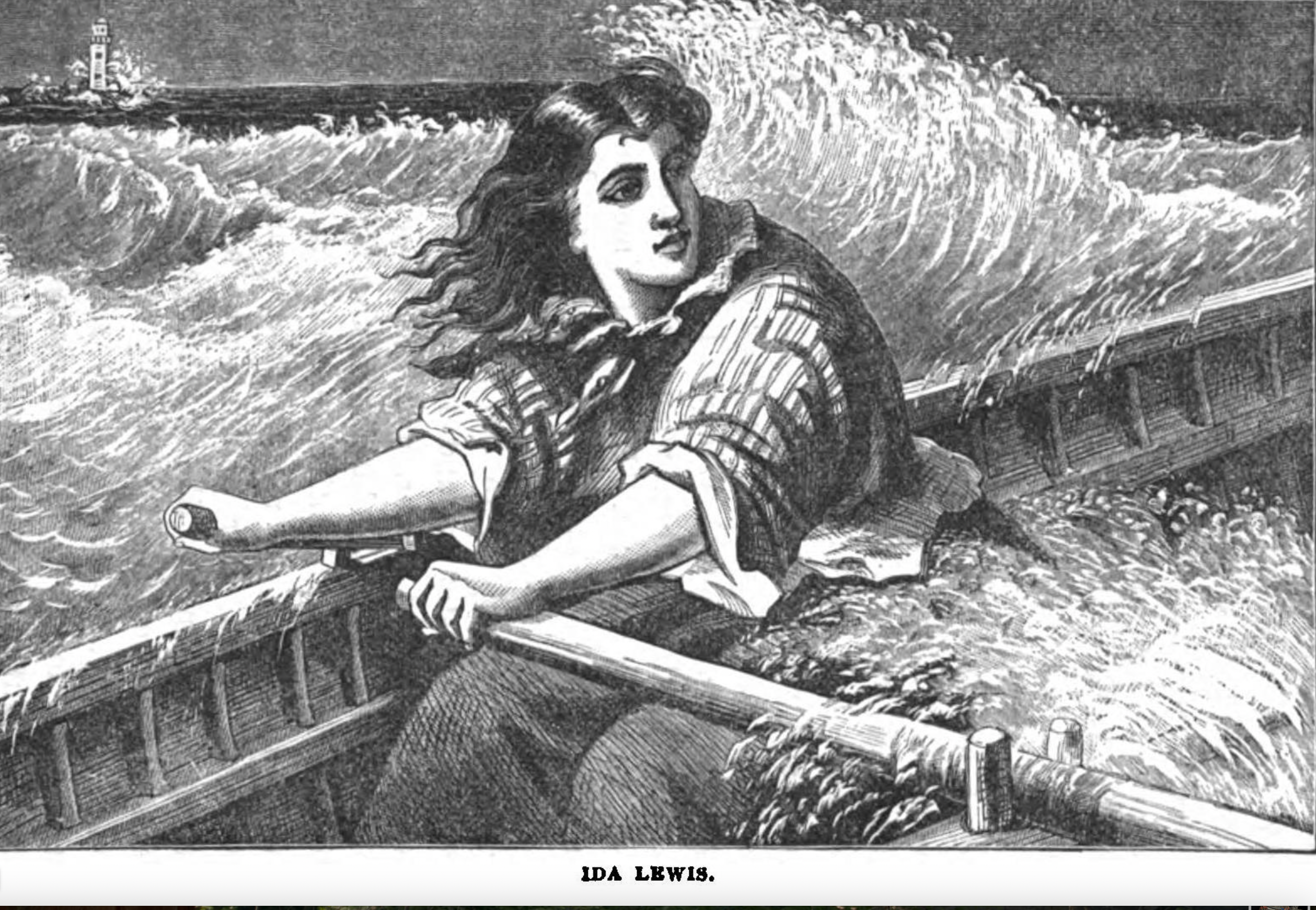
Woodcut of Ida Lewis, light-house keeper, Women of the century By Phebe Ann Hanaford 1876
1997 The Coast Guard commissioned CGC Ida Lewis (WLM 551) on this date. The tender was assigned to Newport, Rhode Island. Ida Lewis was the lead ship of 14 new 175-foot Keeper Class coastal buoy tenders built by Marinette Marine of Marinette, Wisconsin for the service. They were the first Coast Guard cutters equipped with Z-Drive propulsion units and were named after famous lighthouse keepers.

USCGC IDA LEWIS
2013 The U.S. Coast Guard and Makah Tribal Council signed a Memorandum of Agreement to reaffirm their integral partnership, cooperation, and coordination in pollution prevention and response. The focus of the MOA was to enhance consultation, improve the leveraging of resources within respective authorities as applicable, and to improve collective all-hazards prevention and response posture within the maritime environment that comprises the Makah Treaty Area.

The crew of the Coast Guard Cutter Active, a 210-foot Medium Endurance Cutter homeported in Port Angeles, Wash., conducts an at sea refueling of the Coast Guard Cutter Oliver Berry, a fast response cutter homeported in Honolulu, in the Eastern Pacific Ocean, Sept. 17, 2017.
The Active’s crew recently returned home from a 65-day counter narcotics patrol in the Eastern Pacific Ocean where they interdicted more than 1,500 kilograms of cocaine valued at more than $49 million.
U.S. Coast Guard courtesy photo.
2015 CGC Active returned to its home-port of Port Angeles after seizing more than $17 million worth of illegal narcotics during an 88-day deployment. Active was deployed to the Eastern Pacific Ocean off the coast of Central America in support of Joint Interagency Task Force South. During the deployment, Active’s crew responded to search and rescue calls, detained a number of suspicious vessels and suspects, and seized over 1,177 pounds of cocaine from suspected smugglers.
 Chuck Hill's CG Blog