

Based on the Coast Guard Historian’s timeline, https://www.history.uscg.mil/research/chronology/
With inspiration from Mike Kelso
April 21
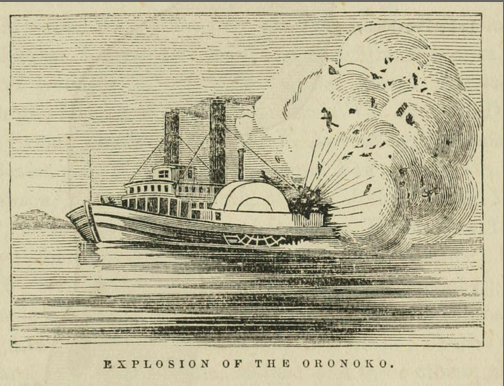
1838 The passenger steamboat Oronoko suffered a catastrophic boiler explosion while tied up at Princeton, Mississippi that killed over 100 passengers. This was one of three fatal steamboat boiler explosions within as many months that forced the Federal Government to begin regulating merchant steam vessels.

Men killing fur seals on St Paul Island, Alaska, 1890s.
1910 The U.S. Government took over the sealing operation of Pribiloff Islands from private lessees.
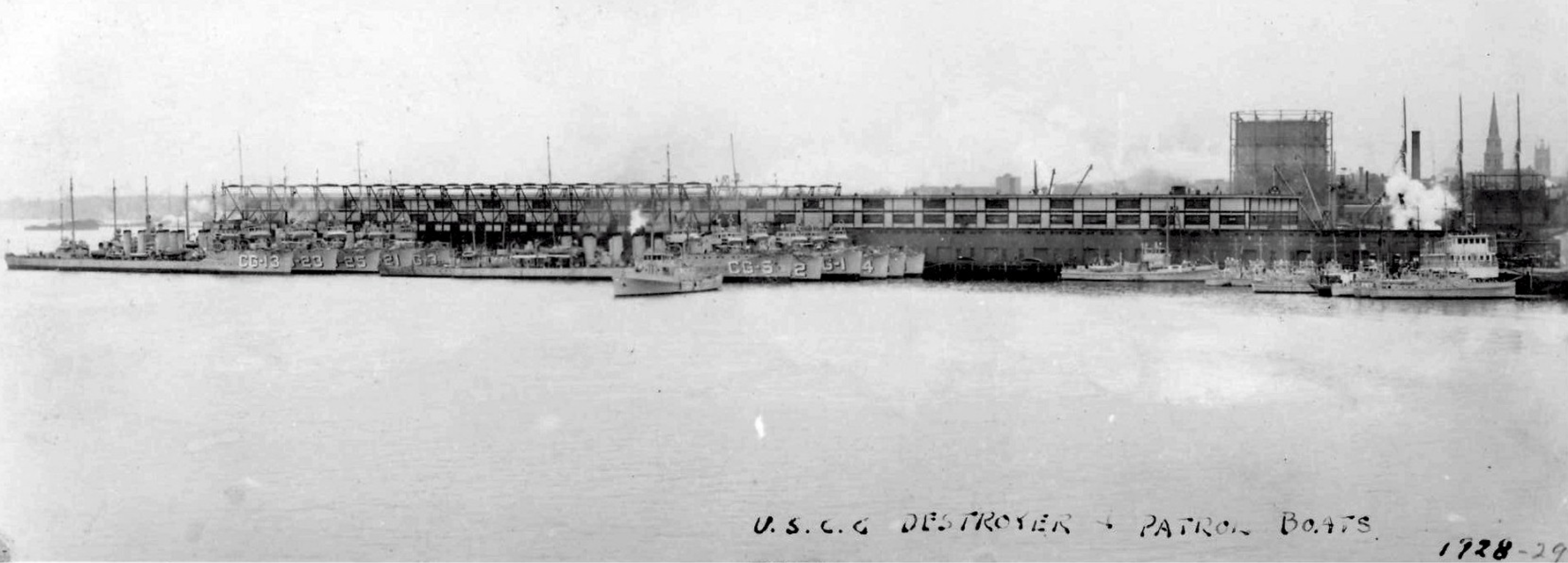
1928 photo of United States Coast Guard destroyers moored at New London, Connecticut. All are former US Navy destroyers loaned to the Coast Guard for Prohibition Service. Shown here are the Trippe (CG-20/DD-33), Wainwright (CG-24/DD-62), Downes (CG-4/DD-45), Beale (CG-9/DD-40) and Abel P. Upshur (CG-15/DD-193). Source: National Aviation Museum Collection, Photo No. 2009.006.001.
1924 In an effort to increase the number of cutters available for Prohibition enforcement, Navy destroyers were transferred to the Coast Guard for law enforcement purposes. The Coast Guard was also authorized to commission temporary officers.

Coast Guard destroyers Circa 1924-1930. (L-R) USS Jouett (CG-13) ex DD-41, USS Paulding (CG-17) ex DD-22 and USS Beale (CG-9) ex DD-40. Leslie Jones Collection, Boston Public Library. From Navsource.
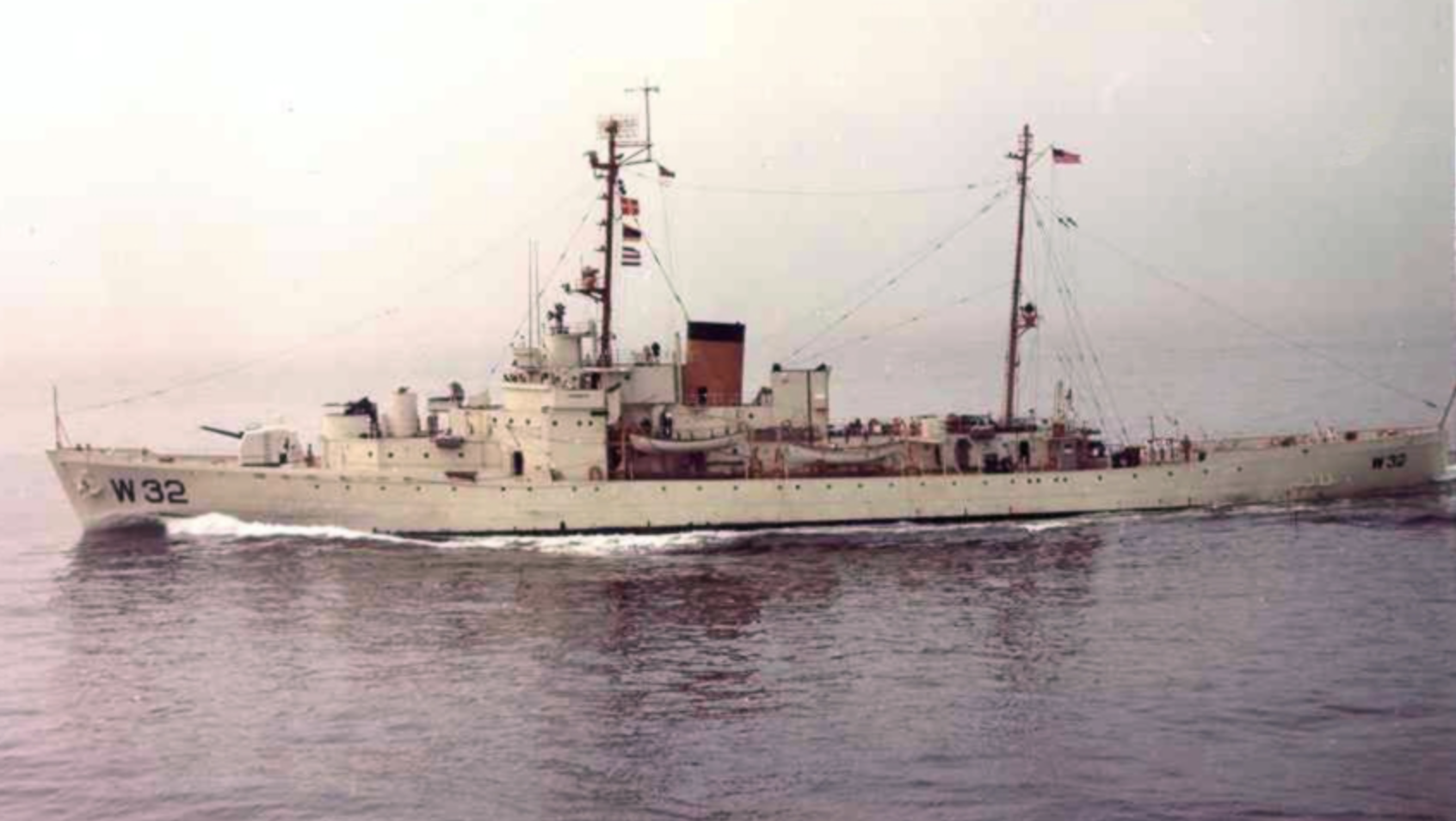
U.S. Coast Guard cutter USCGC Campbell (WPG-32) underway off New York Harbor, in 1963. Note that she still carries her World War II SC radar on the masttop. 20 August 1963. Photo by PHC Borzage, USCG
1963 While returning home from duty on Ocean Station Charlie, CGC Campbell diverted to assist the sinking M/V Helga Smith 50 miles southeast of Cape Race, Newfoundland. Upon arrival, Campbell prepared to put a repair party aboard the merchantman but the master of Helga Smith ordered his crew to abandon ship due to the seriousness of the flooding. With Campbell’s searchlights illuminating the scene, the crew abandoned ship in a motor lifeboat. The boat’s motor would not start so the crew pulled away from the ship with oars. A lifeboat from Campbell then towed them alongside the cutter where the survivors were assisted aboard by a rescue party in a rubber lifeboat. Two commercial tugs arrived on the scene and commenced towing Helga Smith to St. John’s, Newfoundland, with Campbell escorting. While enroute though Helga Smith settled by the bow and sank. Campbell then proceeded to Argentia, Newfoundland with the survivors.
1980 Boats with Cuban migrants on board began departing Mariel, Cuba. The first two boats arrived in Miami the same day, marking the beginning of the largest Cuban migration to the U.S. to date. Cuban leader Fidel Castro declared the port of Mariel “open”, increasing the number of boats involved in the exodus and giving the exodus its name. This became the largest Coast Guard operation ever undertaken to date since World War II. The Coast Guard coordinated a three-wave operation. Coast Guard high endurance cutters operated closest to Cuba. U.S. Navy ships operated in the inner-wave and Coast Guard small cutters, 95 and 82-footers, served the waters closest to Florida. Over 660 Coast Guard Reservists were called to replace boat crews and maintenance and repair teams. The Coast Guard Auxiliary lent support in many areas, including radio communications. Over 117,000 people in more than 5,000 boats were assisted by the Coast Guard and Navy forces during the Mariel Boatlift.
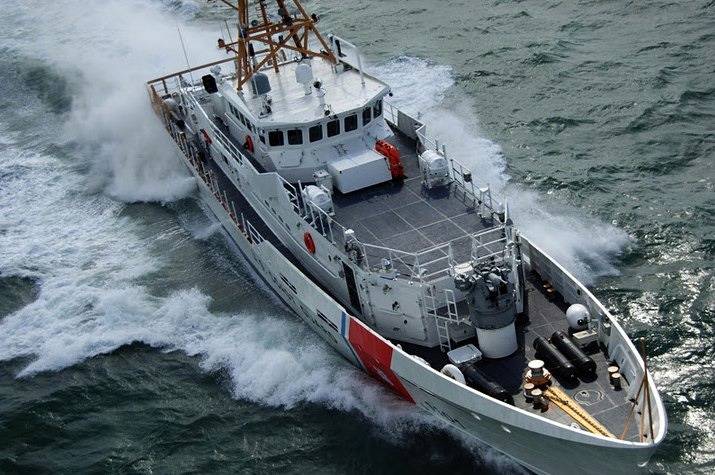
2011 The Coast Guard’s first 154-foot Fast Response Cutter, CGC Bernard C. Webber, “entered the water” at Bollinger Shipyards in Lockport, Louisiana. During a three day evolution, the cutter was towed from the fabrication facility, lifted on a crane and then successfully placed in the water.

SAN FRANCISCO. The Coast Guard Cutter Waesche transits through the San Francisco Bay for the first time en route to its homeport of Alameda, Calif., Feb. 28, 2010. (U.S. Coast Guard photo by Petty Officer 3rd Class Kevin Metcalf)
2013 CGC Waesche returned to its homeport at Coast Guard Island in Alameda, California after a 91-day deployment to the Eastern Pacific Ocean. Departing on January 20, 2013, Waesche completed an 18,000-mile patrol in support of joint counter-drug operations off the coast of California and in the Eastern Pacific Ocean. During that time the cutter and crew demonstrated their capability as a multi-mission unit. During their patrol, Waesche’s crew assisted two boaters in distress when their 12-foot sailboat began taking on water approximately three miles west of San Diego. Earlier in their patrol, Waesche participated in a search and rescue mission assisting two mariners 90 miles west of San Diego when their sailboat began taking on water. Also in January, law enforcement crews aboard the cutter seized more than 2,400 pounds of marijuana from a boat approximately 300 miles west of San Diego, apprehended three suspects, and recovered 70 bales which tested positive for marijuana. Additionally, during the mid-patrol break in Panama City, Panama, Waesche crewmembers participated in a community relations project by painting and restoring a local school.
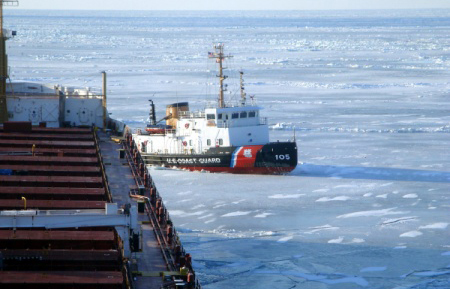
2014 The Coast Guard concluded icebreaking operations on the lower Great Lakes, more than four months after it started on December 15, 2013. Operation Coal Shovel is a bi-national domestic icebreaking effort covering the St. Lawrence Seaway, Lake Ontario, Lake Erie, the Detroit/St. Clair River System, and southern Lake Huron. Crews aboard CGCs Mackinaw, Hollyhock, Bristol Bay, Neah Bay, and Morro Bay were joined by crews from Canadian Coast Guard Ships Samuel Risley, Griffon, and Des Groseilliers. In total, the Coast Guard crews conducted more than 2,100 icebreaking hours during the 128 days of Operation Coal Shovel. Also assisting the ships with ice reconnaissance were aircrews from AIRSTA Traverse City and AIRSTA Detroit. During Operation Coal Shovel, U.S. and Canadian Coast Guard crews assisted 184 vessels and provided harbor breakouts to relieve or prevent flooding in four U.S. and one Canadian community.
 Chuck Hill's CG Blog