

Based on the Coast Guard Historian’s timeline, https://www.history.uscg.mil/research/chronology/
With inspiration from Mike Kelso
April 24

An aerial view of upper New York Bay from over Staten Island and looking North towards Manhattan. Statue of Liberty is in the upper left. The Caven Point Pier is visible in the center-left of the photo with four MSTS Troopships tied up at the pier. The Berthing location of the El Estero on the day of her fire is highlighted by the Red arrow. Pic courtesy of https://tugster.wordpress.com/
1943 While loading a cargo of ammunition at a Bayonne, New Jersey pier, the freighter El Estero caught fire, threatening downtown Manhattan with devastation should the ship’s cargo explode.
“Though public knowledge about Caven Point’s additional duties would remain non-existent until the end of the war in Europe, the FDNY Marine Division was well briefed on the nature and scale of operations carried out at the facility. Every ship calling at Caven Point to load munitions was required to tender a copy of its blueprint and cargo hold plans to the Marine Division, so that in the event of an emergency, first responders could quickly and easily access, contain, and fight fires on any ammunition-laden ship. In addition to these measures, the U.S. Coast Guard maintained an active fire watch and sizeable fleet of pump-equipped patrol boats on a 24-hour alert around the pier, and the Bayonne Fire Department kept a fast reaction squad on alert as well. Every commercial tugboat calling the pier complex for ship-assist duties was required to have substantial external firefighting capabilities, to provide near-immediate response in the event of fire. Due in large part to these precautions, operations at Caven Point proceeded smoothly despite the hectic nature of operations at the now combined-use facility through 1942 and into 1943, when the buildup of men and material bound for England and Africa began to greatly swell the number of ships loading men, materials and munitions at the pier.”
Coast Guardsmen under the command of LCDR John T. Stanley responded immediately and were soon reinforced by local firefighters. Two Coast Guard fireboats along with commercial and New York City firefighting tugs headed to the area. LCDR Stanley boarded the freighter which was now burning out of control and he was joined by LCDR Arthur F. Pfister who was in charge of the Coast Guard vessels. Upon consultation with the Captain of the Port of New York, Third District commander RADM Stanley V. Parker, they decided to scuttle the ship. However, the sea cocks were not accessible and so they decided to fill the vessel with water. While firefighting teams fought the blaze aboard the El Estero, the tugs arrived and took the freighter under tow, heading to deeper water away from New York City. The tugs and firefighting vessels began spraying their water cannons on the freighter, filling her holds with water. The residents of the city were warned to expect an imminent explosion. Fortunately, the vessel began listing to starboard and soon thereafter sank northwest of the Robbins Reef Light, extinguishing the fires. All of the men aboard the vessel escaped harm. The fire was later ruled as accidental.
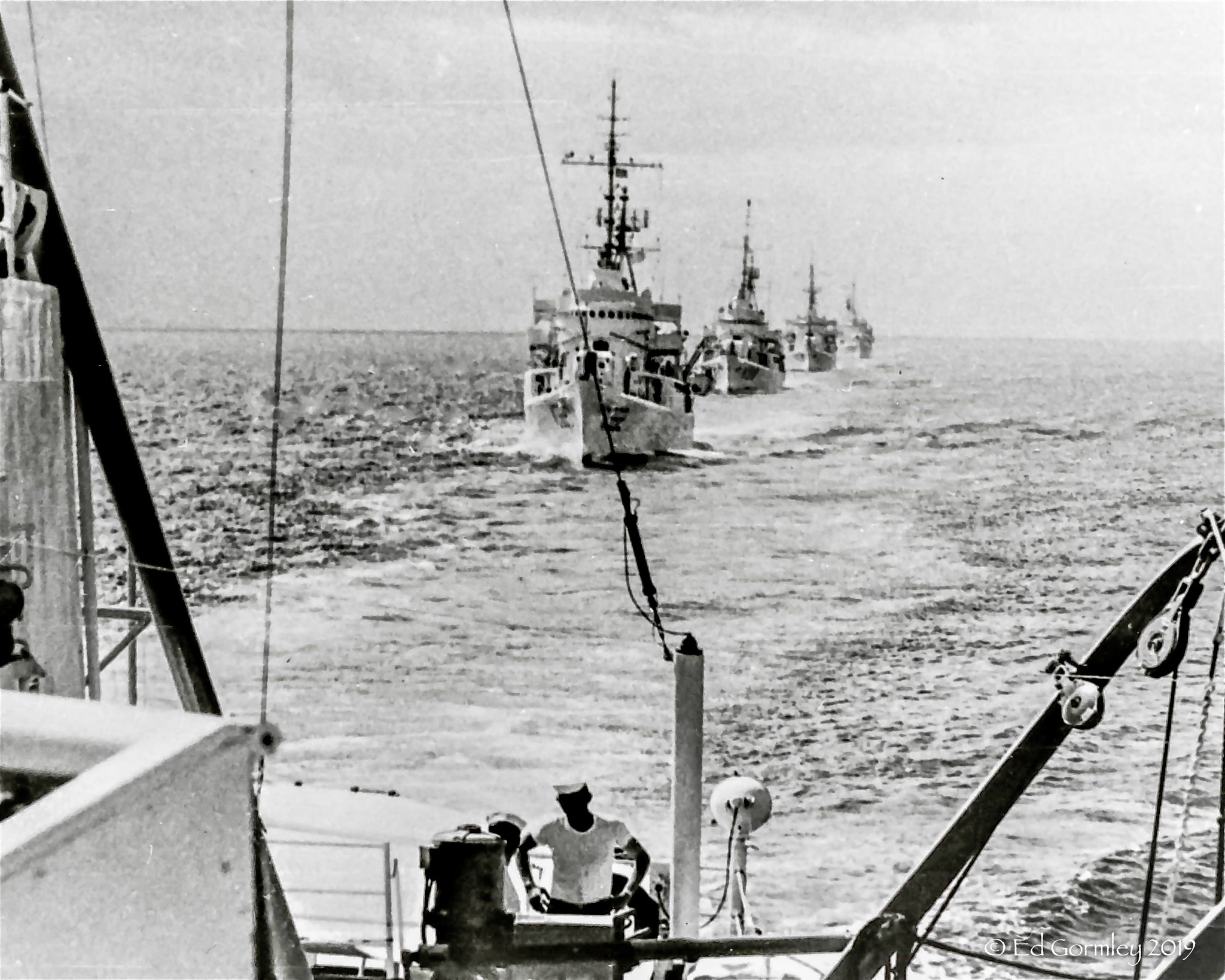
CG Squadron 3 enroute Subic Bay, 1967, Vietnam War
1967 At the request of the U.S. Navy, five Coast Guard Casco class high endurance cutters (WHECs) were commissioned as Coast Guard Three (RONTHREE) at Pearl Harbor for service in Vietnam.
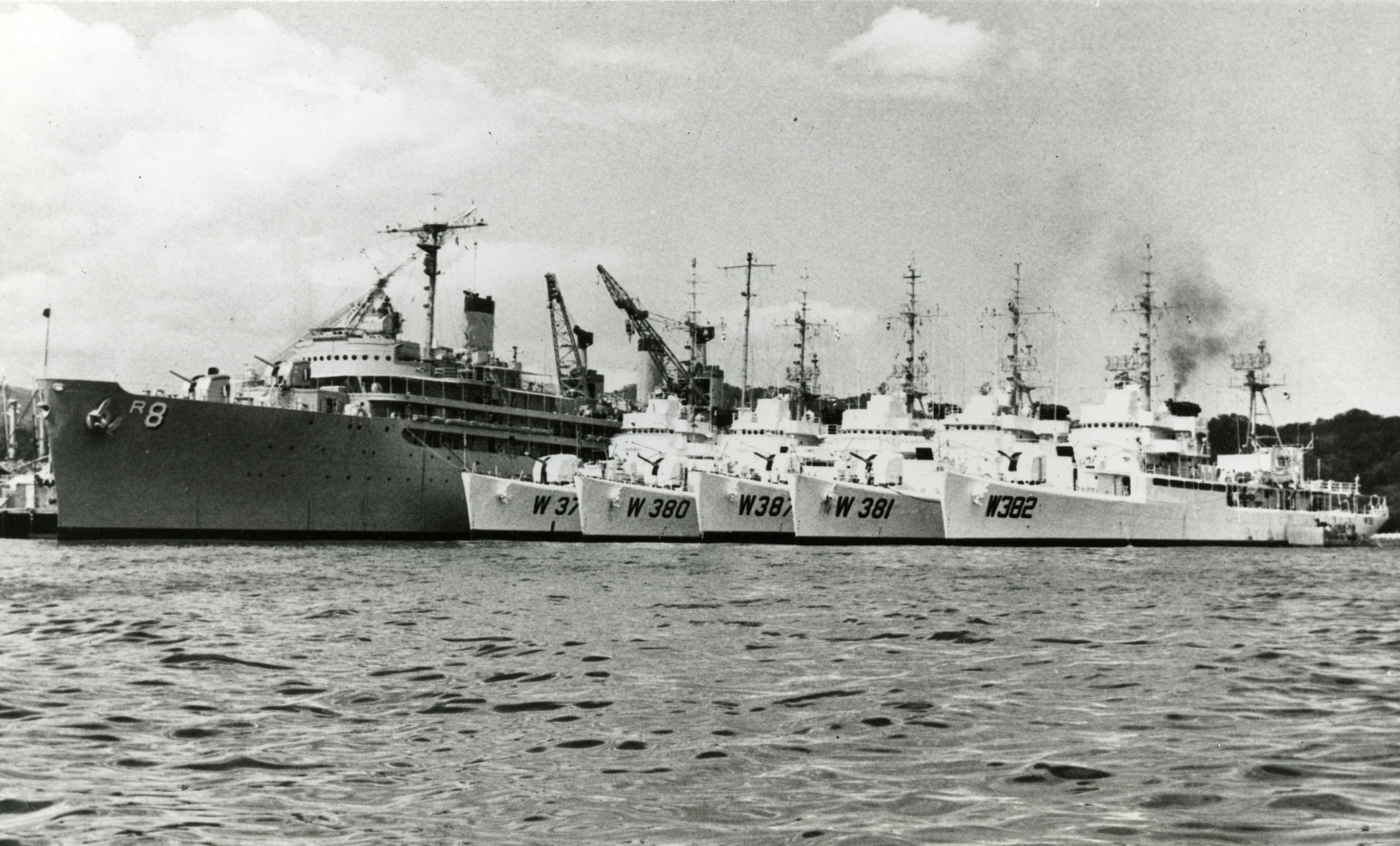
Squadron Three in Subic Bay, WHECs Half Moon (W378), Yakutat (W380), Barataria (W381), Bering Strait (W382), and Gresham (W387) along side repair ship USS Jason (AS-8).

ARLINGTON NATIONAL CEMETERY, Va. (MAY 7, 2004) — Pall bearers carry the casket of DC3 Nathan Bruckenthal during his interment ceremony. Bruckenthal was the first Coast Guard casualty in Operation Iraqi Freedom. USCG photo by PA2 Fa’iq El-Amin.
2004 Damage Controlman Third Class Nathan Bruckenthal, USCG, from Smithtown, New York, and two U. S. Navy sailors were killed in the line of duty while conducting maritime intercept operations in the North Arabian Gulf. He and six other coalition sailors attempted to board a small boat near the Iraqi Khawr Al Amaya Oil Terminal. As they boarded the boat, it exploded. Petty Officer Bruckenthal died later from injuries sustained in the explosion. Petty Officer Bruckenthal was the first Coast Guardsman killed in action since the Vietnam War. He was assigned to Tactical Law Enforcement South in Miami, Florida and deployed with Coast Guard Patrol Forces Southwest Asia aboard the USS Firebolt. This was his second deployment to the Arabian Gulf for Operation Iraqi Freedom.
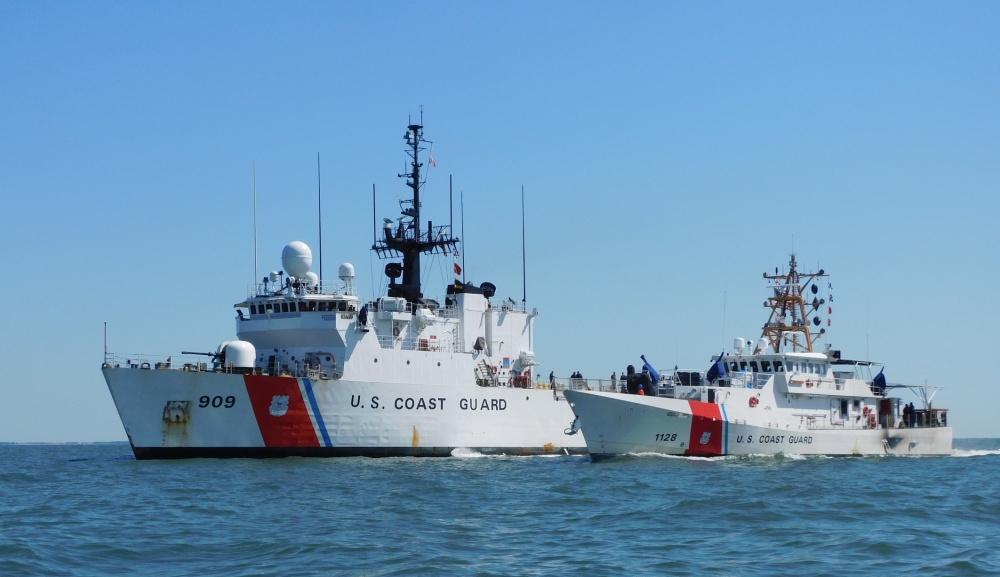
The crew of the Coast Guard Cutter Bruckenthal (WPC-1128) participates in a fueling exercise with the Coast Guard Cutter Campbell on the Chesapeake Bay, April 11, 2020. The Coast Guard acquired the first Sentinel Class cutter in 2012, with the namesake of each cutter being one of the service’s many enlisted heroes. (U.S. Coast Guard photo by Petty Officer 3rd Class Isaac Cross)
 Chuck Hill's CG Blog