

Based on the Coast Guard Historian’s timeline, https://www.history.uscg.mil/research/chronology/
With inspiration from Mike Kelso
May 4
1882 The Secretary of the Treasury was authorized to discontinue any lifesaving station, transfer apparatus, appoint keepers, etc.
1910 Congress required every passenger ship or other ship carrying 50 persons or more, leaving any port of United States, to be equipped with a radio (powerful enough to transmit to a 100-mile radius) and a qualified operator.
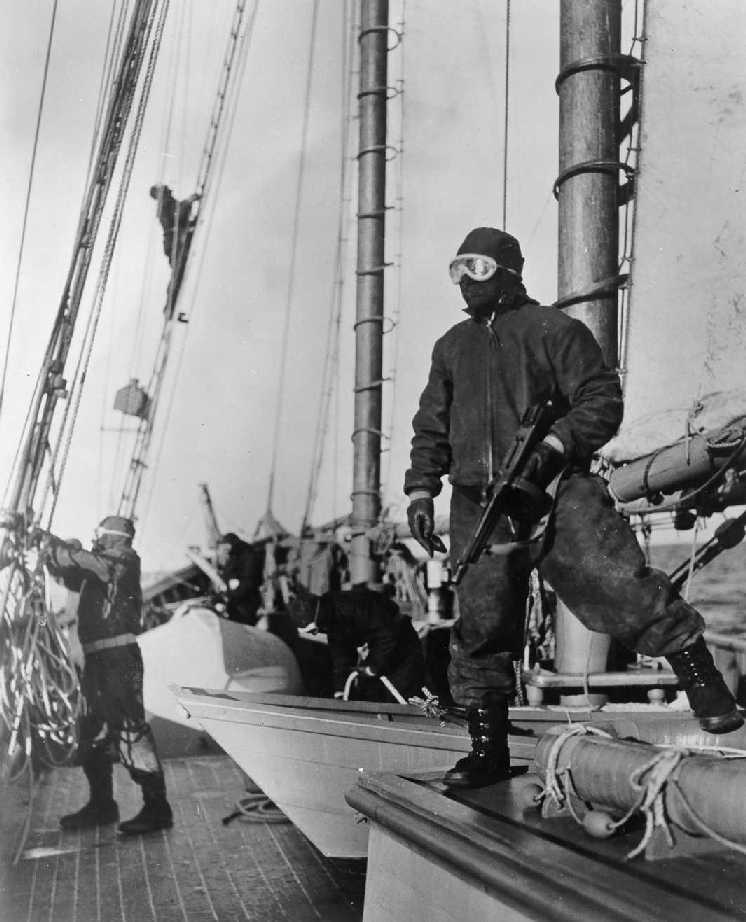
Members of the US Coast Guard Auxiliary anti-submarine forces, colloquially referred to as the “Corsair Fleet”
1942 ADM Ernest J. King, Chief of Naval Operations and Commander in Chief, U.S. Fleet, requested the Coast Guard organize a coastal picket force utilizing suitable civilian craft. The Coast Guard Auxiliary led the initial efforts with responsibility eventually falling to the Coast Guard officer in each Naval District. Many Auxiliarists volunteered both their vessels and crew for service in the Coast Guard Temporary Reserve. The signature vessels were the large, rugged sailing yachts assigned to offshore patrols, later nicknamed “The Corsair Fleet.”
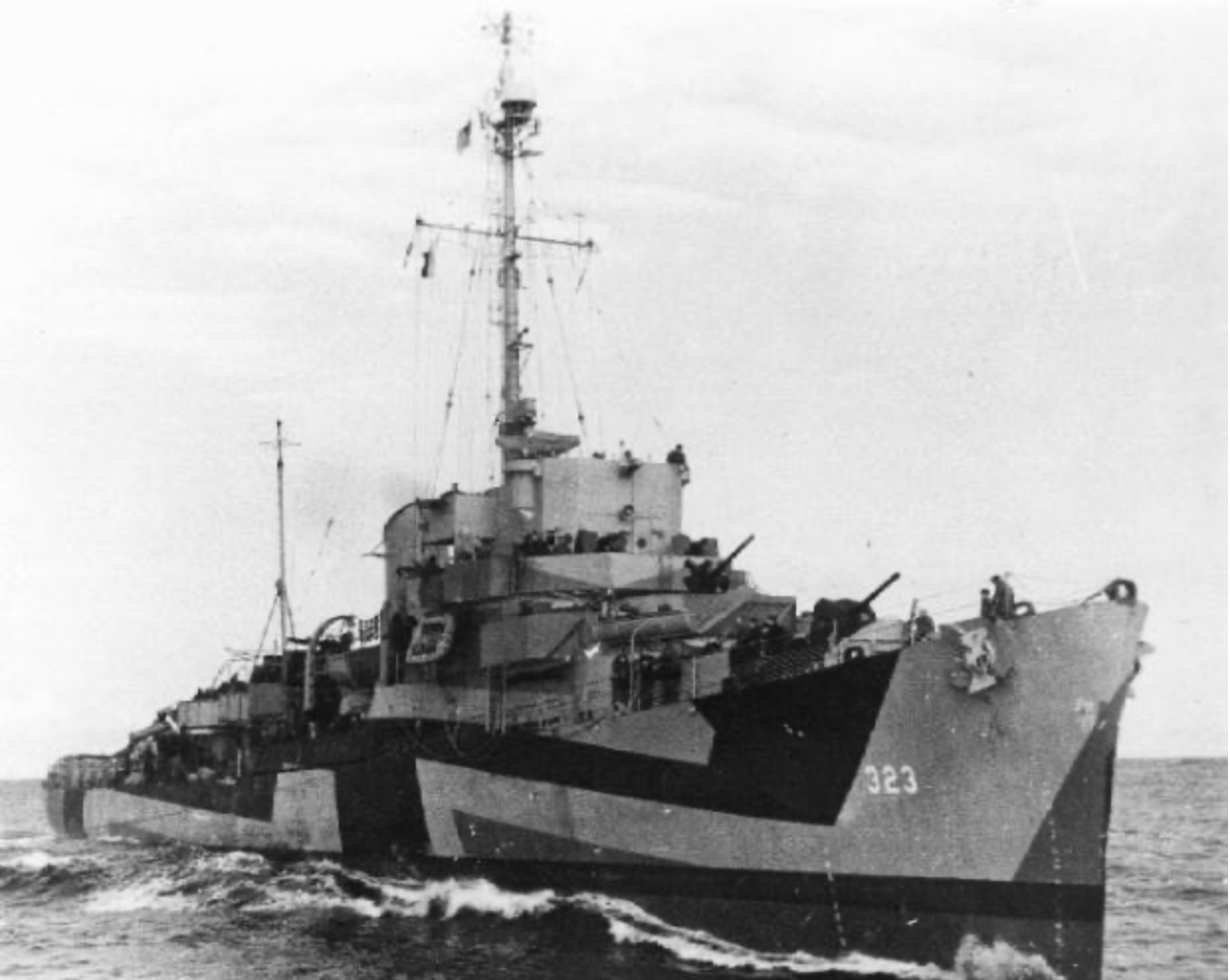
Coast Guard manned USS Pride (DE-323) February / March 1945: underway in the North Atlantic. Photo credit Andy Cisternino
RM1c, USCG.
1944 The Coast Guard-manned destroyer escort USS Pride (DE-323), USS Joseph E. Campbell (DE-70), the American built Free French destroyer escort Sénégalais and the British escort destroyer HMS Blankney sank U-371 which had damaged Coast Guard manned USS Menges (DE-320) the previous day. USNI story about USS Pride by her CO, Captain Ralph R. Curry, U. S. Coast Guard (Retired), here.
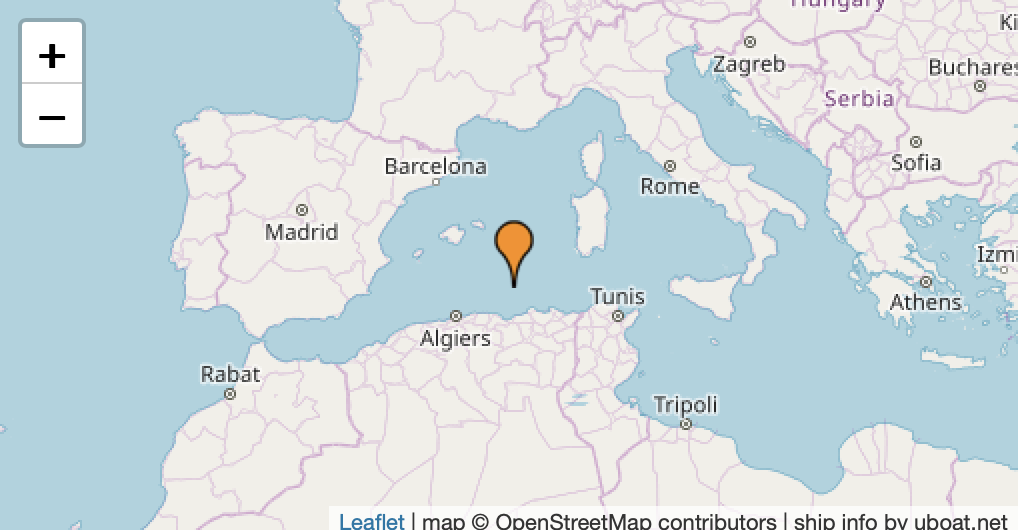
Location where USS Menges was damaged and U-371 was sunk.
U-371 “… was unlucky enough to be the first victim to an Allied sub-hunting tactic in the Mediterranean Sea known as Swamp. This tactic simply called for the area of a known or suspected U-boat to be packed with surface escorts and patrol aircraft. They would then systematically and continually search the area and force the U-boat to remain submerged until its batteries ran out or try to escape at night on the surface. Either was almost hopeless.
U-371 was spotted recharging her batteries on the surface off Djidjelli on the Algerian coast during the night of 2/3 May 1944 and was immediately detected and the area was swamped with 6 escorts and 3 aircraft squadrons. They hunted the boat until the early morning of 4 May when Oblt. Fenski had to surface the boat and save his crew. He had managed to fight back and torpedoed and damaged the US destroyer escort USS Menges and the French destroyer escort Sénégalais before calling it quits.”
1963 CGC Morris and CG-95318 escorted the annual Newport Harbor, California to Ensenada, Mexico Yacht Race which commenced May 4, 1963 and upon conclusion of the race made an informal visit to Ensenada.
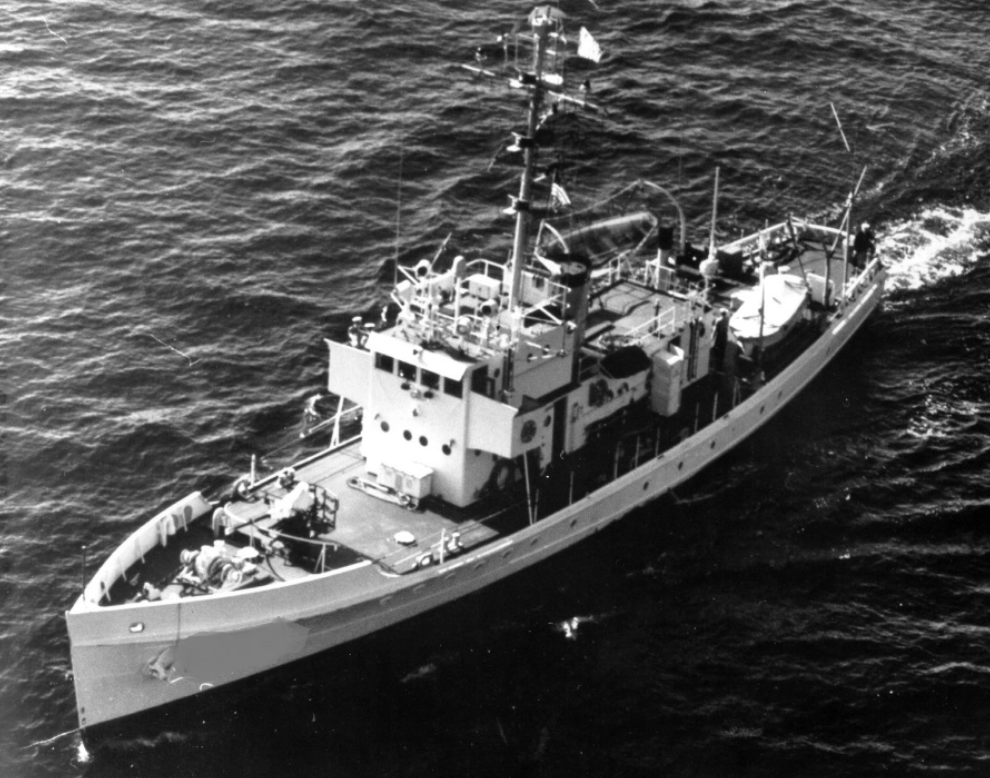
USCGC Morris
 Chuck Hill's CG Blog