

Based on the Coast Guard Historian’s timeline, https://www.history.uscg.mil/research/chronology/
With inspiration from Mike Kelso
May 6
1796 Congress increased the monthly compensation of Revenue Marine officers to masters $50; first mates $35; second mates $30; third mates $25 and mariners $20.
1896 President Grover Cleveland placed the Lighthouse Service within the classified federal civil service.

USRC MORRILL. Photographed by the Detroit Photographic Co. Library of Congress photo No. LC-D4-9016
1898 The cutter Morrill participated in an engagement at Havana, Cuba on May 6-7, 1898 during the Spanish-American War. Her officers were awarded Bronze Medals by the authority of a joint resolution of Congress that was approved on March 3, 1901.
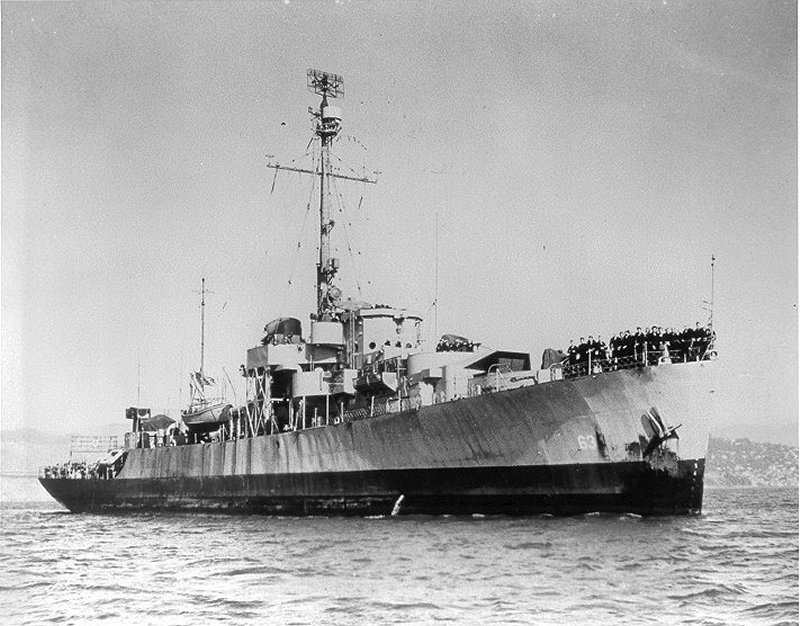
USS Moberly (PF-63) Off San Francisco, CA in early 1946.
Naval Historical Center photo NH 79077
1945 The Coast Guard-manned frigate USS Moberly (PF-63), in concert with USS Atherton, sank the U-853 in the Atlantic off Block Island. There were no survivors.
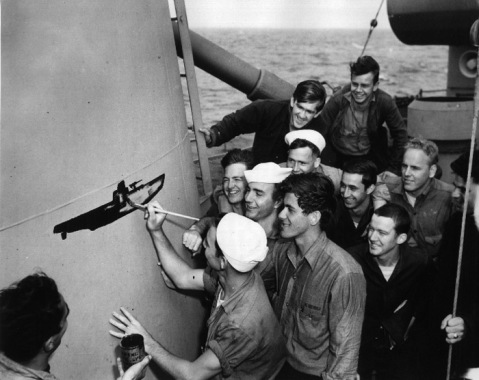
USS Moberly and USS Atherton share credit for the sinking.

Lightship Huron LV 103/WAL 526
1958 During her 50 plus year career, the Huron Lightship WAL-526 at Port Huron, Michigan, survived many a Great Lakes storm without the loss of a single crewmember until on this date when Seaman (Boatswain Mate Striker) Robert G. Gullickson lost his life while attempting to swim for assistance to save another shipmate, CS1 Vincent Disch, after their small boat was swamped by a freighter’s wake and sank. Disch was rescued, but Gullickson was lost at sea and his remains were never recovered. Gullickson was posthumously promoted to BM3 for his rescue attempt and for sacrificing his life for his shipmate.
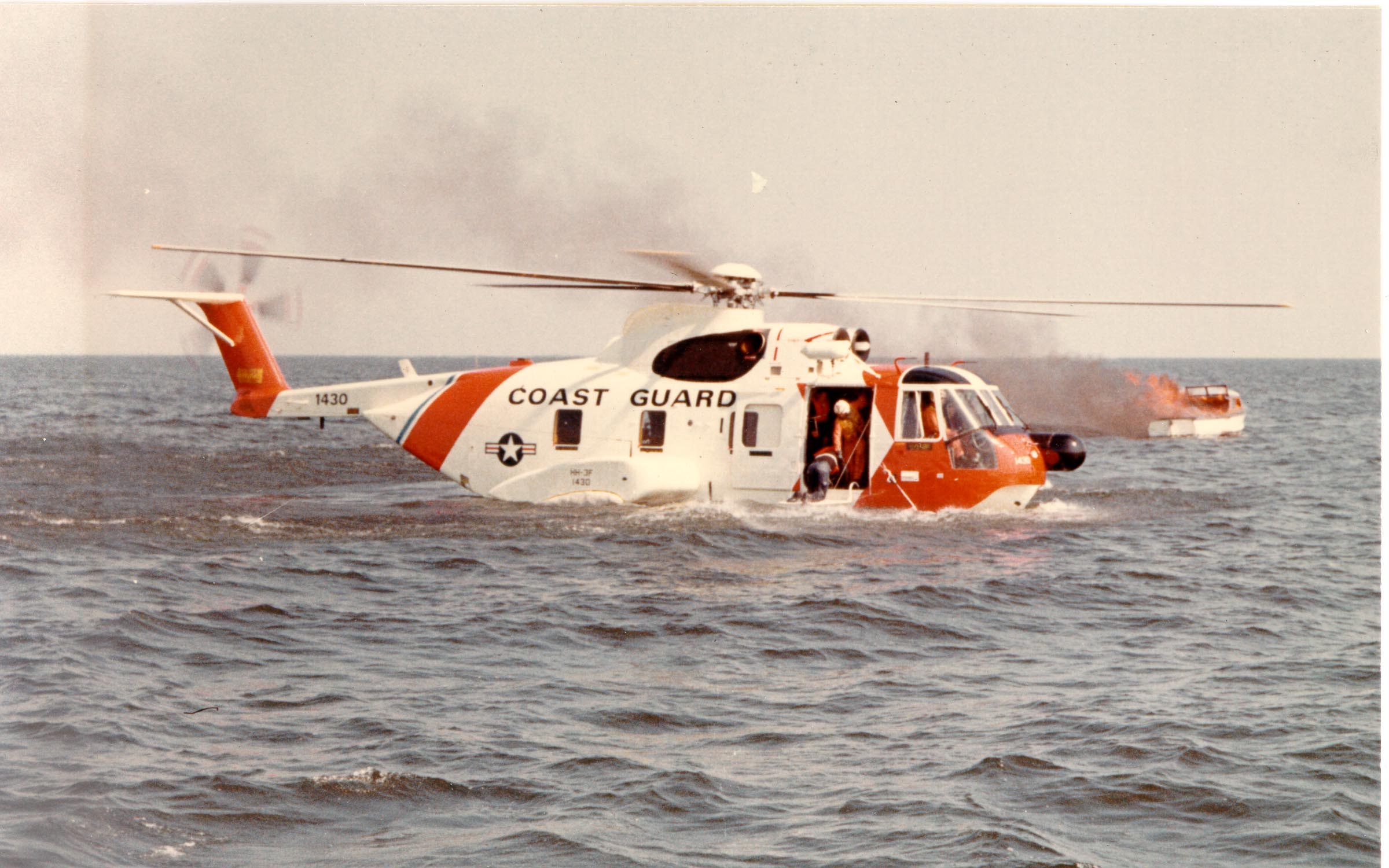
USCG HH-3F Pelican on the water, demonstrating its amphibious capability. This was also the first HH-3F delivered to the Coast Guard.
1994 The last HH-3F Pelican helicopter in Coast Guard service was retired. This ended the Coast Guard’s “amphibious era,” as no aviation asset left in service was capable of making water landings.

2003 CGC Walnut completed its 20-day humanitarian mission in support of Operation Iraqi Freedom. Walnut marked the navigational channel of the Khawr Abd Allah waterway leading from the North Arabian Gulf to Iraq’s critical port of Umm Qasr. The cutter completely replaced 30 buoys and repaired an additional five along the 41-mile waterway, vastly improving the navigational safety of the waterway for humanitarian aid sailing to the port and providing a critical step towards the economic recovery of the people of Iraq. The majority of the equipment used in the navigational improvements was located in a warehouse in Umm Qasr and was inspected and upgraded to ensure that the buoys matched as closely as possible to the charted channel. Walnut was originally deployed to the North Arabian Gulf with an oil spill recovery system in the event the regime of Saddam Hussein committed any acts of environmental terrorism. When those threats did not materialize, the cutter conducted maritime interdiction operations enforcing U.N. Security Council resolutions, participated in the search for two downed United Kingdom helicopters, and patrolled and provided assistance to captured Iraqi offshore oil terminals.

The crew of the Coast Guard Cutter Active, a 210-foot Medium Endurance Cutter homeported in Port Angeles, Wash., conducts an at sea refueling of the Coast Guard Cutter Oliver Berry, a fast response cutter homeported in Honolulu, in the Eastern Pacific Ocean, Sept. 17, 2017.
The Active’s crew recently returned home from a 65-day counter narcotics patrol in the Eastern Pacific Ocean where they interdicted more than 1,500 kilograms of cocaine valued at more than $49 million.
U.S. Coast Guard courtesy photo.
2014 CGC Active returned to its homeport of Port Angeles, Washington, following a 70-day deployment. During their deployment, the cutter and crew covered more than 11,500 miles on a counter-drug enforcement patrol in the Eastern Pacific, including patrolling waters off the coast of Central America. The crew conducted multiple at sea boardings, seizing more than 2,300 pounds of cocaine worth an estimated $37 million. While on a port call in Puerto Vallarta, Mexico to resupply the cutter, Active’s crew participated in a community relations event where they painted and helped set up a playground at the local Children’s Cancer Center.
 Chuck Hill's CG Blog