

Based on the Coast Guard Historian’s timeline, https://www.history.uscg.mil/research/chronology/
With inspiration from Mike Kelso
May 7

A HC-130H in a legacy paint scheme in the foreground, and a newer HC-130J
1969 HC-130H CGNR 1453, stationed at Air Station Kodiak, flew over the geographic North Pole, becoming the first Coast Guard aircraft to do so. The aircraft commander was LCDR Melvin J. Hartman and the copilot was LT Larry Minor. The purpose of the flight was ice reconnaissance of a potential route for super tankers from the North Slope of Alaska to the east coast of the U.S. According to a summary of the flight published in the Commandant’s Bulletin: “COAST GUARD AIRCRAFT FLIES AROUND THE WORLD NONSTOP…During the course of this flight, the aircraft circled the north pole, crossing all meridians in eighty seconds.”
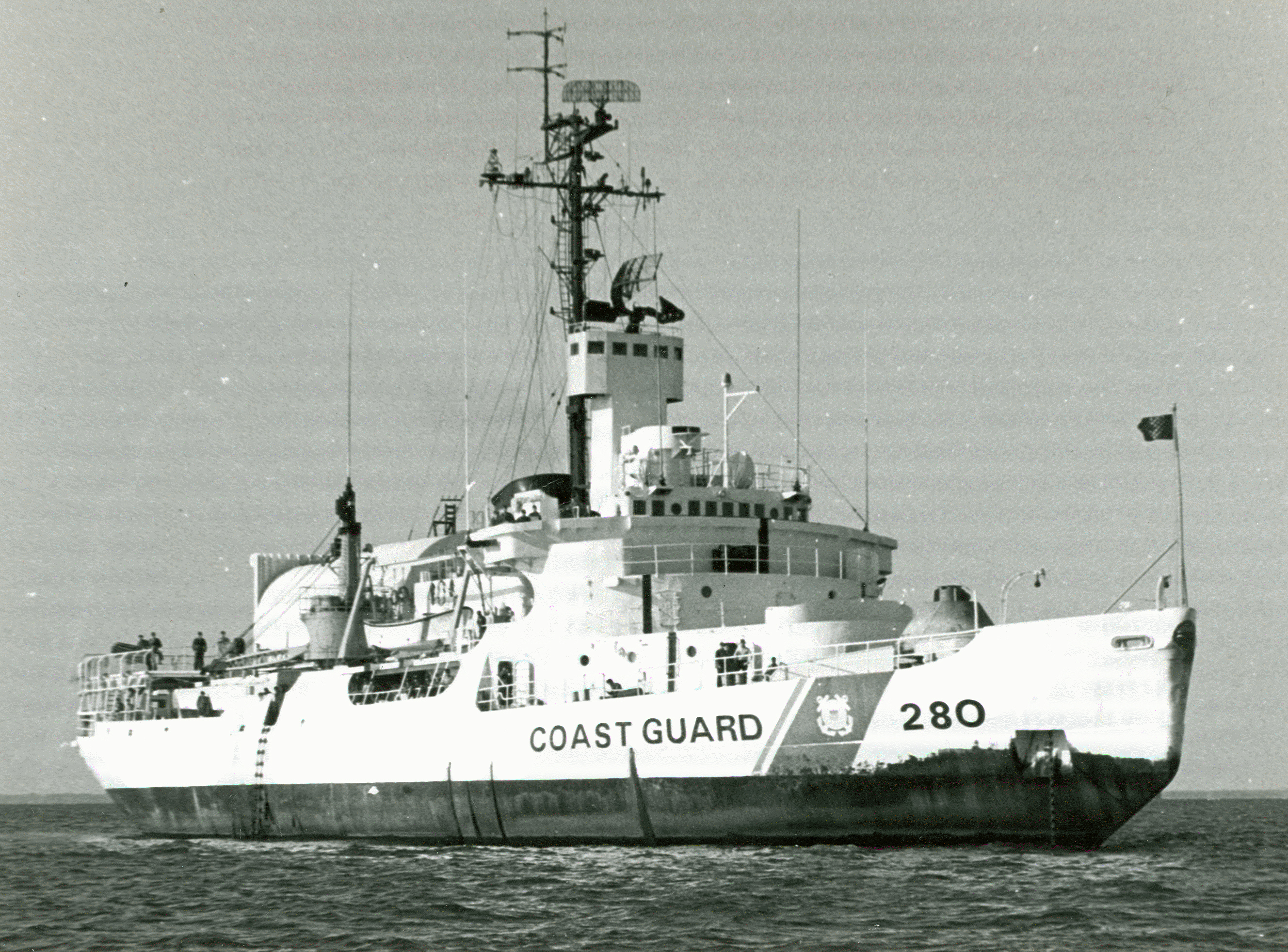
USCGC Southwind near port of USCG Base Berkley, after returning from a 27,000 mile tour of the Arctic.
1969 CGC Southwind returned to Baltimore, Maryland after circumnavigating the globe, becoming only the second cutter to do so.

USCGC Manitou (WYT-60) Operating in the Arctic Ice, during World War II. Note her ice-breaking bow. Photo was taken in Greenland. Catalog #: 26-G-3497
1979 During a city-wide strike by tugboat operators and longshoremen in New York City that began on April 1, 1979, Mayor Ed Koch of New York asked for federal assistance. The Secretary of Transportation, Brock Adams, at the behest of President Jimmy Carter, ordered the Commandant, ADM John B. Hayes, to direct the commanding officer of the Third Coast Guard District, VADM Robert I. Price, “to cooperate with Mayor Koch in the movement of sanitation barges within the harbor.” Beginning on May 7, 1979, the cutters Sauk, Manitou, and Red Beech began moving 16 garbage scows from a Staten Island landfill site to refuse pick-up points in Manhattan, Brooklyn, Queens, and the Bronx. Although the Group received an anonymous bomb threat that proved to be a hoax, the towing effort was carried out without incident. These three cutters were relieved of “garbage duty” in June by the cutters Snohomish and Chinook.

Astronaut Commander Bruce E. Melnick, USCG
1992 Astronaut and Coast Guard CDR Bruce Melnick made his second space flight when he served as a Mission Specialist aboard the space shuttle Endeavour on her maiden flight, Space Shuttle Mission STS-49, which flew from May 7-16, 1992. During this mission, astronauts rescued and repaired the Intelsat VI satellite. Melnick, by this point, had logged more than 300 hours in space.

Crew of the Coast Guard Cutter James Rankin readies to set the Francis Scott Key buoy, June 2, 2017, where a ship carrying the author of “The Star-Spangled Banner” was anchored during the Fort McHenry bombardment in the War of 1812.
2004 CGC James Rankin set the historic “Francis Scott Key” buoy off of Fort McHenry, Maryland, near the Key Bridge in Baltimore, Maryland. The buoy marks the spot where the British warship on which Francis Scott Key, the author of the Star Spangled Banner, was held aboard during the bombardment of Fort McHenry by the Royal Navy during the War of 1812. Each year the buoy is set in the spring, marking the historic location of the event, and is then removed in the fall.
 Chuck Hill's CG Blog