

Based on the Coast Guard Historian’s timeline, https://www.history.uscg.mil/research/chronology/
With inspiration from Mike Kelso
May 11
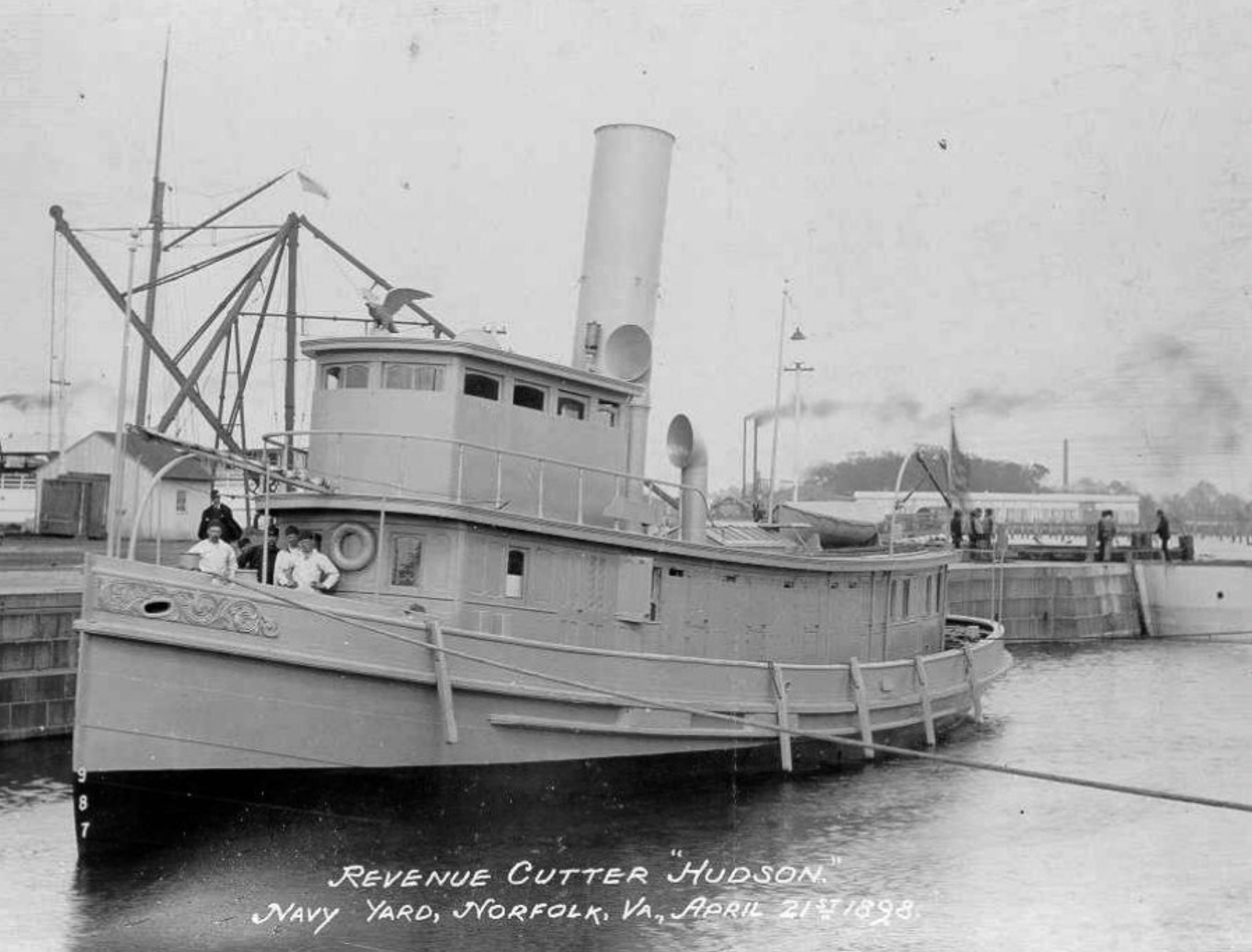
USRC HUDSON At the Norfolk Navy Yard, Portsmouth, Virginia, 21 April 1898 being outfitted for service in the Spanish-American War, which included adding additional armament, armor plating, and a new coat of “war paint” U.S. Coast Guard History website
1898 USRC Hudson towed the crippled USS Winslow from certain destruction under the Spanish forts at Cardenas, Cuba during the Spanish-American War. Congress later conferred a Gold Medal of Honor on her commanding officer, Revenue First Lieutenant (later Commodore) Frank H. Newcomb. His officers and crew were awarded Silver and Bronze Medals.
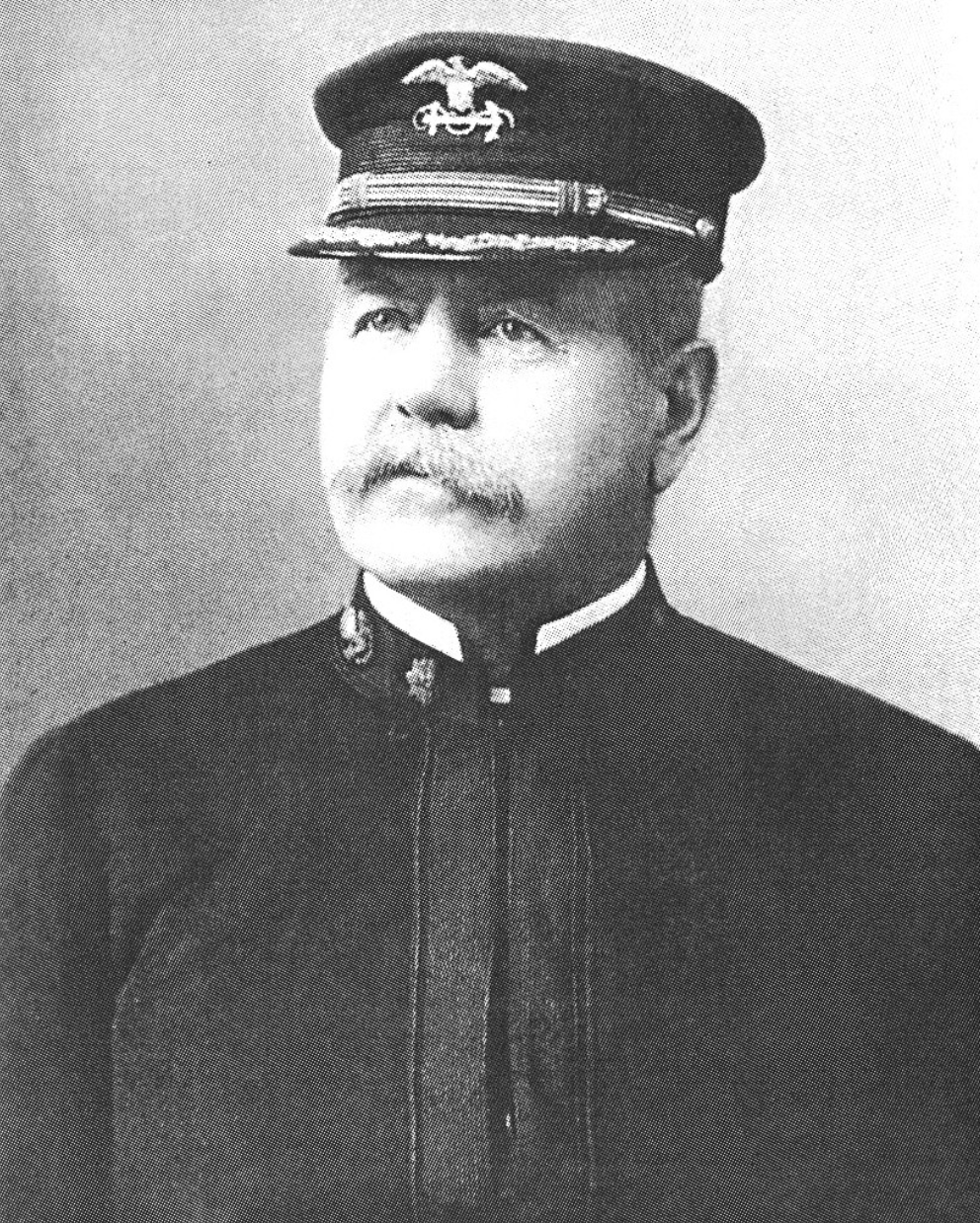
A veteran of the Civil War and the Spanish-American War, Lt. Frank Newcomb served for over 40 years in the U.S. sea services. He was a progressive thinking man and considered one of the finest officers of the Revenue Cutter Service. (U.S. Coast Guard photo)
1908 The Revenue Cutter Service was authorized to enforce Alaska game laws.

USCGC Durant (serving as Coast Guard WDE 489), 1952-1954. Photo credit: Nick Tiberio, Shelton, Conn. Balloon shelter has been added. Armament retained from late WWII appears to include 3×3″/50, two twin 40mm, a quad 40mm, and two 20mm mounts.
1945 In the morning, four days after Nazi Germany surrendered unconditionally to the Allies, the Coast Guard-manned destroyer escorts USS Vance and USS Durant, underway off the Azores escorting their last convoy to the Mediterranean, sighted a light ahead of the convoy. They closed to investigate. Durant illuminated the target, which was the surfaced German submarine U-873, which had been at sea for 50 days. Vance, while screened by Durant, hailed the “erstwhile enemy” over her public address system, established her identity, and then ordered her to heave to. On board were seven officers and 52 enlisted men. Vance placed a 21-man prize crew on board the captured U-boat and delivered the prize at Portsmouth, New Hampshire, on May 16, 1945.

U.S Coast Guard 1309, San Diego Air & Space Museum
1963 Air Station San Francisco intercepted a teletype message from Fort Point Lifeboat Station to CG Radio Station San Francisco stating that the 36-foot F/V Pirate II had lost its engine and would be blown onto Seal Rocks within twenty minutes. Coast Guard HH-19G helicopter CGNR-1309 was dispatched to assist. The helicopter, commanded by LCDR Warren S. Petterson, located the fishing vessel in heavy surf and commenced “Operation Tugbird” by lowering a tow cable to Pirate II. The helicopter then towed the vessel out of the surf and to a distance of one-half mile off shore where CG-82328 successfully took over.
 Chuck Hill's CG Blog