
Based on the Coast Guard Historian’s timeline, https://www.history.uscg.mil/research/chronology/
With inspiration from Mike Kelso
May 21
1849 Revenue Captain Douglas Ottinger reported completing the construction and furnishing of eight life-saving stations on the New Jersey coast between Sandy Hook and Little Egg Inlet, marking the beginning of Federal life-saving efforts.

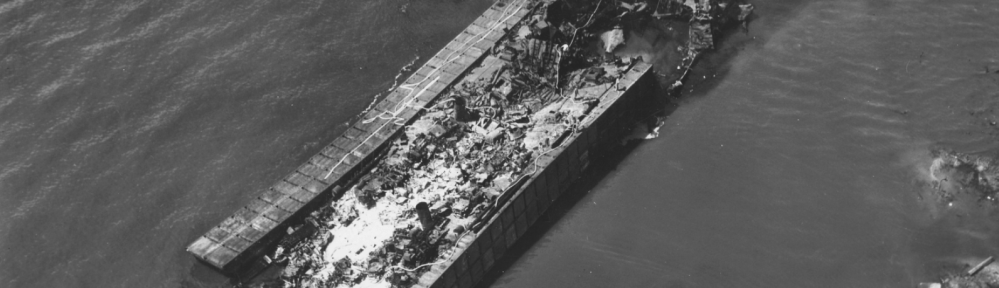
Coast Guard manned USS LST-69 beached while unloading equipment, date and location unknown. US Coast Guard photo # 3237 from the collections of the US Coast Guard Historian’s Office. While moored in the West Loch at Pearl Harbor USS LST-69 was destroyed by an ordnance explosion, and sank, 21 May 1944.
1944 The Coast Guard-manned USS LST-69 was sunk as a result of explosions and fires in ships nested in the West Loch of Pearl Harbor. None of her crew were killed, but 13 were seriously injured.
The West Loch Disaster was a maritime accident during World War II at Pearl Harbor U.S. Naval Base in Hawaii. The incident, which occurred just after 3 p.m. on Sunday, 21 May 1944, began following an explosion in a staging area for Landing Ships, Tank (LSTs) and other amphibious assault ships in West Loch. A fire quickly spread among the ships being prepared for Operation Forager, the invasion of the Japanese-held Mariana Islands. Over the next 24 hours, six LSTs sank, 163 naval personnel died, and 396 were injured.

USCGC Woodbine (WAGL-289) is nosed in at the stern of USS LST-480 burned out and grounded on Intrepid Point, West Loch, on 22 May 1944. A pontoon causeway is floating along LST-480’s starboard side. A second causeway section is still attached to her port side.
1951 The Coast Guard announced the formation, within the Washington, DC area, of a new Organized Reserve Training Unit (Vessel Augmentation). The mission of this new unit was to develop a force of experienced personnel, well-trained in all shipboard billets, with particular emphasis on anti-submarine warfare, and the use of radar, radio, and other branches of electronics. Training was to be directed towards readying personnel of the unit for immediate assignment to ships of the Coast Guard and Navy in the event of mobilization.
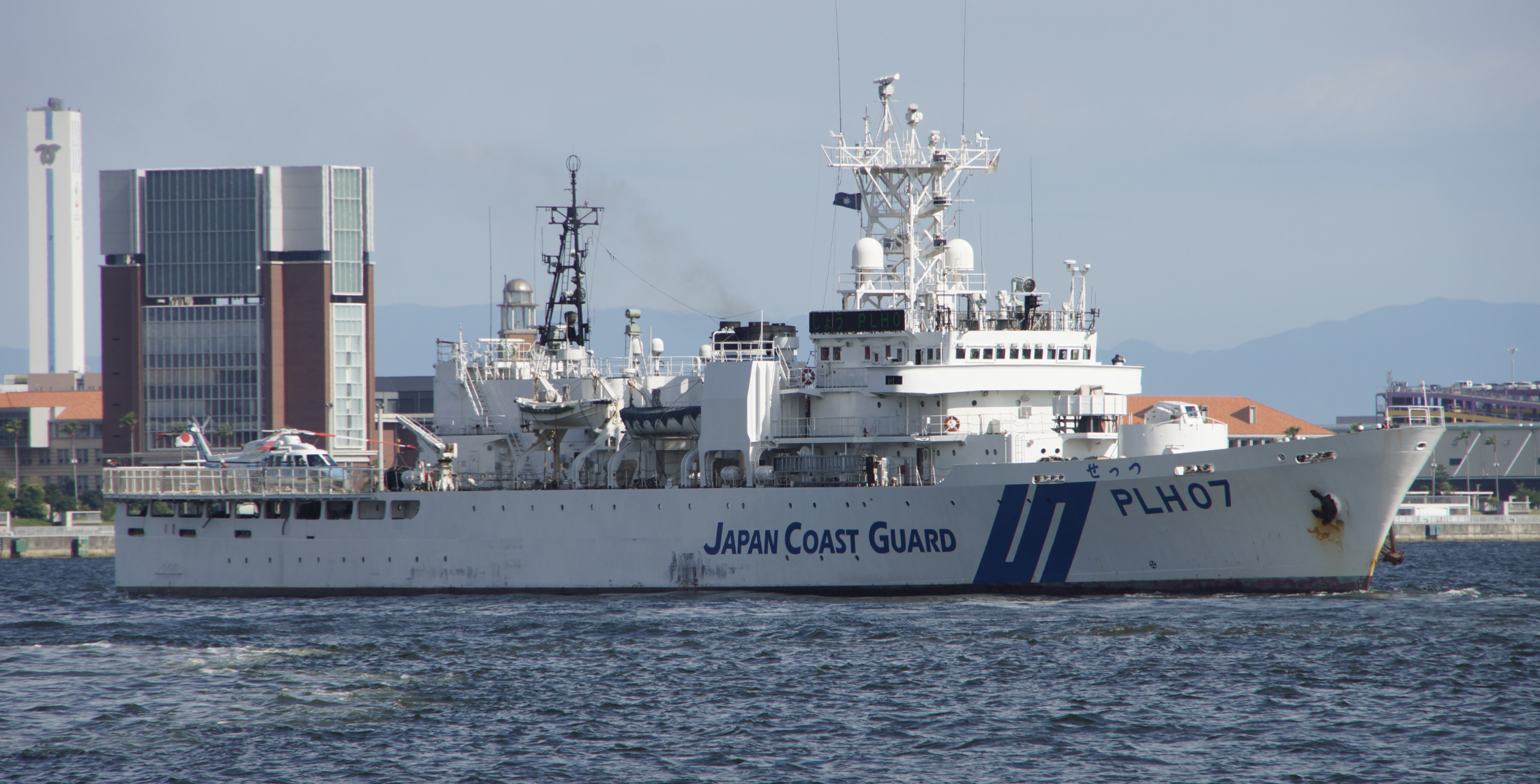
JCG Settsu(PLH-07) at Port of Kobe July 22, 2017
1986 Japan’s Maritime Safety Agency (MSA) vessel Settsu arrived in Juneau for three days of meetings with 17th District staff members, SAR talks, softball games (against the crew of CGC Morgenthau – the MSA crew won one game out of three), and comparing operational notes. The 348-foot Japanese vessel was homeported in Kobi, Japan.

2013 The Commandant, ADM Robert Papp, released the Coast Guard’s Arctic Strategy report. He noted that this strategy would “guide our efforts in the region over the next 10 years. This strategy is based on nearly 150 years of Coast Guard experience in maritime operations in the Arctic region, since the U.S. Revenue Cutter Lincoln first arrived in the new U.S. territory of Alaska in 1867. The U.S. Coast Guard Arctic Strategy documents our intent to pursue three key objectives: improving awareness, modernizing governance and broadening partnerships. Beyond these objectives, we will continue to build upon our Service’s long heritage of leadership in the Arctic, working with Federal, state, local and territorial partners to ensure maritime governance in the region.”
 Chuck Hill's CG Blog