

Based on the Coast Guard Historian’s timeline, https://www.history.uscg.mil/research/chronology/
With inspiration from Mike Kelso
May 23

1928 CGC Haida and the USLHT Cedar rescued 312 passengers and crew from the sailing vessel Star of Falkland near Unimak Pass, Alaska after Star of Falkland had run aground in the fog the previous evening. Both the cutter and the tender managed to save all but eight from the sailing vessel. This rescue was one of the most successful in Coast Guard history and was also one of the few instances where the Coast Guard and one of its future integrated agencies worked together to perform a major rescue.
The Coast Guard cutter Haida and the lighthouse tender Cedar prepare to rescue the passengers and crew from the sailing vessel Star of Falkland near Unimak Pass, Alaska on May 23, 1928. The Star of Falkland, a commercial fishing ship, was returning for the fishing season from its winter port in San Francisco when it ran into high winds and fog and struck stern first on rocks at Akun Head near Unimak Pass. The 280 Chinese cannery workers and 40 crewmen spent a night of terror while the ship pounded on the rocks – eight passengers committed suicide. The next morning, the U. S. Lighthouse Service buoy tender Cedar and the Coast Guard cutter Haida arrived on the scene and managed to take all the passengers off Star of Falkland without loss of life.
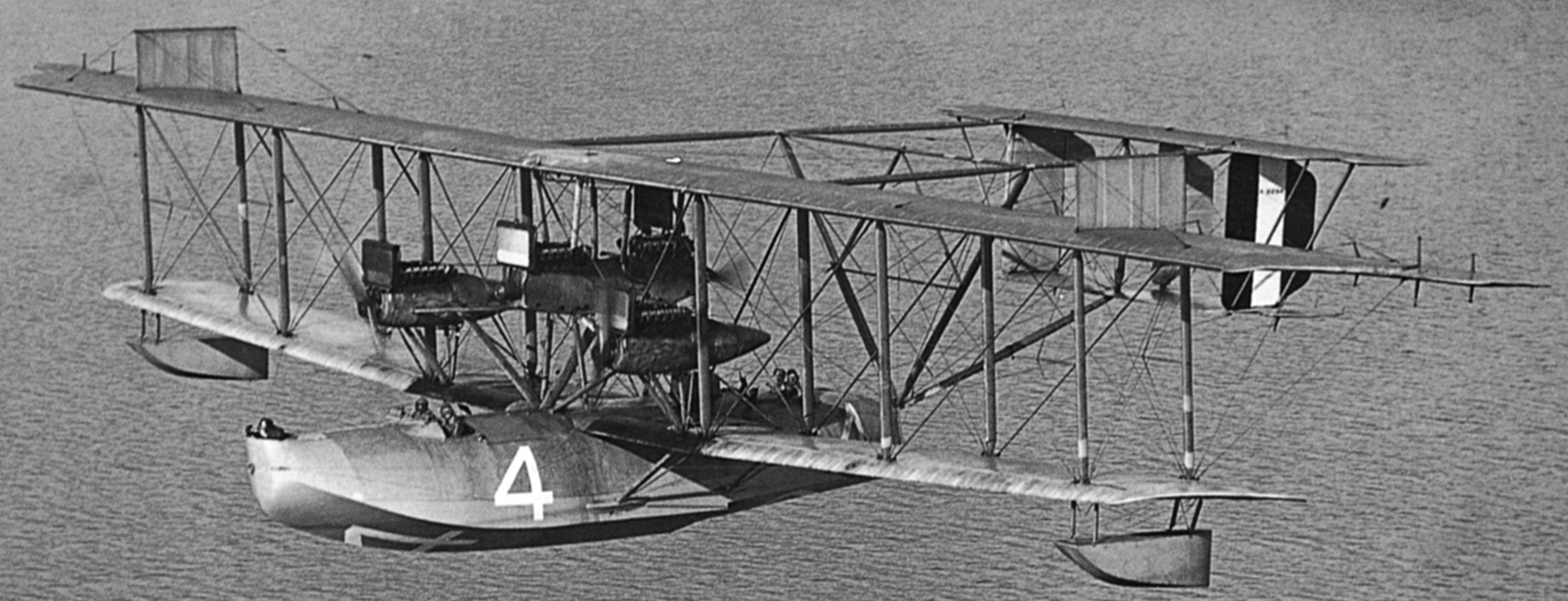
Curtiss NC seaplane. Plane number four of four built, named NC-4, sometime after the translatlantic test flight, 1919. Visible is the fourth pusher engine which was added for that flight. US Navy photo.
1930 Lieutenant Commander Elmer F. Stone received a medal from Congress for extraordinary achievement in making the first successful trans-Atlantic flight in 1919. Stone was the pilot of the Navy’s NC-4.

1946 Commodore Edward M. Webster, USCG, (and here) headed the US Delegation to the International Meeting on Radio Aids to Marine Navigation, which was held in London, England. As a result of this meeting, the principal maritime nations of the world agreed to make an intensive study of the World War II-developed devices of radar, LORAN, radar beacons, and other navigational aids with a view to adapt them to peacetime use. This was the first time that the wartime technical secrets of radar and LORAN were generally disclosed to the public. [USCG Public Information Division News Release, 7 June 1946.]

President Nixon and Nikolay Podgorny (Chairman of the Presidium of the Supreme Soviet of the USSR) sign agreements in cooperation between the United States and USSR in the fields of environmental protection, medical science, and public health. The signing ceremony took place in St. Vladimir Hall in the Grand Kremlin Palace, Moscow, between 6:08 PM and 6:20 PM on May 23, 1972. Photo by Robert Knudsen, White House Photo Office (WHPO). Courtesy of Nixon Library.
1972 President Richard Nixon and the Chairman of the Presidium of the Supreme Soviet of the USSR, N. V. Podgorny, signed the “Agreement on Cooperation in the Field of Environmental Protection between the United States of America and the Union of Soviet Socialist Republics.” Under the agreement, the U.S. Coast Guard was the lead U.S. agency, in association with the EPA and MARAD, for the Task Group on Prevention and Cleanup of Pollution of the Marine Environment from Shipping.
 Chuck Hill's CG Blog