
Based on the Coast Guard Historian’s timeline, https://www.history.uscg.mil/research/chronology/
With inspiration from Mike Kelso
June 13
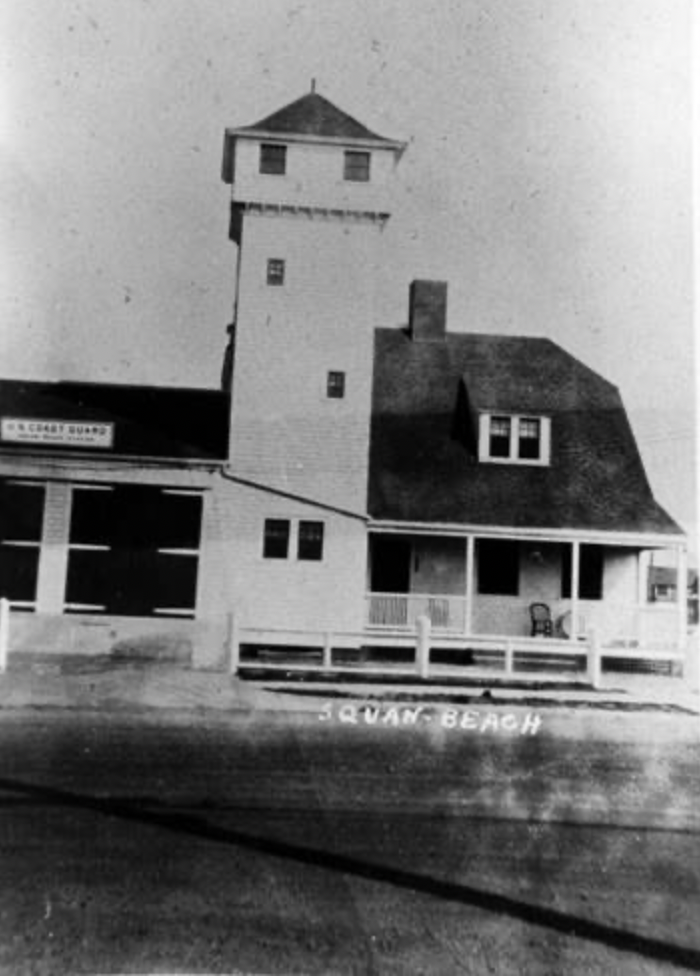
“SQUAN BEACH”; no date/photo number; photographer unknown. Probably 1927.
1903 A Gold Lifesaving medal was awarded to Captain Robert F. Longstreet “for heroic conduct at Squan Beach, New Jersey,” for his efforts to rescue five fishermen from their capsized vessel on June 13, 1903. The heavily – laden vessel was observed to capsize in “heavy breaking surf caused the heavy ground swell and strong southerly wind, following a storm which had just passed along the coast.” Observers went to the Squan Beach life – saving station for help, but because it was the inactive season, only Captain Longstreet was present. Nevertheless, he launched a small skiff with the help of a fisherman and rowed out the fishing vessel.

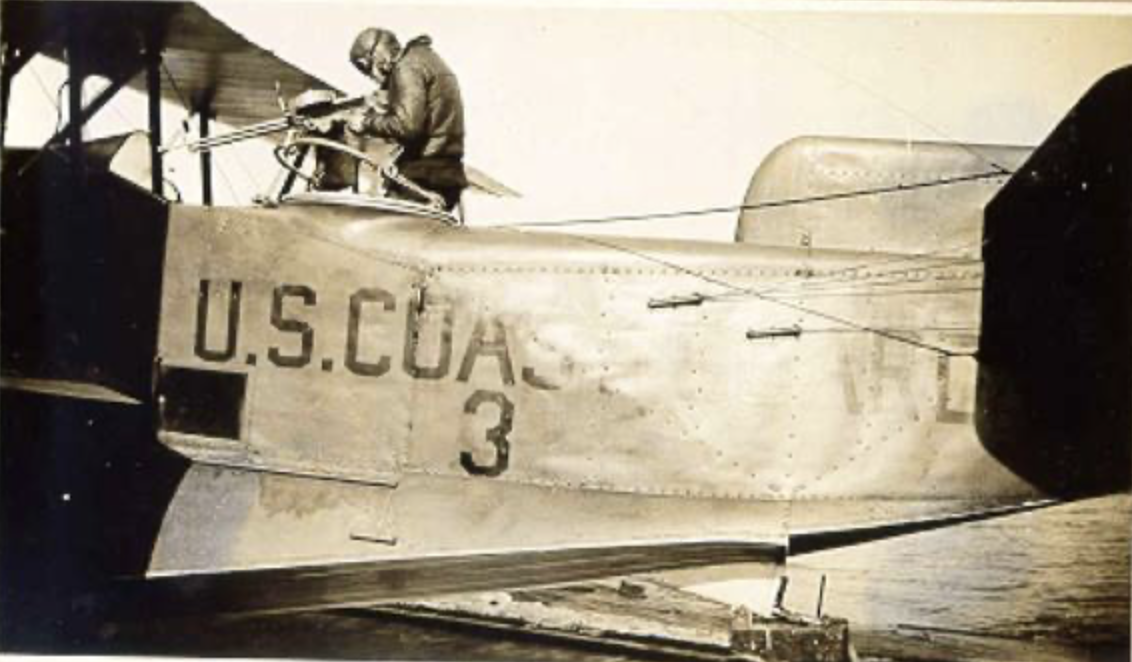
Loening OL-5, “Radio operator, holding mouthpiece of transmitter – wearing ear-phone helmet. Aviation Unit, Gloucester, Mass.; 8 March 1929; Photo Number 3-8-29
1929 Coast Guard Radio Technician A. G. Descoteaux became the first person to broadcast from an aircraft. In a Loening amphibian, he reported the takeoff of a French aircraft on a trans-Atlantic flight at Old Orchard Beach, Maine. The account was relayed by ground equipment to an extensive national hookup and was received by U.S. and foreign listeners.
Meanwhile, the 1925 addition of aircraft to the Coast Guard’s inventory created a new challenge for communications. Early aircraft had not been designed or constructed with radios in mind. Luckily, Coast Guard Lt. Cmdr. Elmer Stone, a pioneer in maritime aviation, devised specifications for an aviation radio set. With those specifications in mind, Radio Electrician A.G. Descoteaux and Chief Radioman R.H. Salvas exercised field-level initiative to develop a 90-pound battery-operated radio set. This set enabled Coast Guard aircraft to report vessel sightings in real time to nearby cutters and shore stations. This capability proved critical to successful surface vessel interdictions and, later, aviation rescues and interdictions.
Loening OL-5, “Machine gun and ring mount ready for action – showing magazine and shell catcher in place. Gloucester, Mass.”; 8 March 1929; Photo Number 3-8-29 (14).
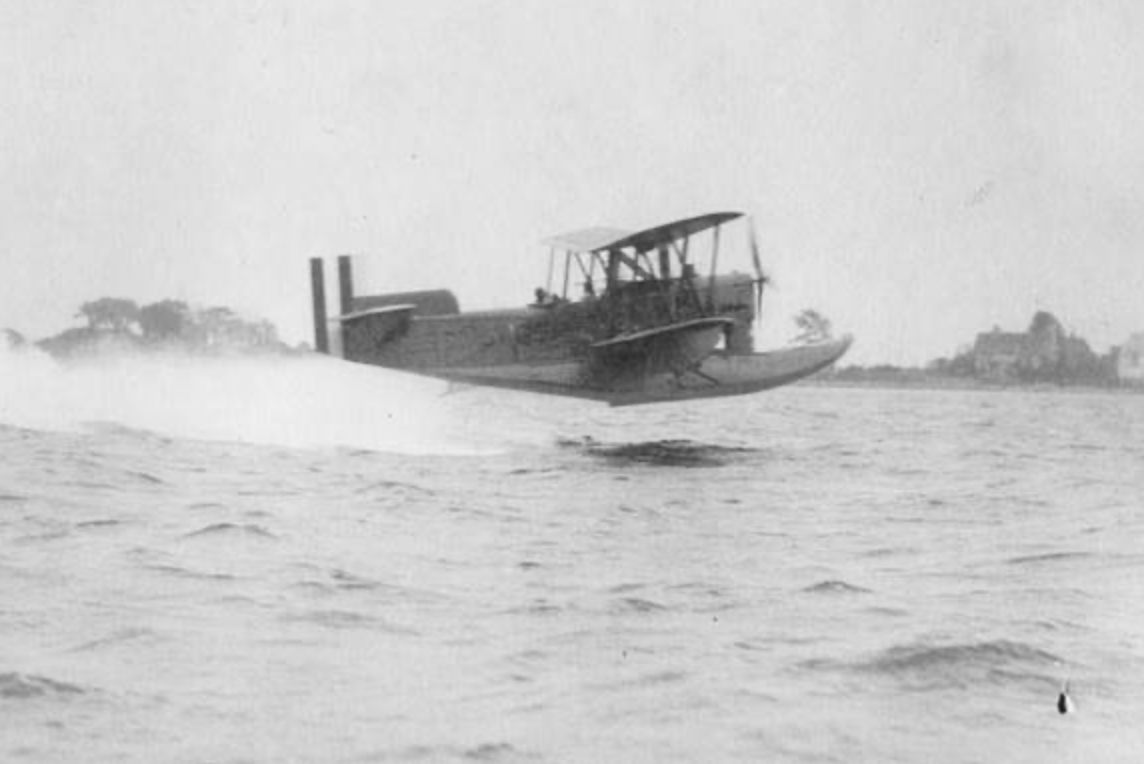
Loening OL-5, waterborne take-off, OL-5 No. 1(?), no caption/date/photo number.

1933 LT Richard L. Burke piloted a seaplane from AIRSTA Cape May to rescue an ill seaman from the fishing trawler Shawmut 130 miles offshore. He was awarded the Distinguished Flying Cross for this rescue.
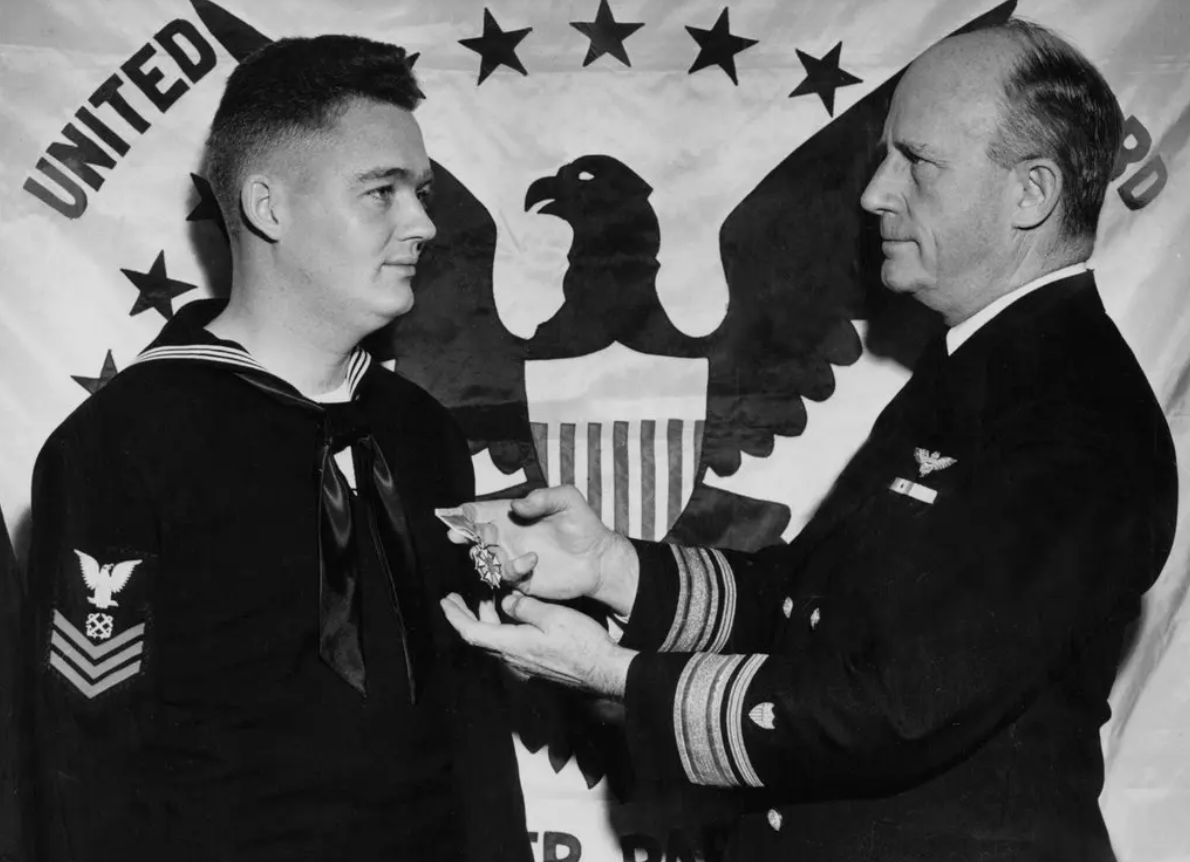
Seaman John Cullen, left, received the Legion of Merit from Rear Adm. Stanley V. Parker for his service in World War II. Credit…The New York Times
1942 Coast Guardsman John C. Cullen (Seaman 2/c) discovered Nazi saboteurs landing on beach at Amagansett, Long Island. He reported this to his superiors. The FBI later captured the Nazis and Cullen was awarded the Legion of Merit.

USCGC Thetis (WPC-115)
1942 CGC Thetis sank the German U-boat U-157 off the Florida Keys. There were no survivors.
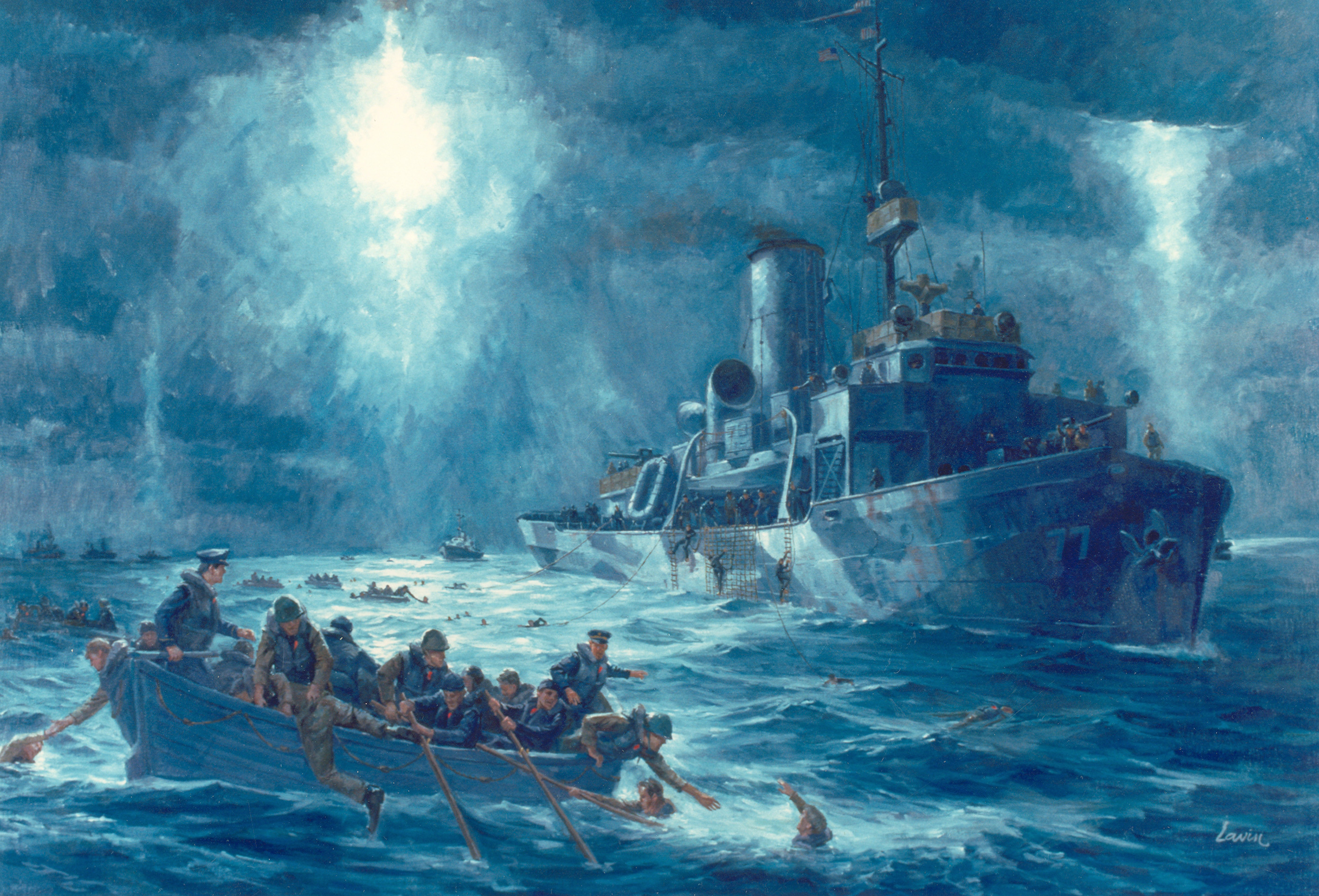
Escanaba rescuing survivors from USAT Dorchester. USCG Image.
1943 CGC Escanaba exploded and sank off Ivigtut, Greenland, with only two survivors. The cause for the loss has never been confirmed.

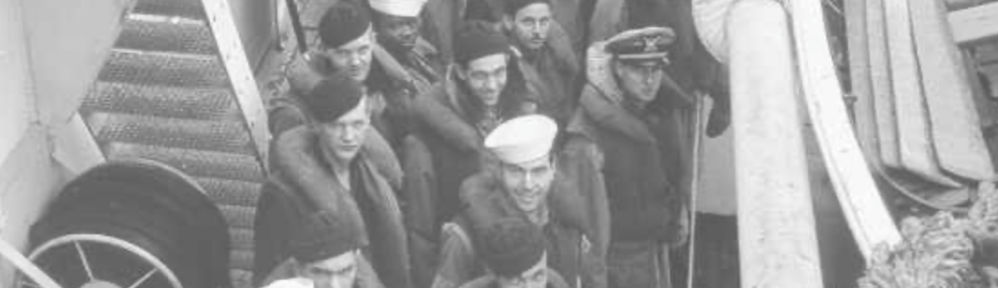
(original USCG caption) USS Escanaba, CG; “All hands at Quarters on deck.”; circa-late 1942; photo is from Roll No. 4; photo by Ray Platnick, P.M.1c.
2023 The Navy organized Coast Guard Port Security Unit (PSU) 305 members conducted a casing of the colors ceremony at Naval Base Guantanamo Bay Tuesday, marking the end of the Coast Guard’s 21-year mission supporting Joint Task Force Guantanamo (JTF-GTMO). Coast Guard Commandant Admiral Linda Fagan presided over the historical ceremony and presented a Coast Guard Unit Commendation award to the men and women of PSU 305. Port Security Units are part of the Coast Guard’s deployable specialized forces and have served JTF-GTMO as the Maritime Security Detachment (MARSECDET) for over 21 years. The Virginia-based PSU 305 was the first PSU deployed to Guantanamo Bay in 2002 in support of Operation Enduring Freedom, and this tour completes their fifth unit eployment. “Thanks to the quiet resolve and careful watch of our Port Security Units for the past 21 years, the work our Nation has conducted here has been done safely and securely,” said Fagan during the ceremony. Coast Guard PSUs and Maritime Safety and Security Teams have provided maritime anti-terrorism force protection for JTF-GTMO since 2002. There have been 39 unit rotations to Guantanamo Bay since the Coast Guard began supporting the mission. The men and women assigned to the MARSECDET collectively provided over 200,000 underway hours conducting around-the-clock waterside patrols and over 50,000 hours of shoreside anti-terrorism and force protection defense security to Department of Defense assets and personnel at Naval Station Guantanamo Bay. Upon the conclusion of the JTF-GTMO mission, PSUs will continue to remain an agile expeditionary force provider, playing a critical role in protecting strategic maritime operations in an environment of increasing global competition. In addition, PSUs will participate in national level joint and combined exercises to enhance readiness and proficiency for the full spectrum of PSU capabilities. “This is an exciting time for the PSU community” said Capt. Matthew Michaelis, Pacific Area deputy chief of operations. “As the focus shifts from a long-standing enduring mission, we look forward to supporting future missions that align with their diverse set of capabilities. Our PSUs recently completed three joint DoD exercises and are preparing for additional exercises overseas with DoD and some of our trusted partners. The increased focus on interoperability will better prepare our PSUs to deploy in a joint or multi-lateral environment as they were designed, while also creating opportunities to evolve and uncover new and novel ways for their employment.”
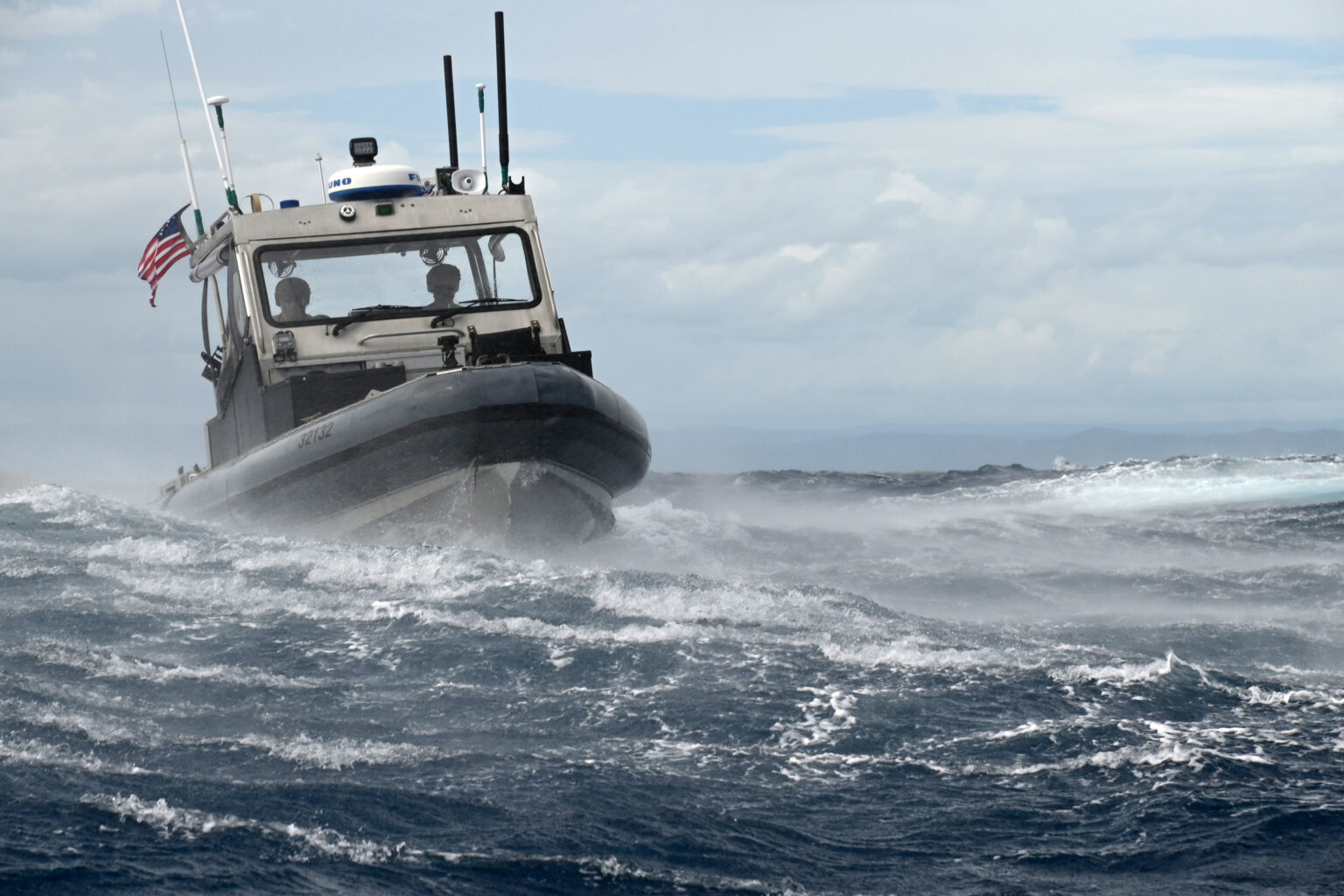
Coast Guardsmen from Port Security Unit 307 conduct seaward security for Department of Defense assets and personnel at Naval Station Guantanamo Bay, Cuba, April 25, 2022. During the nine-month deployment, unit operations focused on maritime defense, providing more than 30,000 hours of around-the-clock waterside and shore side anti-terrorism and force protection. U.S. Coast Guard by photo by Lt. Cmdr. Glenn Sanchez.
 Chuck Hill's CG Blog