
Based on the Coast Guard Historian’s timeline, https://www.history.uscg.mil/research/chronology/
With inspiration from Mike Kelso
June 19
1845 The Secretary of the Treasury had Lieutenants Thornton A. Jenkins and Richard Bache detailed from the Navy and sent abroad to procure information that might tend to the improvement of the lighthouse system of the United States. Subsequently, when the Secretary submitted the report of these two naval officers and asked that a board be appointed to consider thoroughly the matter of lighthouse improvements. No legislative action resulted.
1876 The first Gold Life Saving Medals ever awarded were presented to private citizens Lucien M. Clemens and his brothers Hubbard M. Clemons and Al J. Clemons. On May 1, 1875 the Clemens’ brothers “displayed the most signal gallantry in saving two men from the wreck of the schooner Consuelo” in an open rowboat. Five others on board the schooner perished when the schooner capsized in the heavy seas “with the wind blowing a gale from the northeast” before the brothers arrived on scene. The medals were awarded by the Treasury Department.
1992 In a joint operation with INS, the Coast Guard assisted in the seizure of the 167-foot Belize-registered freighter Lucky No. 1, her 15-man crew, and 117 illegal Chinese migrants that were aboard. The seizure took place off Oahu.
2008 The U.S. Coast Guard announced the launch of an ORBCOMM concept demonstration satellite, equipped with Automatic Identification System (AIS) capability, from Kapustin Yar, Russia. The satellite attained a proper orbit was expected to start transmitting operational data within the next three months. The U.S. Coast Guard Nationwide Automatic Identification System (NAIS) Project sponsored equipment on the satellite to test the feasibility and effectiveness of AIS message reception and reporting from space for ship tracking and other navigational activities. The NAIS project improved maritime domain awareness for the U.S. Coast Guard and Department of Homeland Security by using the integrated network of AIS equipment and user interface services that display and exchange AIS-equipped vessel information for maritime safety and security. Data collected by the NAIS supports the nation’s maritime interests by promoting vessel and port safety through collision avoidance, and through detection, traffic identification, and classification of vessels out to 2,000 nautical miles from shore.
October 4, 2022, Rochelle Park, NJ – ORBCOMM Inc., a global provider of Internet of Things (IoT) solutions, today announced that it has been awarded a multi-year contract by a U.S. Government Agency for a competitive renewal of its global Automatic Identification System (AIS) data services used for ship tracking and other maritime navigational and safety efforts. In addition, ORBCOMM was awarded a separate competitive contract to deliver AIS services to multiple other U.S. Government users.
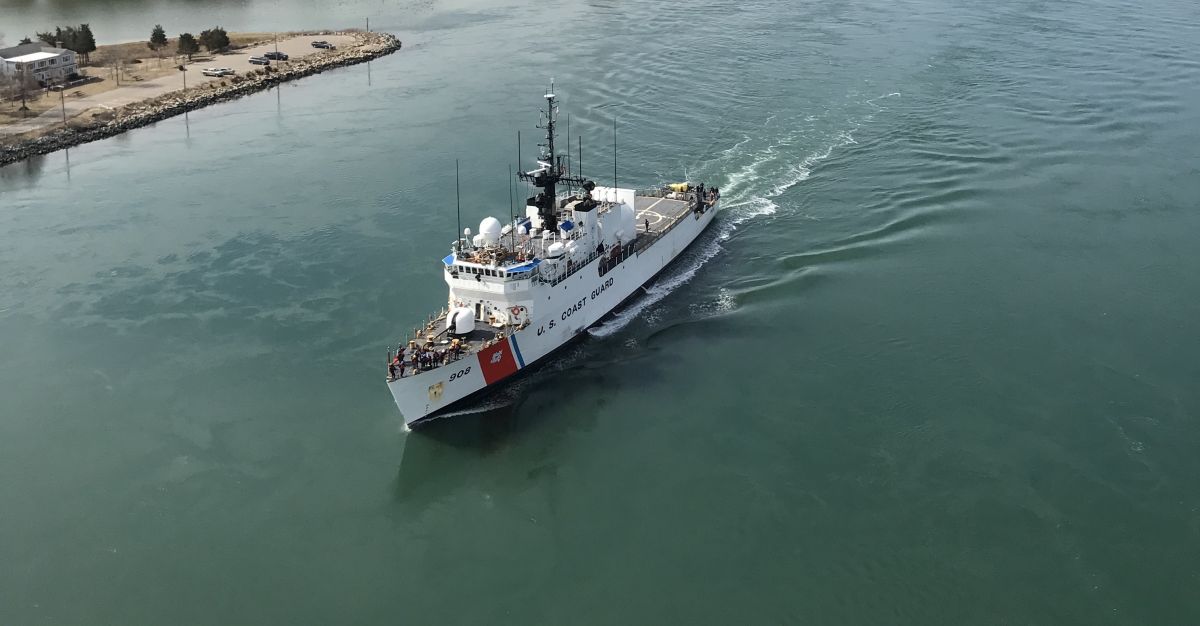
USCGC TAHOMA
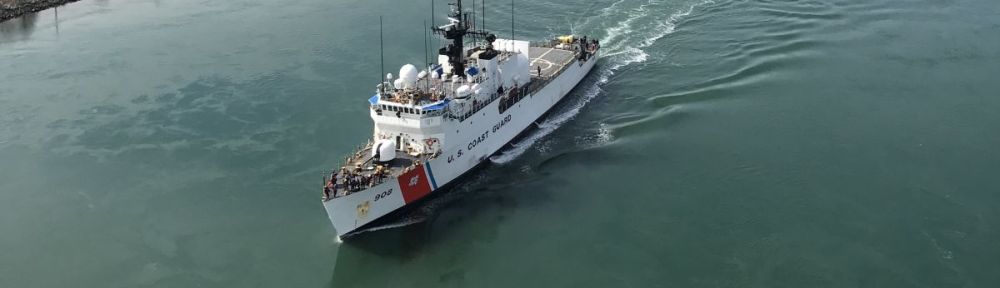
2014 CGC Tahoma returned to its homeport in Portsmouth, New Hampshire after a 64-day deployment in the Caribbean Sea. During the deployment, the 100-member crew of Tahoma worked under tactical control of Coast Guard Sector San Juan, Puerto Rico, conducted flight operations, patrolled drug and migration, conducted sea boarding, and assisted in the transfer or repatriation of 26 Haitian migrants. The crew also participated in training and law enforcement operations, migrant interdiction and counterdrug operations in support of Operation Unified Resolve, and conducted Tailored Ship’s Training Availability (TSTA). The crewmembers completed a total of 148 drills and exercises, earning the prestigious Battle “E” for excellence in five areas of professional expertise.
 Chuck Hill's CG Blog