
Based on the Coast Guard Historian’s timeline, https://www.history.uscg.mil/research/chronology/
With inspiration from Mike Kelso
June 20
1874 An Act of Congress provided for lifesaving stations on the coasts of Delaware, Maryland, Virginia, and Florida, as well as on the Great Lakes and the Pacific Coast.
1874 The first Life Saving Medal enactment was passed, which was updated in 1878 and 1882. Ship masters were also required to report accidents and death in order to gather data to aid in evaluating sites for search and rescue stations.
1906 Congress passed the Sponge Fishing Act and directed that the Revenue Cutter Service enforce it.
1918 An Act of Congress (40 Stat. L., 607, 608) changed the designation of Lighthouse Inspectors, who were in charge of the 19 lighthouse districts, to that of Superintendents of Lighthouses.

25 May 1963 — The first of the new class of 210-foot cutters, USCGC Reliance (WPC-615, later WMEC-615), was christened at Todd Shipyard, Houston, Texas. The wife of the Commandant at the time, Mrs. Edwin J. Roland, was the sponsor for the cutter. A news report published at the time noted: “The CGC RELIANCE, to be stationed at Corpus Christi, Texas, marks a significant milestone in the building program of the Coast Guard as it is the first cruising cutter of any size built for Coast Guard service in almost twenty years.”
1964 CGC Reliance, the first of the Coast Guard’s new 210-foot medium endurance cutter class, was commissioned.

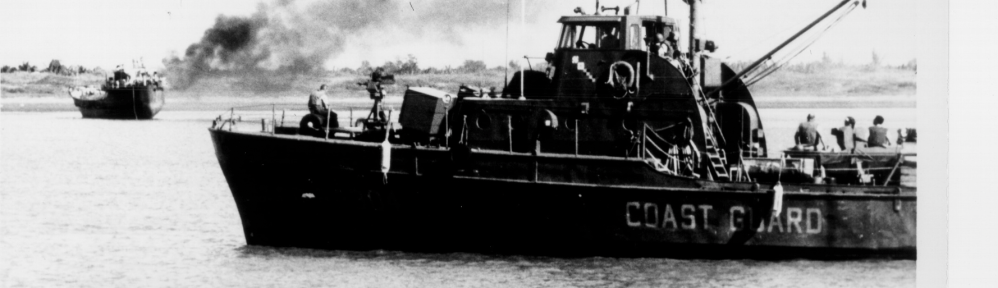
North Vietnamese 100′ Trawler burns on a South Vietnamese beach after being forced ashore by USCGC POINT LEAGUE, on 20 June 1966. It was carrying an estimated 250 tons of supplies for the Viet Cong. USN 1116663
1966 CGC Point League attacked and crippled a North Vietnamese junk attempting to run the Navy’s Market Time blockade. The action continued into the next day as the junk stranded itself on the shore and its crew fired a demolition charge, destroying their ship.

USCGC Point League (WPB-823304) forces North Vietnamese trawler aground near Ba Song, RVN, 20 June 1966.
 Chuck Hill's CG Blog