

Based on the Coast Guard Historian’s timeline, https://www.history.uscg.mil/research/chronology/
With inspiration from Mike Kelso
June 28
1946 Peacetime cruises for the cadets of the U.S. Coast Guard Academy at New London Connecticut, were revived.
June 29

Revenue Cutter Dallas 1815
1820 The Revenue cutter Dallas captured the 12-gun brig-of-war General Ramirez, which was loaded with 280 slaves, off St. Augustine. The July 8, 1820 issue of the Savannah Republican noted:
“On the 28th ultimo, while the Cutter DALLAS was lying in the St. Mary’s River, Captain Jackson received information that the Brig of war GENERAL RAMIREZ, supposed to be a piratical vessel was hovering off St. Augustine. The Cutter forthwith got under way in pursuit of the Brig having first obtained 12 United States soldiers from Fernandina to strengthen the Cutter’s force. At half past three the next day, she hailed the Brig and received for answer, “This is the Patriot Brig GENERAL RAMIREZ—-.” Captain Jackson finding a number of blacks on board took possession of the vessel and brought her into St. Mary’s, arriving on the 1st instant. Captain Jackson found on the Brig about 280 African slaves. The Captain and crew, 28 in number, acknowledged themselves Americans.”

CDR Frank Erickson, USCG, the first US Naval Aviation helicopter pilot.
1944 CDR Frank A. Erickson landed a helicopter on the flight deck of CGC Cobb. This was the first rotary-wing aircraft-shipboard landing by Coast Guard personnel.

A U.S. Coast Guard Sikorsky HNS-1 helicopter (right) and a Sikorsky HOS-1 (left) conducting experimental flight operations on USCGC Cobb (WPG-181), 15 June 1944.
1950 The Coast Guard adopted a Navy directive relative to security measures, including precautions against possible sabotage at installations and aboard ships.

The components and operation of the Cospas-Sarsat system
1982 The Soviet Union launched COSPAS I, the first search and rescue satellite ever launched. In combination with later SARSAT satellites, a new multi-agency, international, search and rescue service was made operational.
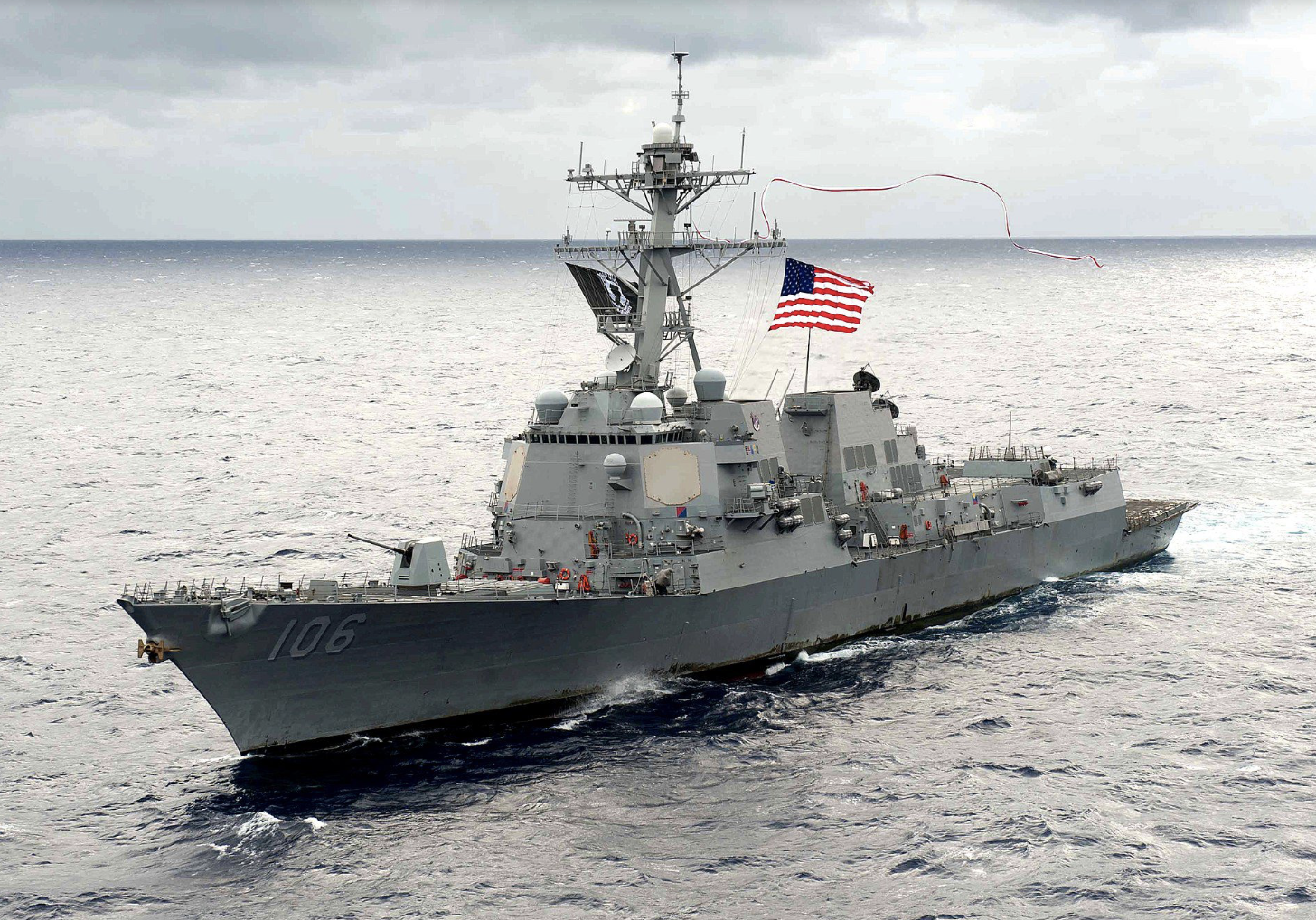
USS Stockdale (DDG 106). U.S. Navy File Photo
2013 A Coast Guard Advanced Interdiction Team (AIT) returned home from a four-month counter piracy deployment to the Middle East. The team was comprised of three units: Maritime Safety and Security Team (MSST) Los Angeles-Long Beach, MSST San Diego, and the Pacific Tactical Law Enforcement Team (PACTACLET) out of San Diego. Under the direction of the U. S. Navy’s 5th Fleet, the team served aboard the U.S. Naval guided missile destroyer USS Stockdale, working side by side with the ship’s Visit, Board, Search and Seizure (VBSS) team assigned to Combined Task Force 151. While on board the Stockdale, the team’s primary mission was to fight maritime terrorism and counter piracy. The AIT and VBSS conducted joint training for counter piracy, illegal activity interdictions, and boardings. The training also included space accountability for hidden compartments, mock medical emergencies, and planning and executing mission contingencies. CTF-151 was a multi-national task force working under Combined Maritime Forces to conduct counter-piracy operations in the Southern Red Sea, Gulf of Aden, Somali Basin, Arabian Sea and Indian Ocean. Augmented by members from the Coast Guard, the joint-unit team was engaged in stemming illegal piracy and armed robbery at sea.
 Chuck Hill's CG Blog