
Based on the Coast Guard Historian’s timeline, https://www.history.uscg.mil/research/chronology/
With inspiration from Mike Kelso
July 15
1870 Congress directed that the revenue cutters on the northern and northwestern lakes, when commissioned, shall be specially charged with aiding vessels in distress on the lakes.
1870 An Act of Congress (l6 Stat. L., 291, 309) directed the Lighthouse Board to mark all pierheads belonging to the United States situated on the northern and northwestern lakes, as soon as it was notified that the construction or repair of pierheads had been completed.

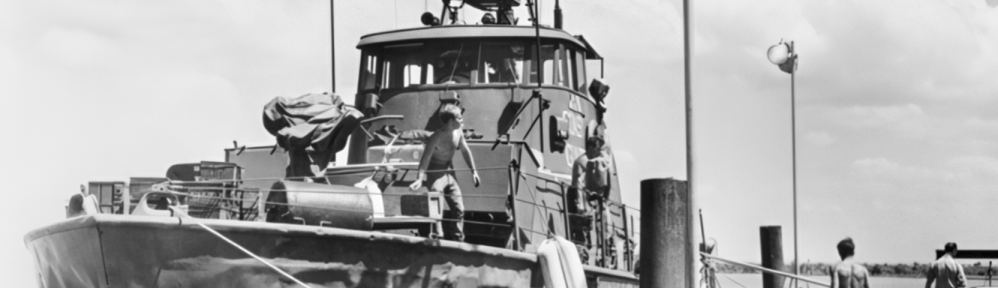
USCGC Point Orient in Vietnam
1967 USCGC Point Orient (WPB 82319) of Coast Guard Squadron One captured a communist trawler in Vietnam.
“…15 July 1967 after three days of tracking by patrol aircraft and the radar picket, USS Wilhoite. After playing a cat-and-mouse game for three days with TF115 units the trawler headed for the mouth of the Sa Ky Riveron the Batangan Peninsula late on 14 July. The trawler was directed by Point Orient to heave to, but the hail was answered with gunfire. The cutter returned fire along with Wilhoite and USS Gallup, USS Walker, and swift boat PCF-79. At 0200 15 July, the trawler was boxed in and ran aground 200 yards (180 m) from shore and the trawler was ablaze. Republic of Korea Marines directed artillery fire from the shore and at 0600 with the trawler apparently abandoned, a Navy demolitions expert from Walker boarded the trawler and defused 2,000 pounds of TNT charges that were designed to scuttle the craft. Found on board were several thousand rounds of rifle and machine gun ammunition, mortar and rocket rounds, anti-personnel mines, grenades, and several thousand pounds of C-4 plastic explosive and TNT. Weapons found included several hundred machine guns, AK-47 rifles, AK-56 rifles, and B-40 rocket launchers.”
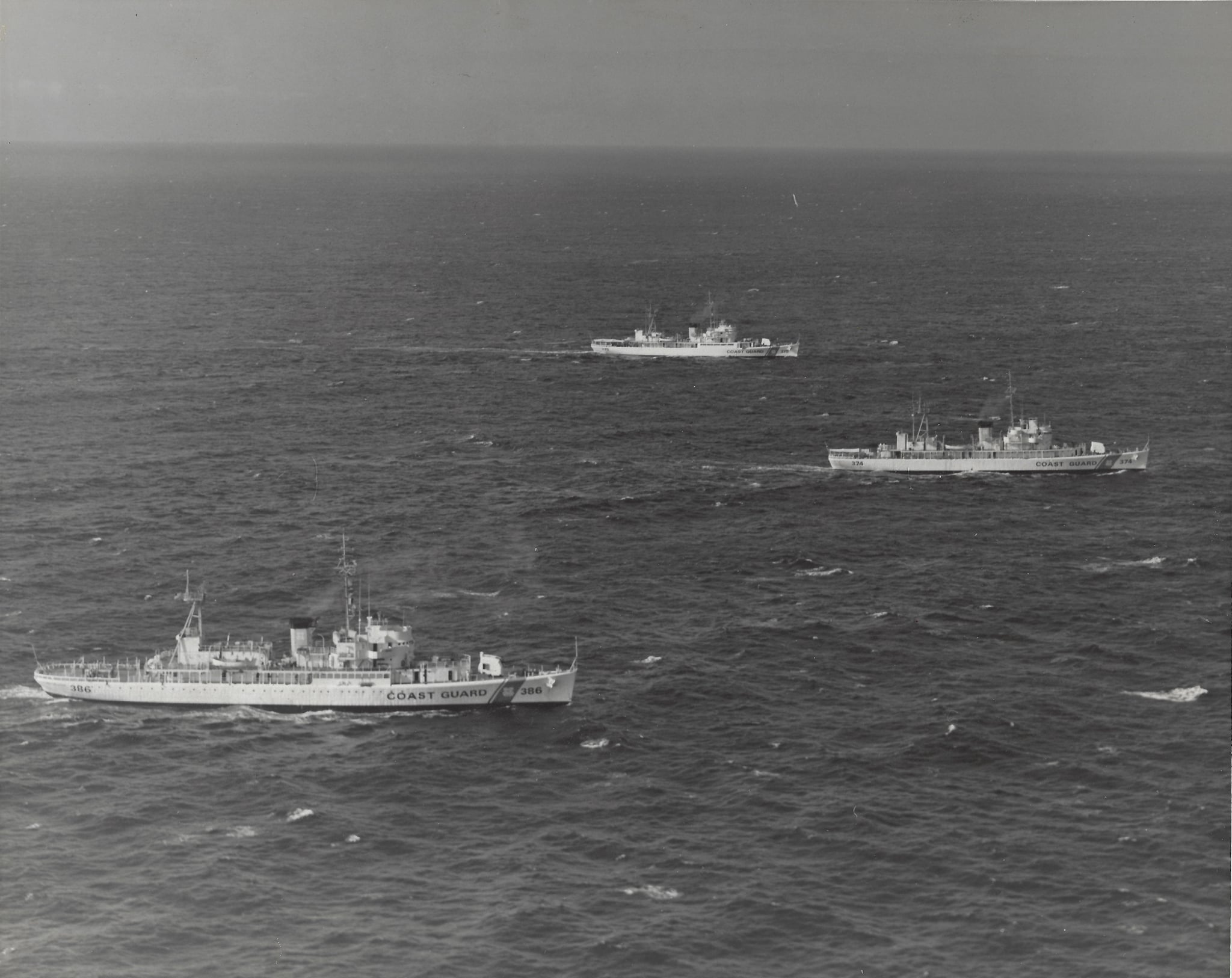
USCGC Absecon, Chincoteague, and McCulloch SquadronThree
1972 CGC Absecon was decommissioned and transferred to the South Vietnamese Navy. This was the last of the seven 311-foot Casco-class cutters to be transferred to the South Vietnamese. She was commissioned as the Tham Ngu Lao (HQ-15) on July 15, 1972. She was seized by the North Vietnamese when the South fell in 1975. The North Vietnamese gave her the hull number HQ-1, but did not apparently name her. She was refitted with two or possibly four SS-N-2 launchers. Her current status remains unknown.
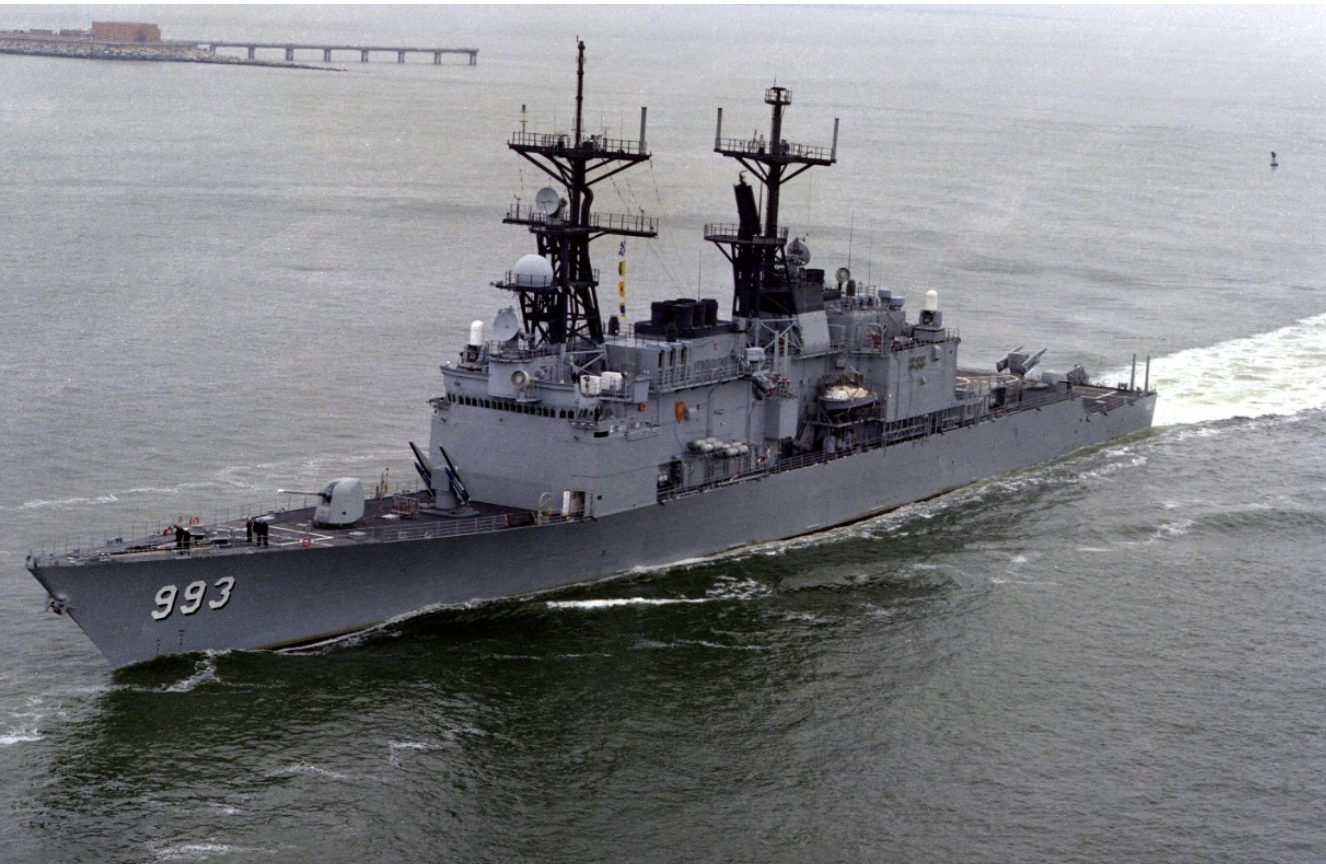
A port bow view of Kidd (DDG-993) crossing Thimble Shoals, 1 February 1984. (U.S. Navy Photo by PH2 K. Bates, DIMOC #DN-SC-88-09212)
1983 For the first time in history a U.S. Navy warship with a Coast Guard LEDET on board fired on a suspected drug-smuggling vessel to force it to heave to. On 15 July 1983, U.S. Navy destroyer USS Kidd fired on the “stateless” vessel Ranger with warning shots at first and when the vessel refused compliance the destroyer fired disabling shots, stopping Ranger without causing casualties. About 35 tons of marijuana were discovered on board and Ranger’s nine crew were arrested and the vessel seized. From “COUNTER-NARCOTERRORISM OPERATIONS IN THE EASTERN PACIFIC AND CARRIBEAN OPERATIONS AREAS FROM 1970 THROUGH 1990.”
“Some smugglers preferred to try their luck and run from the anti-narcotics forces. The smugglers knew that it would take time for the forces to get the necessary permissions to board their vessels, and even if permission was granted there were maneuvers that the smugglers could use in order to prevent the forces from boarding their ships. The only way for the forces to get the smugglers to stop was to disable their engines. The first time that the Navy used this method was in 1983 when the USS Kidd (DDG-993) used her .50 caliber machine guns to stop the M/V Ranger after receiving permission from the Coast Guard Headquarters.
Ranger had refused to stop and allow the search teams onboard after receiving an order to do so from Kidd. Once the Ranger was stopped the LEDET proceeded to search her and after finding over 57,000 pounds of marijuana onboard, they arrested her crew.”
 Chuck Hill's CG Blog