“20,000-pound cocaine seizure by Coast Guard breaks 18-year-old record” –CBS

CBS reports,

“A U.S. Coast Guard ship seized more than 20,000 pounds of cocaine from a single ship this week, making the largest at-sea interdiction in nearly 20 years, officials said.

“The Coast Guard said the crew of the Munro, a cutter that patrols the Pacific and is based in Alameda, California, made the seizure during “counter-narcotics operations” in the Eastern Pacific.”

I would have liked to quote the Coast Guard news release in full, but I could not find it.


“How Donald Trump Is Reviving the Coast Guard” –The National Interest

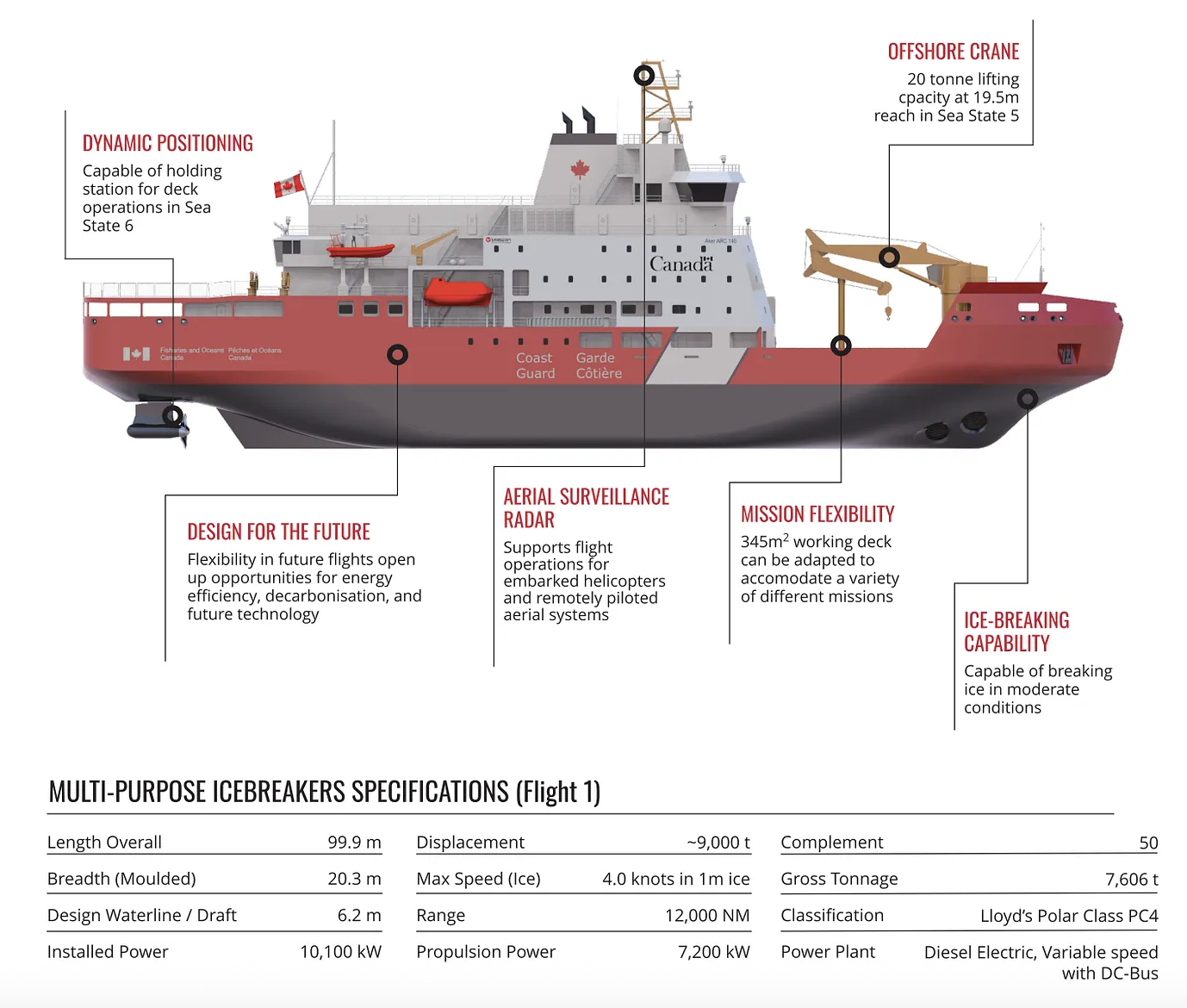
Canadian Coast Guard Multi-Purpose Icebreaker (MPI). Source: Seaspan
Note: The MPI image does not show the right propulsors; it will use Steerprop’s contra-rotating propulsors (CRP). Additionally according to Seaspan, the design could easily be upgraded to PC3. Confirmation from Seaspan and Aker Arctic. This is one of two Arctic Security Cutter designs being built for  the USCG.

This is mostly about the “Big Beautiful Bill,” which we talked about earlier. but there is some important additional information here. As previously speculated there will apparently be a new Coast Guard base in American Samoa. (See also here.)

They (Webber class FRCs–Chuck) will be based out of Guam, Hawaii, and the soon-to-be-reopened WWII-era base in American Samoa.

We probably also need to station some FRCs in Manus, Papua New Guinea.

The report may create some unwarranted impressions.

“Among other theaters, the FRCs and OPCs will operate in the Indo-Pacific in packs led by a frigate-sized National Security Cutter.” –The Coast Guard does not normally operate their ships in packs. In the Eastern Pacific Drug transit zone there may be more than one cutter coordinating their operation, but even there they tend to spread out. There is the possibility of coordinating operations with law enforcement agencies of friendly nations in the Western Pacific. 

“In just three short years, the USCG will have seventy-seven FRCs in the fleet.” FRC#61 was delivered recently. The 67th FRC was previously scheduled for delivery in 2028. With the most recent award, the total program has increased to 77 vessels, extending the production line by approximately three years. Sounds like 2031.

“Additionally, Trump signed a deal with our NATO ally Finland to buy 11 Finnish ice-capable cutters for the Arctic and Antarctica right away.” –Only four of these will be built in Finland, the rest will be built in the US. 

“The Coast Guard’s High-and-Dry Cutter” –No Dowd About It

Future USCGC Argus at launch Eastern Shipyard, Oct 27, 2023.

If you are a regular reader, you know the sad story Eastern’s problems producing the Offshore Patrol Cutter. I am not familiar with the source of this story, but it is the first I have seen that suggests there may have been some political push to grant Eastern the contract.

(Swampy sleaziness might have played a role in the decision. In the spring of 2015, POLITICO learned that the company’s owner “hosted a ‘hush-hush’ fundraiser … for Marco Rubio,” then the chairman of the Senate “panel that oversees the Coast Guard.”)

“Coast Guard Grows VIP Fleet Amid Helicopter Procurement Changes” –Aviation Week

Every Coast Guard Aircraft Type Pictured Together In Rare ‘Family Photo’. Pictured: HC-130J, C-27J, HC-144, C-37B, MH-60T, MH-65E.

Aviation Week reports,

“The increased focus on homeland defense has translated to a budget influx for the U.S. Coast Guard, enabling the service to modernize its fleet, as a watchdog outlines a continued drop in readiness.

“The One Big Beautiful Bill Act passed in Congress and signed by President Donald Trump in July allotted the service $24.59 billion to be spent on readiness through 2029. That was in addition to the Coast Guard’s fiscal 2026 request of $14.5 billion.”

This provides a brief look at what we can expect in the future.

The slip in readiness is slight and, “While the Coast Guard fleet flies much more often than Defense Department aircraft, the Coast Guard has about the same readiness rate as the department, the CBO states.”

“America’s Sole Heavy Icebreaker Heads South as Arctic Competition Intensifies” –gCaptain

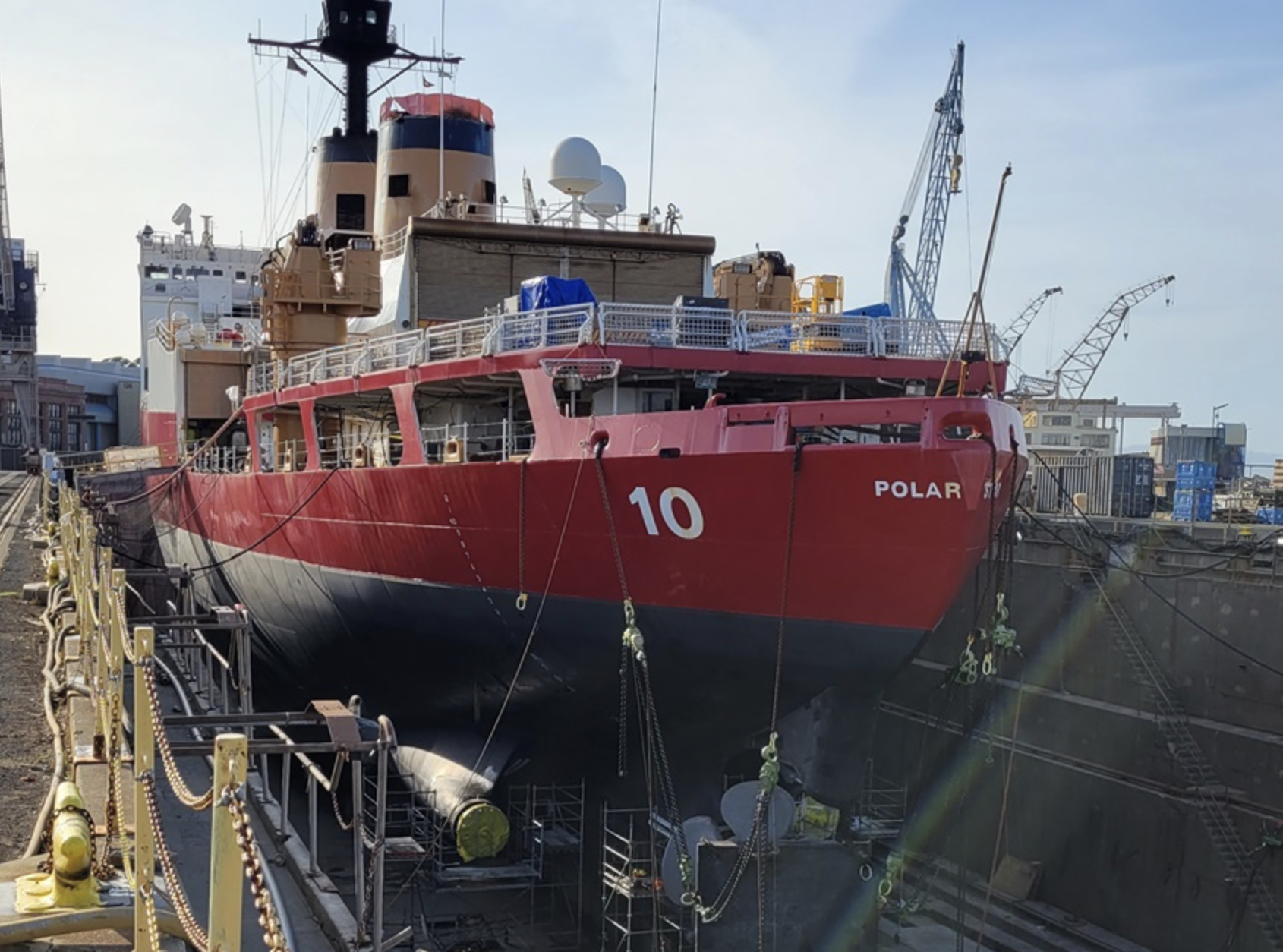
The rudder of the USCGC Polar Star (WAGB 10) is being removed while in a Vallejo, Calif., dry dock, April 1, 2025. The maintenance work completed over the past five years recapitalized integral systems, including propulsion, communication, and machinery control systems. (U.S. Coast Guard photo by Seaman Nestor Molina)

gCaptain reports,

“The U.S. Coast Guard Cutter Polar Star departed its Seattle homeport Thursday for its 29th annual deployment to Antarctica, beginning a months-long mission that underscores both America’s enduring polar presence and the mounting challenges facing its aging icebreaker fleet.

“The cutter’s deployment follows its return to Seattle in September after 308 days away, which included completing the final phase of its comprehensive five-year Service Life Extension Program at Mare Island Dry Dock in Vallejo, California. The $12.7 million final phase focused on recapitalizing integral systems including propulsion, communication, and machinery control systems.”