
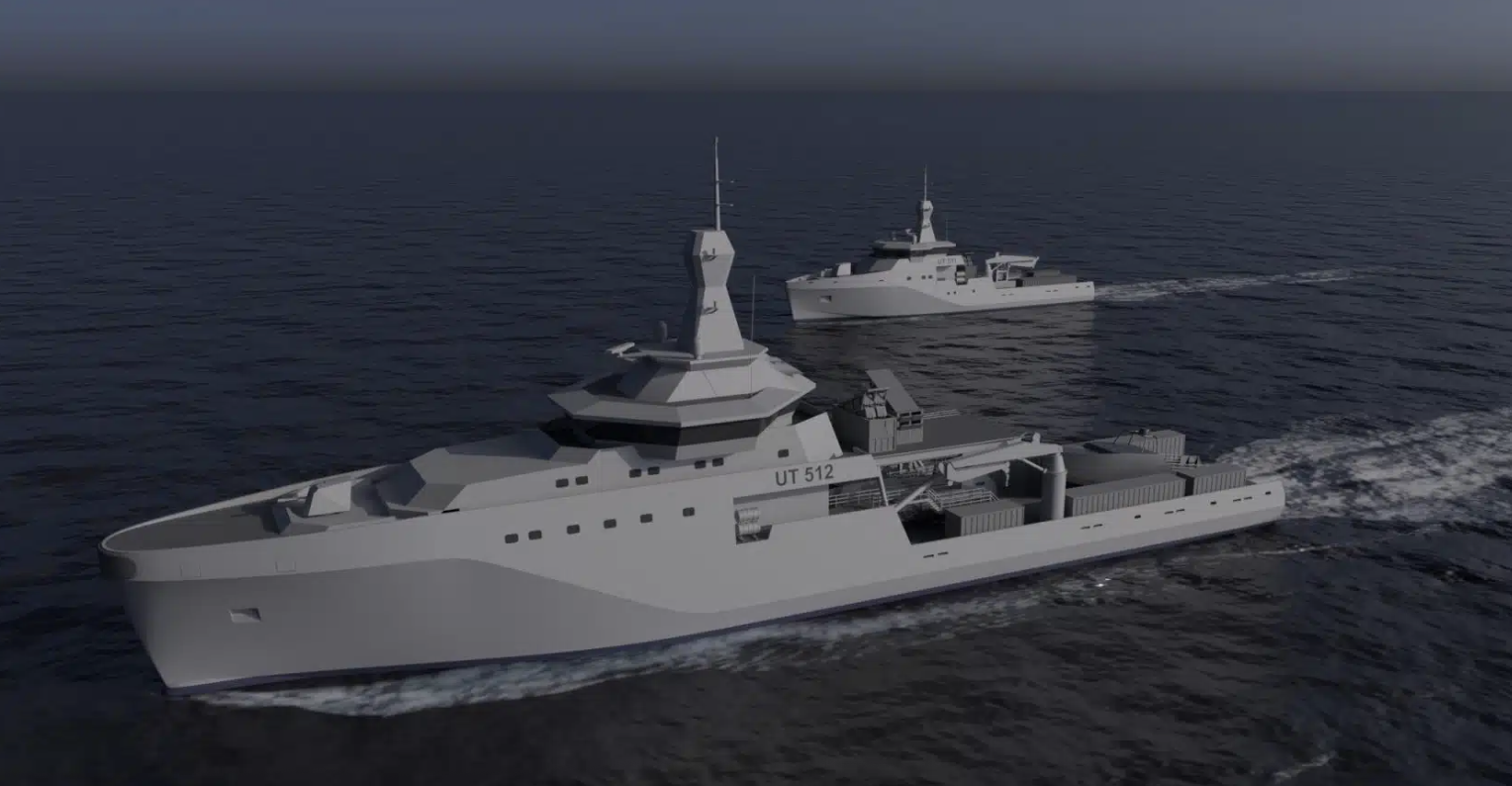
Kongsberg proposal for Norway’s Standard class.
Norway has begun a program to replace “smaller patrol craft, minehunters, light corvettes, and other auxiliaries, spread out over twelve different classes” with two “Standard” classes for both their Navy and Coast Guard. My guess is that five of the 18 “medium” size and five of the ten “offshore” vessels will go to the Norwegian Coast Guard which is a branch of the Norwegian Navy.
“The standardised vessels dedicated for Coastguard work will have certain modifications, but will also be capable of embarking the modular systems used by the Navy.”
We have two reports from Naval News, apparently news releases from two of the shipbuilders competing for the contract(s). The Ulstein report is much more detailed and is quoted above.
- Kongsberg Maritime Participates in Competition For New Standardised Vessels for Royal Norwegian Navy
- Ulstein unveils designs for new standardised vessels for Royal Norwegian Navy
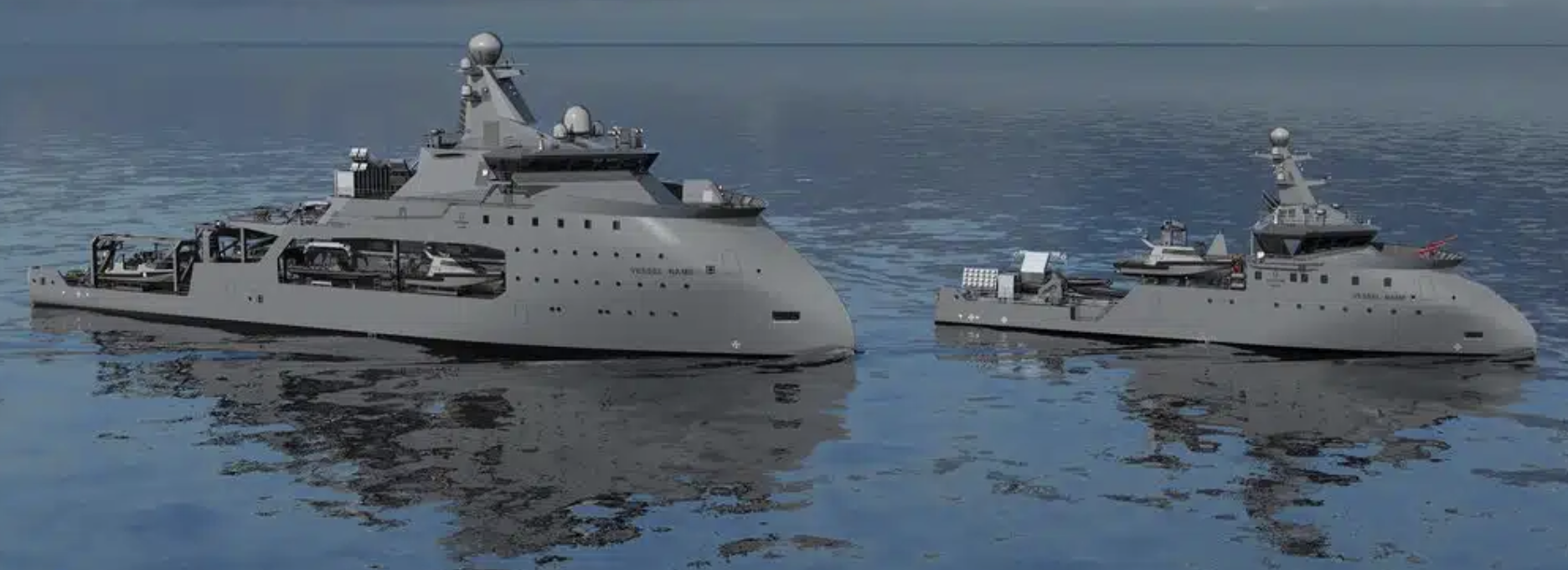
Artist impressions of ULSTEIN’ standard-class designs proposal to the Royal Norwegian Navy. Ulstein image.
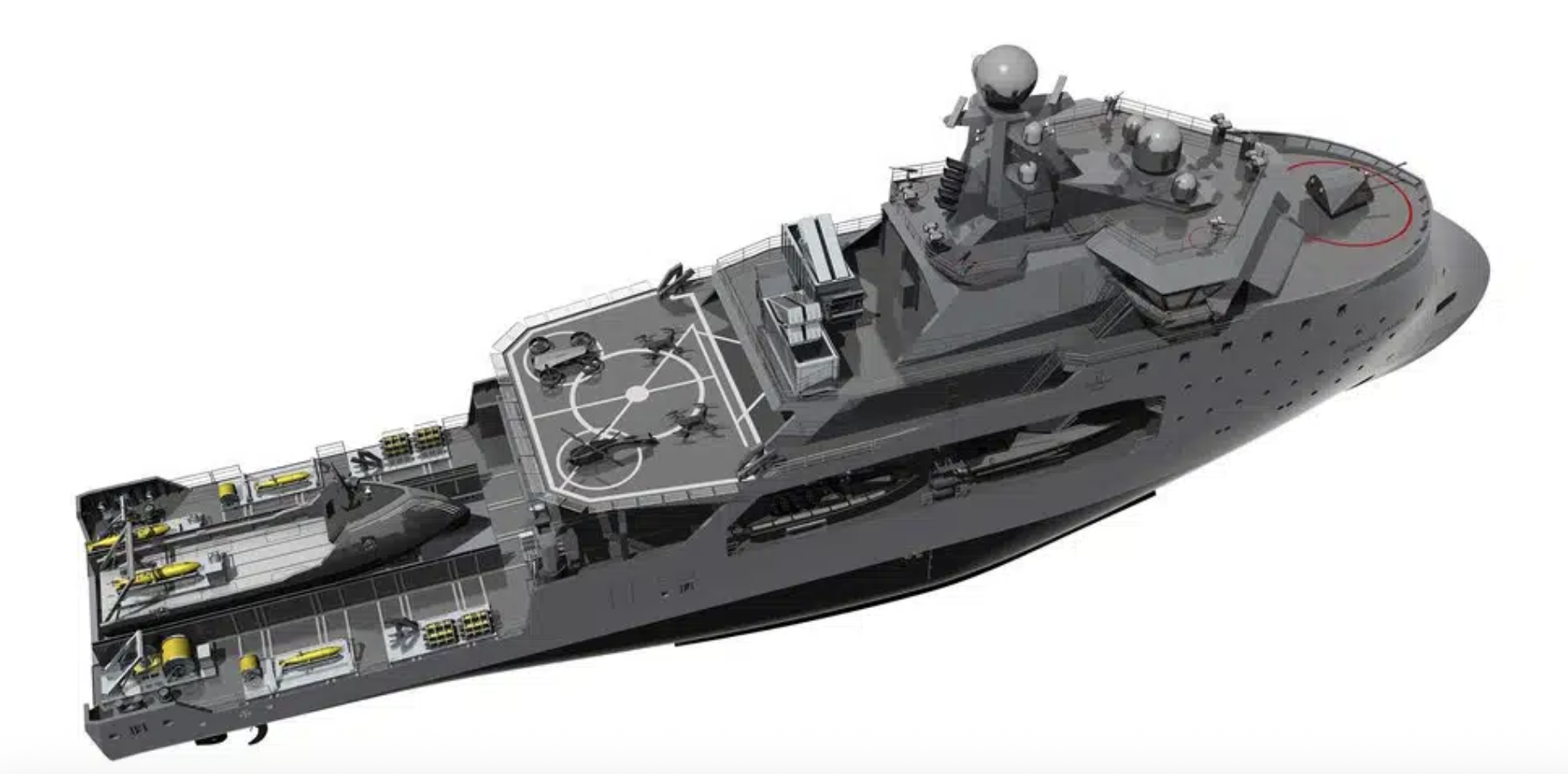
Artist impressions of ULSTEIN’ standard-class design proposal to the Royal Norwegian Navy. Ulstein image.
This project is interesting as a joint navy/coast guard project, as a modular systems project, and as a exploitation of what looks to be designs based on offshore industry support ships.
If you were reading this blog back in 2012, you might remember that a Ulstein design offered by Vigor was one of the contenders for the OPC contract.
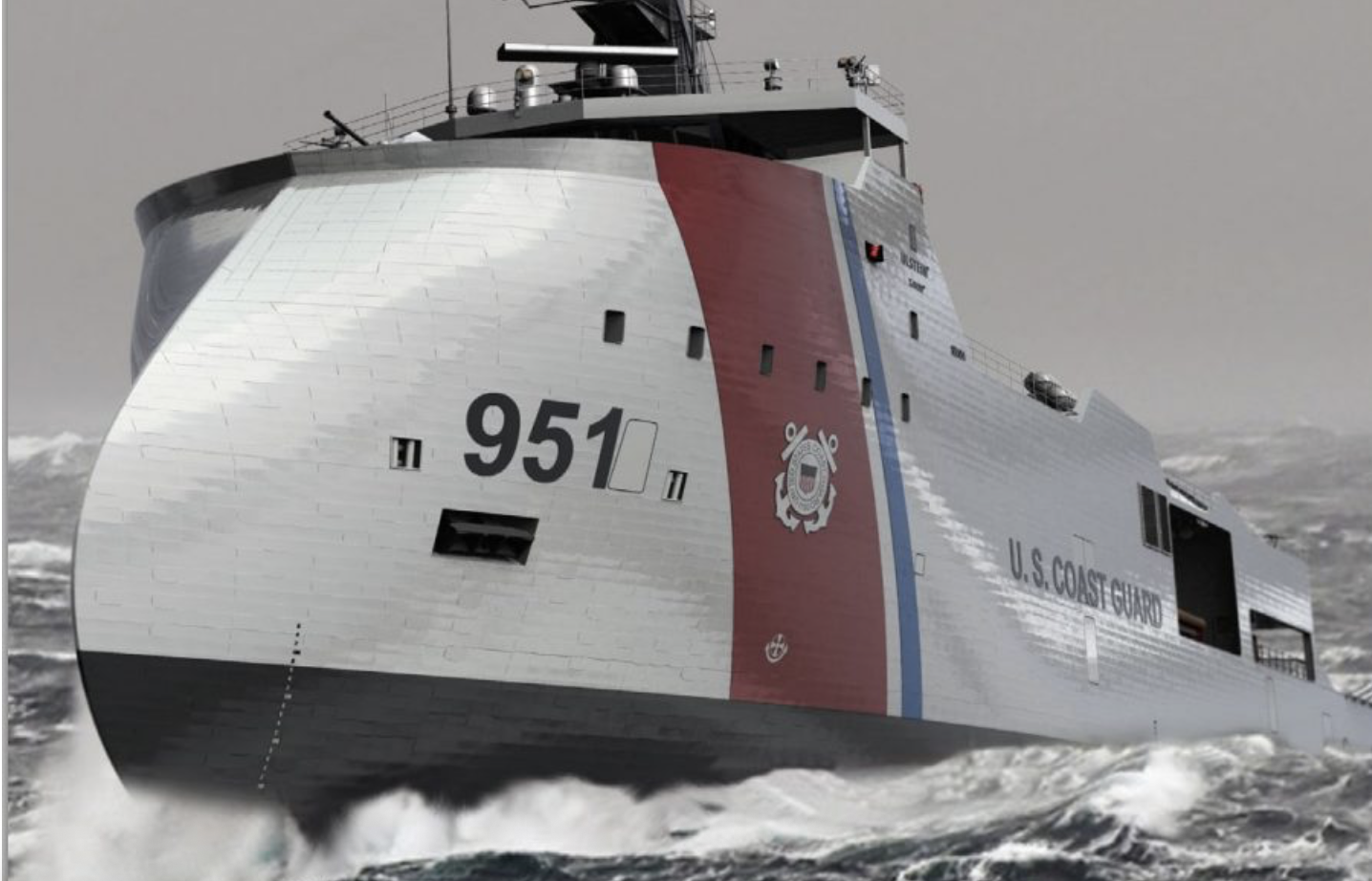
Vigor’s Ulstein OPC proposal.
 Chuck Hill's CG Blog
How big is that workboat on the back of Ulstein’s larger design? It looks like it’d be able to operate as a small platform supply vessel on it’s own.
The Norgies had a third naval arm with their maritime home guard but it was destabilised a year or two back. They were allocated two of the small coast guard ships.
I find that blunt-nose bow to be interesting an reminiscent of Naval designs circa 1890’s – early 1900’s. Makes one wonder if they had a good idea back 130 years ago?
Back then it was intended as a ram. Now it intended to extend the waterline length and minimize pitching.
On these designs the bow is usually raised at least on deck. Otherwise they tend to be very wet forward.
This usually means the bridge is also well forward. That is a feature I don’t really like because the up and down movement of the bridge is increased the further forward the bridge is located.
The Norwegians have a lot of experience with rough seas especially in the North Sea areas. If they say these designs work well, I’ve got to give them the benefit of the doubt. I can see how the pitch must be more pronounced the further forward the bridge, but maybe the design doesn’t slam as much. Don’t really know.