
Threats to shipping passing the Hormuz Strait include ballistic missiles, cruise missiles, Unscrewed Air Systems (UAS), submarines, small manned surface craft, and Unscrewed Surface Vessels (USV). It appears the submarine and manned surface craft threats have been neutralized. Provided there are a few destroyers, helicopters, and fighter aircraft providing zone defense, to take out the ballistic and cruise missiles and most UAS, it seems the USVs may be one of the most effective threats because of their numbers, minimal support requirements, small radar signature, and large warhead which explodes at the waterline.
Above is a video from Ukrainian Forces of USV attacks on the Russian shadow fleet. Notice the attacks all are from the stern.
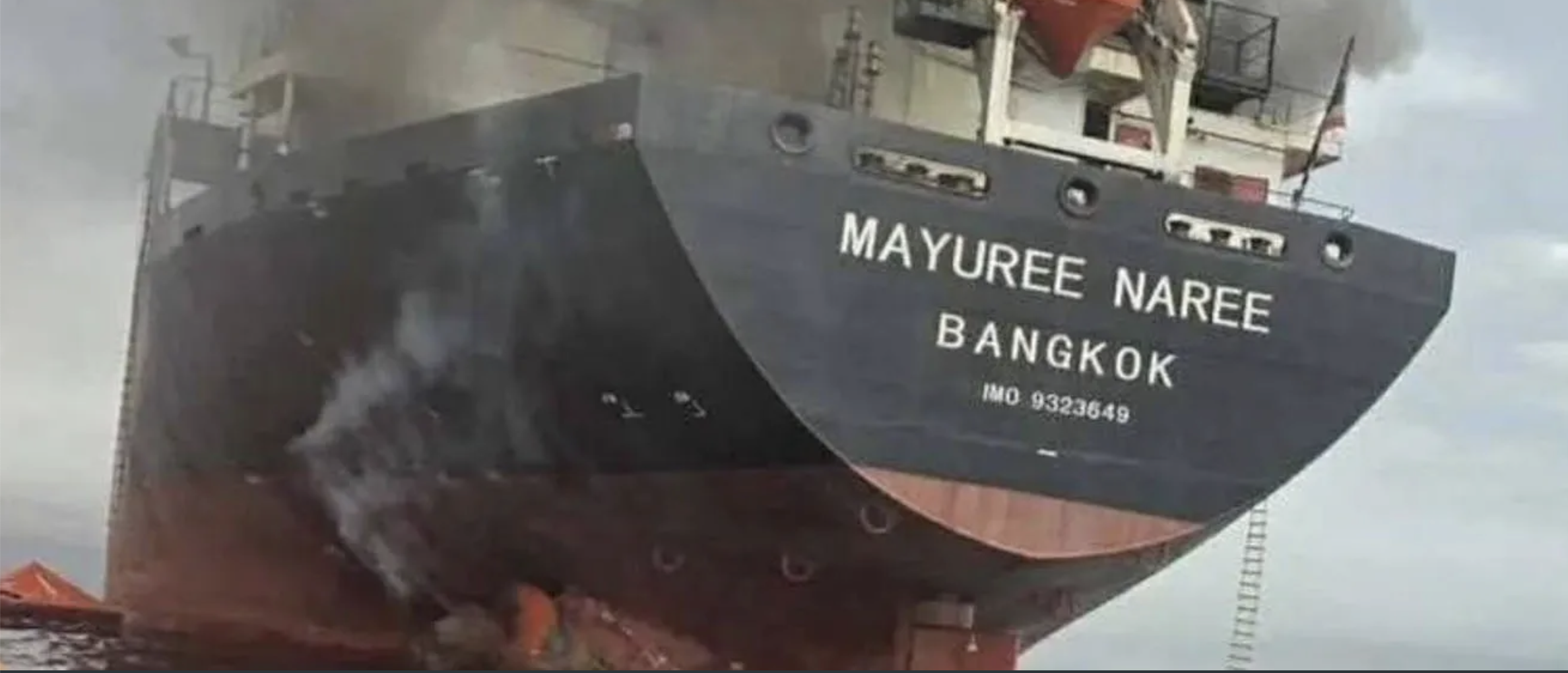
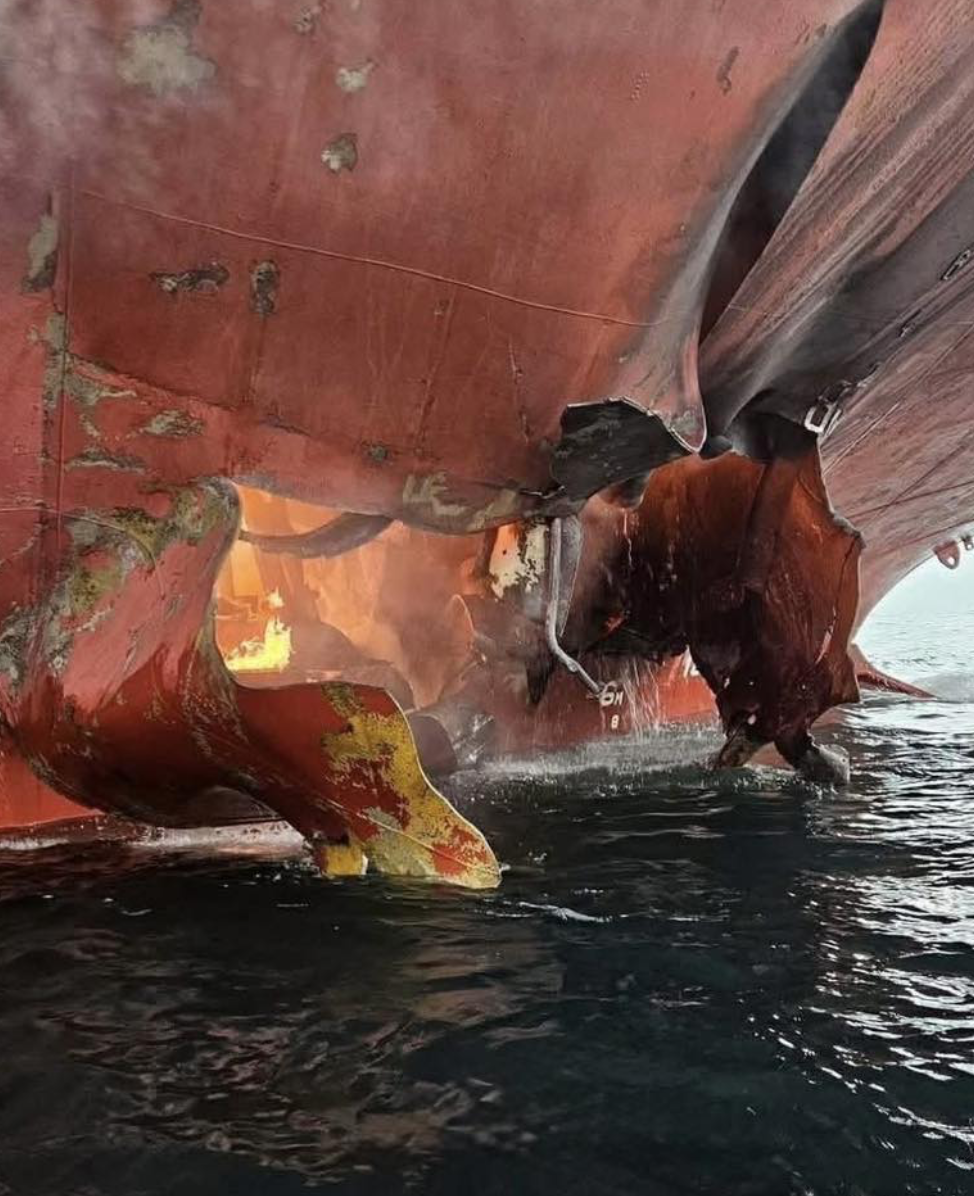
USV damage–Iranian media
A recent attack by an Iranian USV Ilooks to have been similar.
A Thai-flagged cargo vessel, Mayuree Naree Bangkok, was attacked near the Strait of Hormuz on March 11, leaving 3 of its 23 crew missing. The ship had departed Dubai and was heading to India when struck near its stern. #Iran
I have noticed that in most of the videos of uncrewed surface drone attacks, the attacks generally approach from stern and most frequently the attack detonates at the stern.
I think there are at least two reasons for the attacks from the stern. First, it is a more vulnerable area in terms of disabling the ship. This is the reason I want the Coast Guard to have access to torpedoes that target the propellers and rudder. On most merchant ships, the stern is also where the ship’s control stations and crew accommodations are.
Second if the target is moving and the targeting logic is a pursuit curve (always point at the target and use higher speed to close the target) the USV will always approach from the stern.
While leading the target (constant bearing/decreasing range) is more efficient, it might not be possible if the USV’s camera is fixed to face forward and the field of view is limited. Even if the operator leads the target a little, the USV will always approach abaft the beam to keep the target visible in a fixed forward facing camera’s field of view.
What does this mean for escorting shipping?
The PATFORSWA Webber class WPCs (and LCS) may have a role in escorting ships through the Strait of Hormuz providing a last line of defense against UAS and USVs. I would have hoped the Webber class were better equipped, but it might still be possible to supplement their weapons by putting a squad of Marines aboard.
Knowing that approach from the stern is most likely, will influence the positioning of escorting vessels and where additional weapons and lookouts might be positioned.
 Chuck Hill's CG Blog