
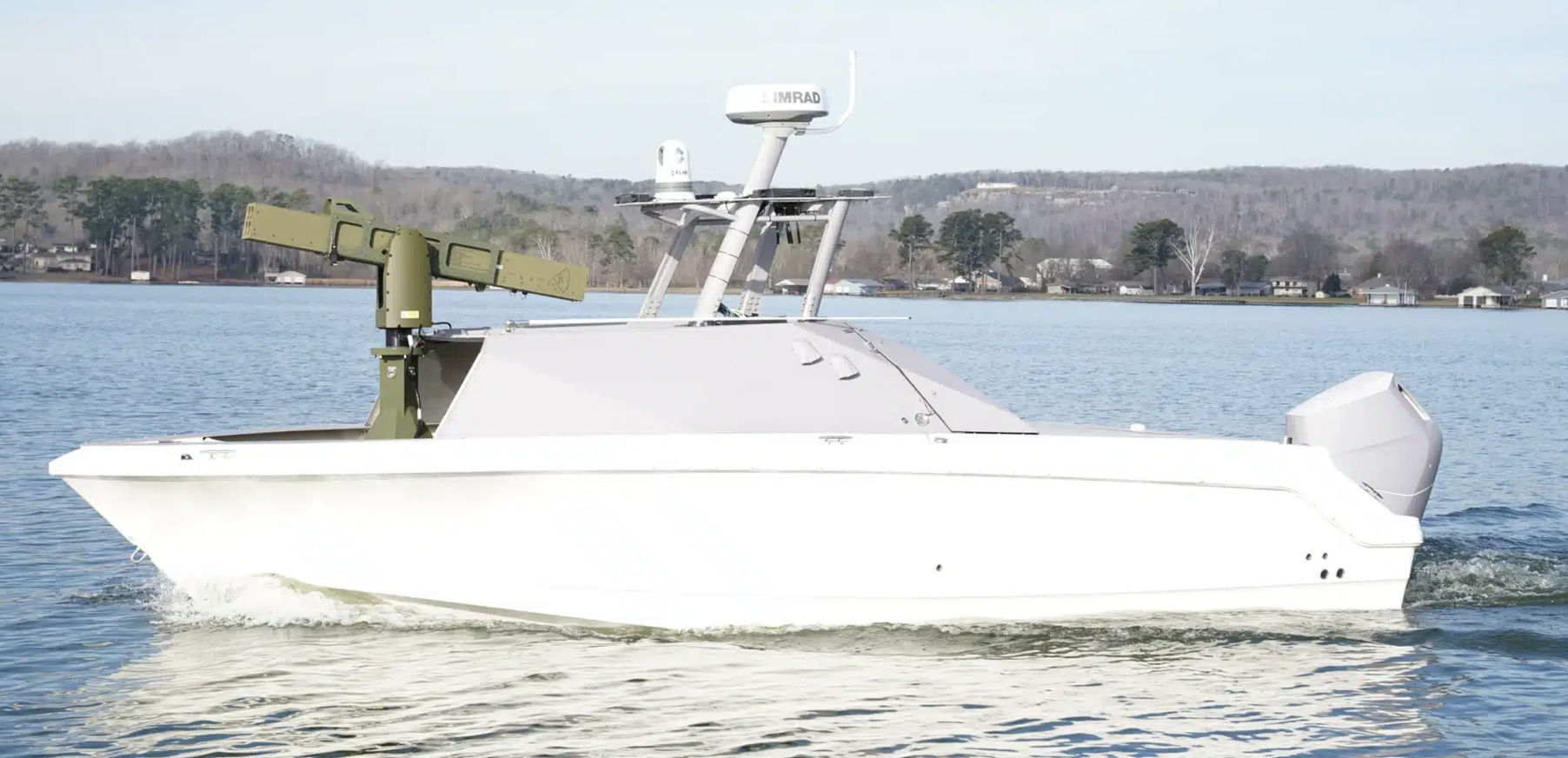
TSUNAMI USV fitted with STAKE (Invariant Technologies picture) The launcher is probably only a little longer than the APKWS guided rocket which is 73.8 in (1.87 m) in length so I would estimate this boat is about 24 feet in length. Textron TSUNAMI® USVs range in length from 21 to 38 feet in length.
The need to have a counter to unmanned air and surface systems has been getting a lot of attention lately. Even the Coast Guard has been questioned about this.
The Coast Guard says they are working on it.
So far the counters I have heard the Coast Guard is deploying seem to be primarily intended to interrupt the control link of small commercial drones. Other than machine guns, I haven’t seen any hard kill systems that can deal with larger UASs and USVs including those that might be autonomous.
Potential targets range from consumer drones with a few ounces of explosives to modified personal watercraft or even general aviation aircraft carrying hundreds of pounds.
Using something like a .50 caliber machine gun in a US port is problematic both in terms of accuracy and in the danger of potential collateral damage.
Below are two press releases from Invariant discussing their APKWS based cUAS system, similar to the Vampire system.
From the moment I first saw APKWS, in 2017, I considered it an almost perfect weapon for the Coast Guard because it is cheap enough for wide distribution; it is accurate enough to minimize the likelihood of collateral damage, it has adequate range so that cutters don’t have to be so close improvised armaments can pick off our weapons operators, it is light enough to fit on even the smallest cutters, training requirements appear minimal, and the warhead is large enough to do serious damage to larger targets particularly if multiple hits are made.
Feb 18, 2026
(HUNTSVILLE, Ala.) Invariant Corporation’s Surface-to-Air Kinetic Engagement (STAKE) system has once again demonstrated a significant advancement in autonomous maritime Counter Unmanned Systems (C-UxS) capabilities. Earlier this month, STAKE was integrated onto a Textron Systems’ TSUNAMIR Unmanned Surface Vessel (USV) and performed early integration testing at Lake Guntersville.
This milestone marks a significant step forward in the application of APKWS in the maritime domain. The success of the demonstration highlights the STAKE system’s versatility and performance in a highly dynamic, complex environment as well as Invariant’s C-UxS team’s commitment to advancing autonomous weapons development. STAKE, a modular system, can be integrated onto a variety of vehicles with minimal engineering.
STAKE’s maritime payloads consist of two core subsystems: the Hunter, which houses the sensor and laser designation package responsible for acquiring and tracking targets, and the Killer, the precision engagement platform. Together, as previously shown, the Hunter and Killer subsystems operate seamlessly in the maritime setting, confirming the system’s readiness for shipboard C-UxS mission, no matter the size.
“This successful demonstration represents a significant development and reflects Invariant’s position at the forefront of C-UxS innovation as well as kinetic maritime autonomy,” says President Danny Levis. “We are committed to advancing adaptable, high-performance systems that align with the Department of War’s objective to enhance lethality, especially in the maritime domain”.
For more information about Invariant Corporation, visit www.invariant-corp.com.
The New Rules of Engagement: STAKE, C-UAS Agility, and the Future Fight
Aug 26, 2025
With a career spanning in explosives, missile defense, and tactical ground systems, James made the deliberate choice to go deep, not wide. “I wanted to zero in on a single domain and become the expert,” he says. That domain? Counter-Unmanned Systems (C-UxS).
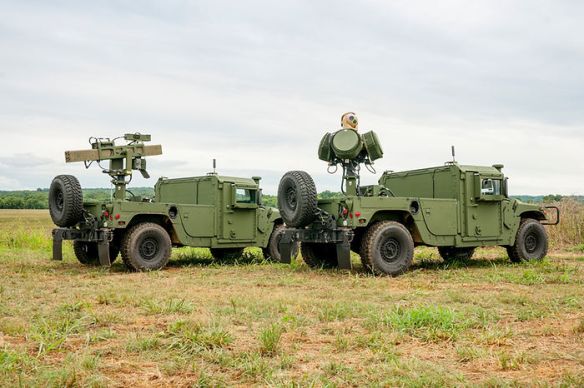
Agility Over Legacy
For James, the most dangerous assumption in modern defense planning is that yesterday’s acquisition timelines still apply. “We used to develop a system over five years and support it for 20. But when the fight changes daily, our tech has to change daily too.”
“We’re not just building a product,” James says. “We’re building a process that evolves with the fight.”
C-UxS as a Forever Fight
What’s Next for STAKE

