November 11
1881 The crew of Life-boat Station No. 14, Eleventh District (Racine, WI) rendered service during the severest storm of the season. The life-saving crew noticed several vessels running north for safety under bare poles and two of them made safely into the harbor. Observing this, the master of the schooner Lavinda tried to make the same haven, but the vessel became unmanageable, struck the south pier, immediately became waterlogged, and in five minutes was a wreck. The life-saving crew sprang for the lifeboat and put out to her assistance. They got alongside and managed to run a line from the wrecked vessel to the station tug H. Wetzel, which had steamed out to her relief. The tug soon towed her into the harbor.
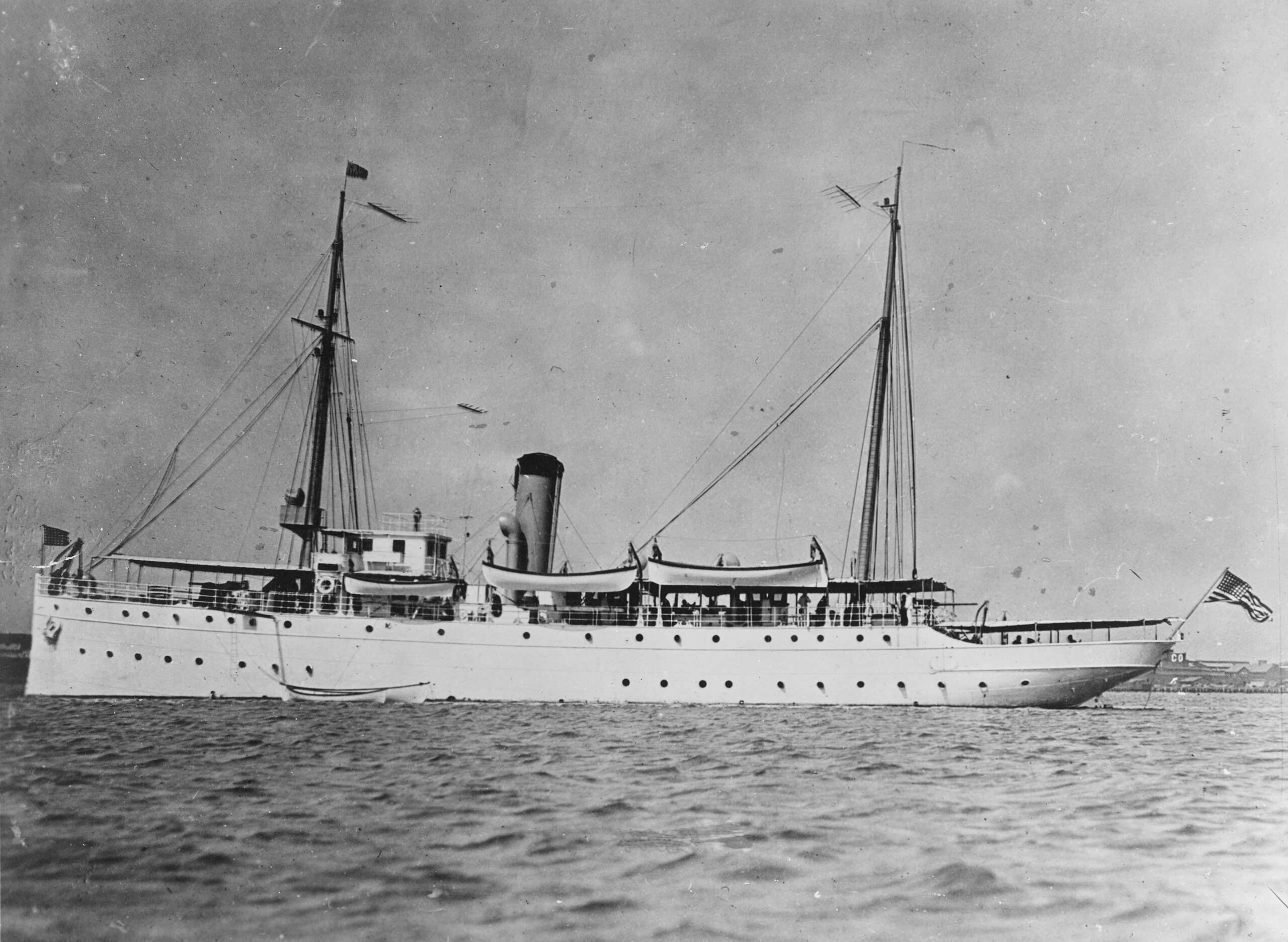
USCGC Tampa (Coast Guard Cutter, 1912) photographed in harbor, prior to World War I. Completed in 1912 as the U.S. Revenue Cutter Miami, this ship was renamed Tampa in February 1916. On 26 September 1918, while operating in the English Channel, she was torpedoed and sunk by the German Submarine UB-91. All 131 persons on board Tampa were lost with her (111 Coast Guardsmen, 4 U.S. Navy personnel, and 16 passengers consisting of 11 British Navy personnel and 5 civilians.), the largest loss of life on any U.S. warship in combat during the First World War. U.S. Naval History and Heritage Command Photograph.
1918 The Allied powers signed a cease-fire agreement with Germany at Rethondes, France on November 11, 1918, bringing World War I to a close. Between the wars November 11 was commemorated as Armistice Day in the United States, Great Britain, and France. After World War II, the holiday was recognized as a day of tribute to veterans of both world wars. Beginning in 1954, the United States designated November 11 as Veterans Day to honor veterans of all U.S. wars. Over 8,000 Coast Guardsmen served during the World War I and 111 were killed in action with the enemy.

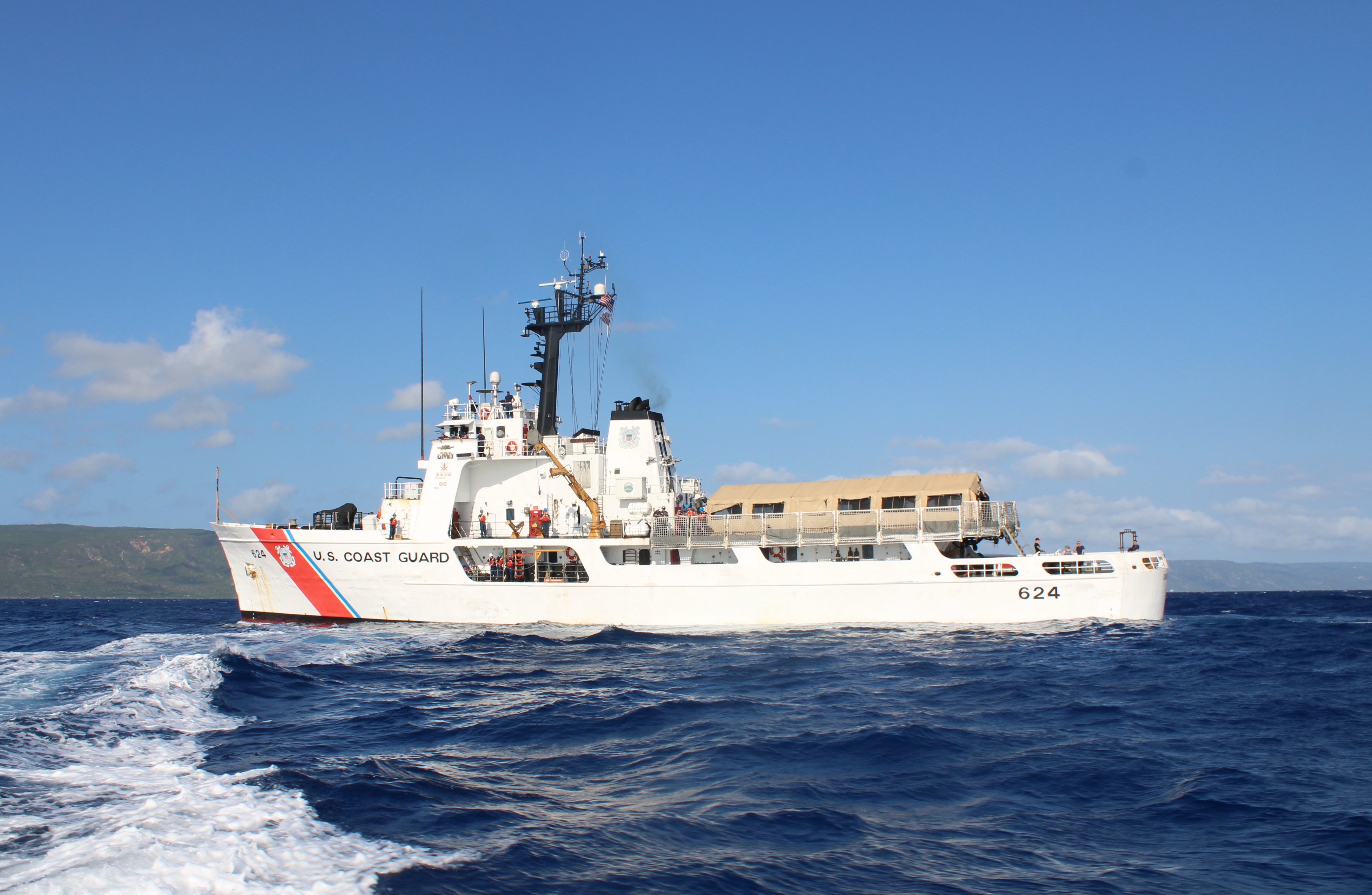
Cutter Yocona towing environmental bouy (EB-16) off of San Diego underway for deployment. May 19,1975.
1955 CGC Yocona rescued the crew of the sinking fishing vessel Ocean Pride some 50 miles off Cape Lookout, Oregon. When 60 to 70 mph winds and heavy seas with 30 feet swells made it impossible to launch lifeboats, Yocona came close aboard the sinking fishing vessel to allow all of its crew members to jump on board the cutter to safety.

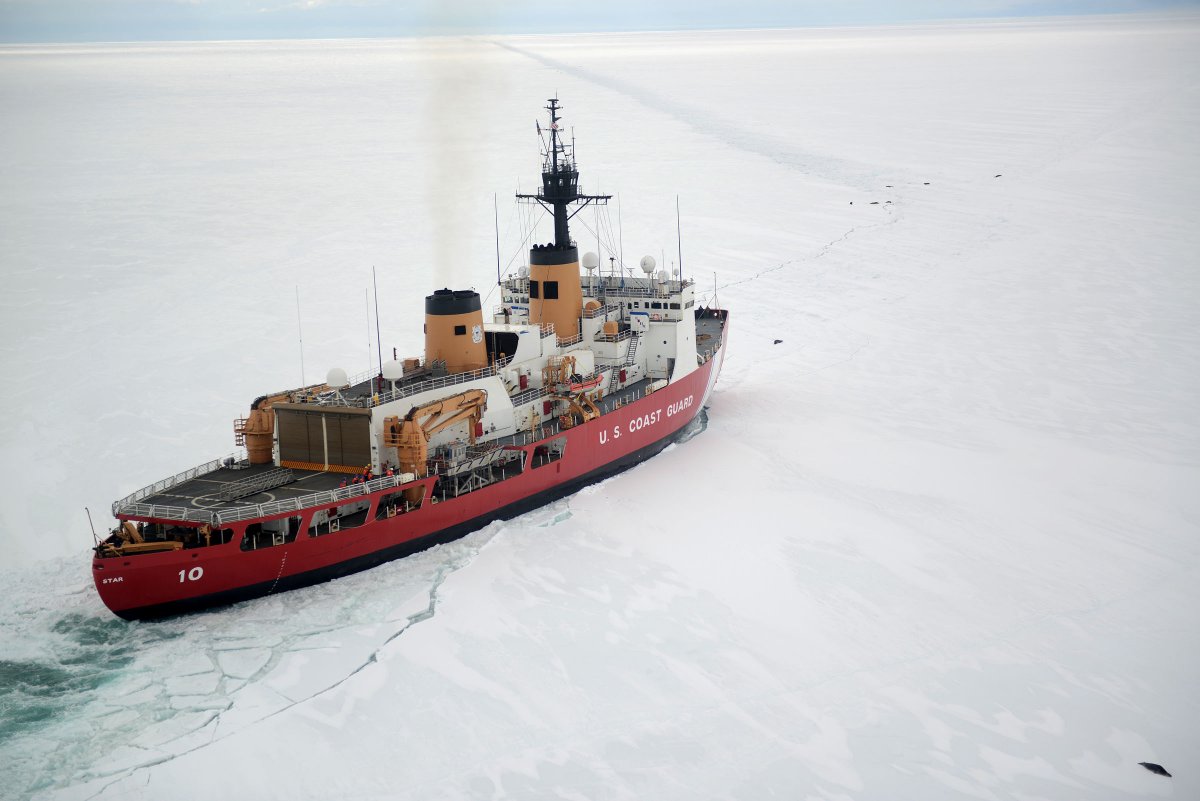
The U.S. Coast Guard Cutter Healy (WAGB 20) cuts a channel through the multi-year pack ice and snow as Healy transits the Arctic Ocean to the North Pole, September 27, 2022. This is the third time the icebreaker has traveled to the North Pole since its commissioning in 1999. U.S. Coast Guard photo by Deborah Heldt Cordone, Auxiliary Public Affairs Specialist 1.
2022 CGC Healy returned to its homeport of Seattle following its historic 17,000-mile, 124-day deployment in the high Arctic latitudes that included a transit to the North Pole. Healy and its crew traversed the ice-packed Arctic Ocean to the top of the world, reaching the geographic North Pole on 30 September 2022. This was only the second time a U.S. surface vessel had reached 90 degrees north unaccompanied. In July and August 2022, after a port call in Seward, Alaska, Healy traveled into the Beaufort and Chukchi Seas, going as far north as 78 degrees, while supporting an Office of Naval Research-sponsored team from the University of Washington Applied Physics Department and Woods Hole Oceanographic Institution. The embarked team worked with Healy crew to conduct various evolutions, including deploying and recovering sea gliders, underwater sensors and acoustic buoys, throughout the marginal and pack ice zones as part of the Arctic Mobile Observing System. During transits to and from the Arctic, Healy participated in flight operations in Kotzebue Sound and off the coast of Kodiak Island, Alaska, with Air Station Kodiak MH-60 helicopter aircrews, conducted passing exercises with the CGC Kimball (WMSL 756), and completed patrols of the international maritime boundary line between the U.S. and Russia. In September and October, after a port visit to Dutch Harbor, Alaska, Healy transited north again to conduct multidisciplinary, internationally collaborative research as part of the Synoptic Arctic Survey. The embarked National Science Foundation-funded team collected samples and data to study environmental changes across the Arctic Ocean. Upon reaching the North Pole, Healy conducted two days of science operations and the crew enjoyed several hours of ice liberty. After disembarking all science personnel during a second logistics stop in Dutch Harbor at the end of October, Healy made a final port call in Juneau, Alaska, where friends and family of crewmembers were given the opportunity to sail on the cutter during its final underway leg through the inside passage to Seattle












 Chuck Hill's CG Blog