Mini-Cruise Missile

(Graphic by Alex Hollings)

SANDBOXX has a report on a new weapon, “Anduril’s mini-cruise missile is like a Hellfire on steroids.”

I have been advocating for Hellfire, or something similar, for some time as an answer to the possibility of an attack using small, fast, highly maneuverable surface craft (manned or unmanned). It could also work against some aircraft and have at least a minimal capability against an attack using a medium to large vessel. This new weapon seems to be a significant improvement and reportedly at a lower cost. Even if the Coast Guard does not get it, but DOD does, it might free up stocks of Hellfire for Coast Guard use. If the Coast Guard does get the system, it would mean that a single launch platform could cover a very large area, if they could get targeting from units on scene.

Apparently, this is not yet a program of record, but it certainly looks promising and Anduril has a good record of producing affordable innovative weapons.

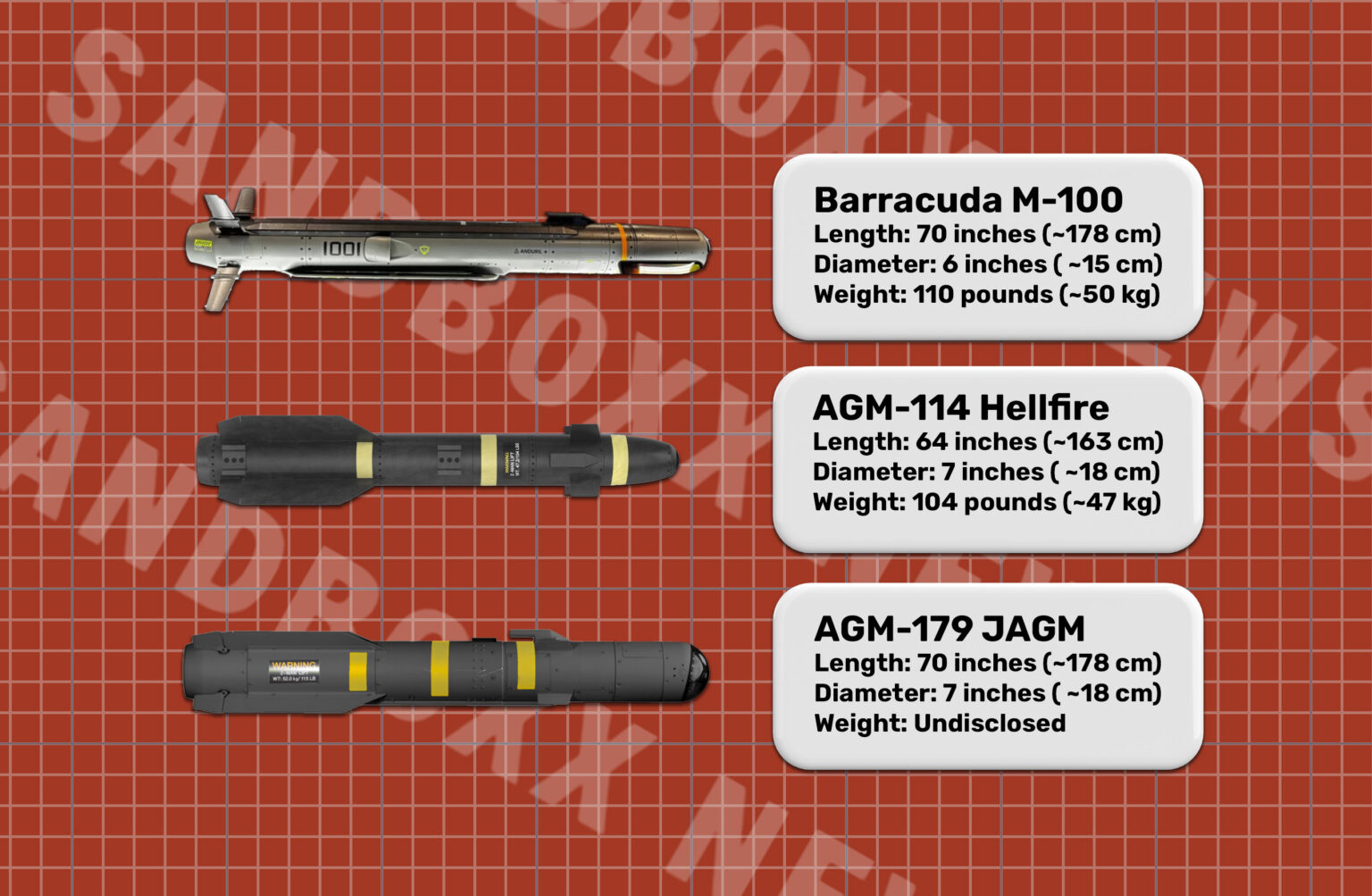
Differences in capabilities between Barracuda M-100 and the Legacy Hellfire and JAGM are a larger warhead (40 pounds vs 20) and much longer range (138 miles vs at most 21). A disadvantage is lower maximum speed (roughly 500 knots vs 860 knots). The speed difference may not actually be significant over the entire range since Hellfire and JAGM are rocket powered so they don’t necessarily fly under power the entire range, rather they accelerate to a maximum speed, sustain for a period, and then coast to their maximum range. The Barracuda M-100 would be fully powered, accelerating to its maximum speed, over any range Hellfire or JAGM could reach and well beyond that.

The M-100 is the smallest of the Anduril line of Barracuda cruise missiles.

Barracuda line of AAVs and Weapons (graphic created by Alex Hollings using Anduril images)

In the video below, there is more information on the company, the defense industry and what is wrong with it, and even a “Lord of the Rings” connection. It’s almost an hour, but it is very interesting.

“AGM-179 JAGM: REPLACING THE LEGENDARY HELLFIRE MISSILE” –Sandboxx

U.S. Marines with Marine Aerial Refueler Transport Squadron (VMGR) 252 equip a KC-130J Hercules with AGM-114 Hellfire missiles (U.S. Marine Corps photo by Lance Cpl. Christian Cortez)

Sandbox has a good overview of the Hellfire missile’s replacement, the AGM-179 JAGM (Joint Air Ground Missile–Despite the acronym, this missile will be used surface to surface and even surface to air, as well as air to surface.)

I have for a long time pointed to the Hellfire as a missile that could provide much needed firepower if any of our vessels, down to and including patrol boats, encounter a situation where they need to forcibly stop a vessel, regardless of size, with a near 100% prospect of success against small, fast highly maneuverable targets and at least some chance of success against large ships. All with minimal chance of collateral damage.

The post notes that the AGM-114L Longbow Hellfire, the version used in vertical launchers as part of the anti-surface module on Littoral Combat Ships has been out of production since 2005, but the new missile will include the capabilities of the Longbow Hellfire as well as Semi-Active Laser Homing.

The Missile:

JAGM shares many components with the Hellfire. It has the same dimensions:

  • Length: 70″ (1,800mm)
  • Diameter: 7″ (180mm)
  • Weight: 180 pounds (49 kg)
  • Warhead: 20 pounds
  • Range: 8 km (almost 9,000 yards)

Launchers: 

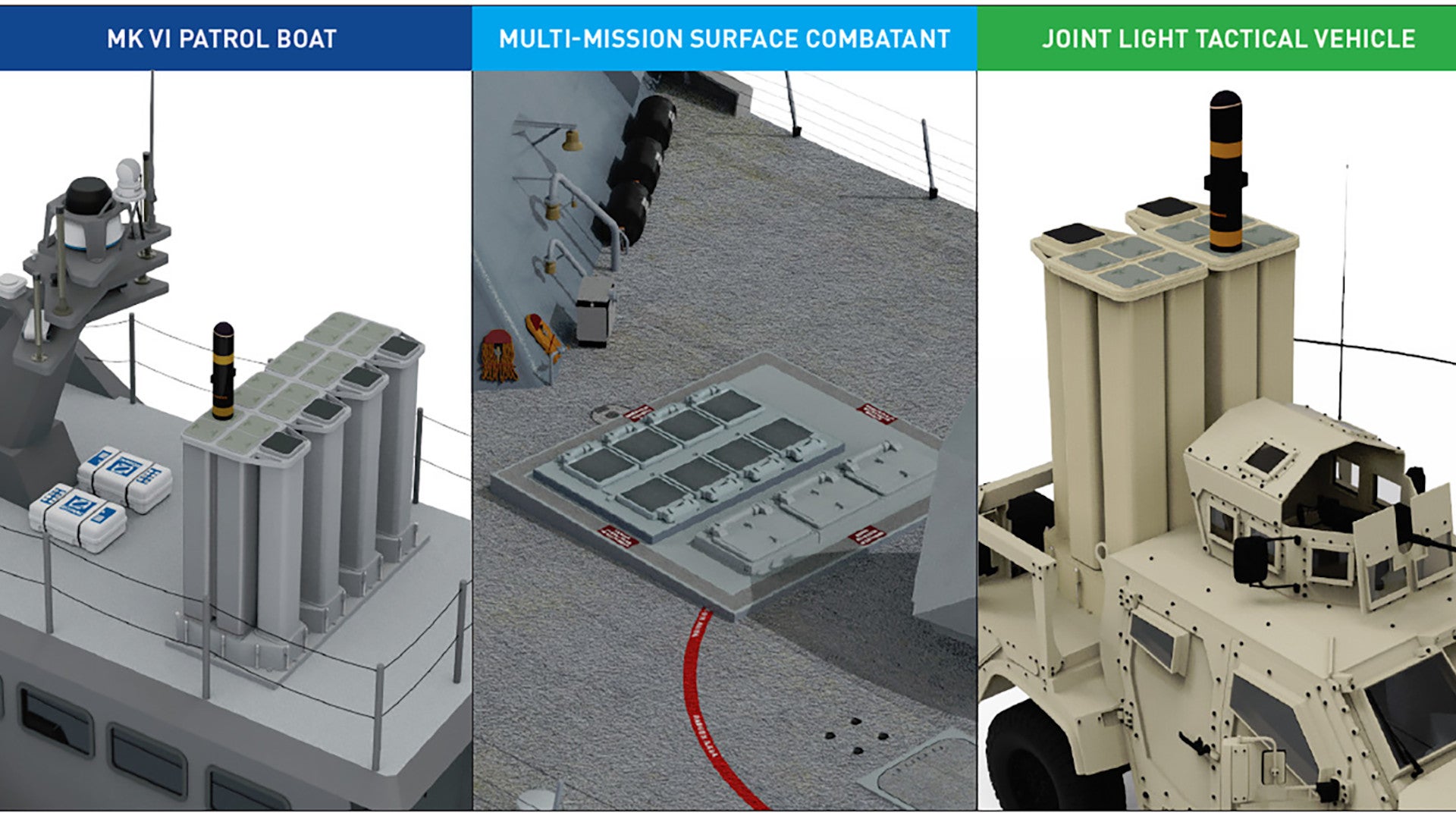
There are a number of ways the missile could be integrated into the various cutter classes.

There are stand alone single round launchers.

Launch tubes could be attached to existing Mk38 gun mounts.

We could use small vertical launch systems.

Textron Systems’ CUSV with Surface Warfare payload including a Hellfire vertical launch system, the box in the center, at SAS 2019

These weapons will be made in huge numbers, thousands per year, and in the meantime, there are thousands of Hellfires in inventory that could meet our needs. This is a weapon based on the Hellfire’s history of success and with a promising long term future. It has a small foot print, and requires minimal maintenance and training while providing the punch of a 6″ naval gun. Range is expected to be extended to 16 km.

This is doable, at modest cost, and the Navy should pay for most of it.