Retraction: NSC to be named for Munro

Relative to my earlier post, I have just been informed by a highly placed and very reliable source that there will be a National Security Cutter named for Douglas Munro.

The planned names for the remaining cutters, approved by the Commandant in February, will be:

#5 James, #6 Kimball, #7 Munro, #8 Midgett

The Name that is no longer on the list is “Stone.”

SM1 Douglas Munro, Anniversary. Will there be a USCGC Munro?

Today marks the 69th anniversary of the death of Douglas Munro. The Coast Guard historian’s page is here. There is some background on the unit he was serving with here.

Apparently there will not be a “Legends Class” National Security Cutter named for Munro. This is the current plan: WMSL 750 Bertholf
, WMSL 751 Waesche, 
WMSL 752 Stratton, 
WMSL 753 Hamilton
, WMSL 754 James, 
WMSL 755 Stone, 
WMSL 756 Midgett, 
WMSL 757 Kimball.

When WHEC-724 is decommissioned, we will presumably no longer have a cutter named for the only Coast Guard Medal of Honor recipient.

Perhaps naming the first Offshore Patrol Cutter for Munro, and giving his name to the class, would be appropriate.


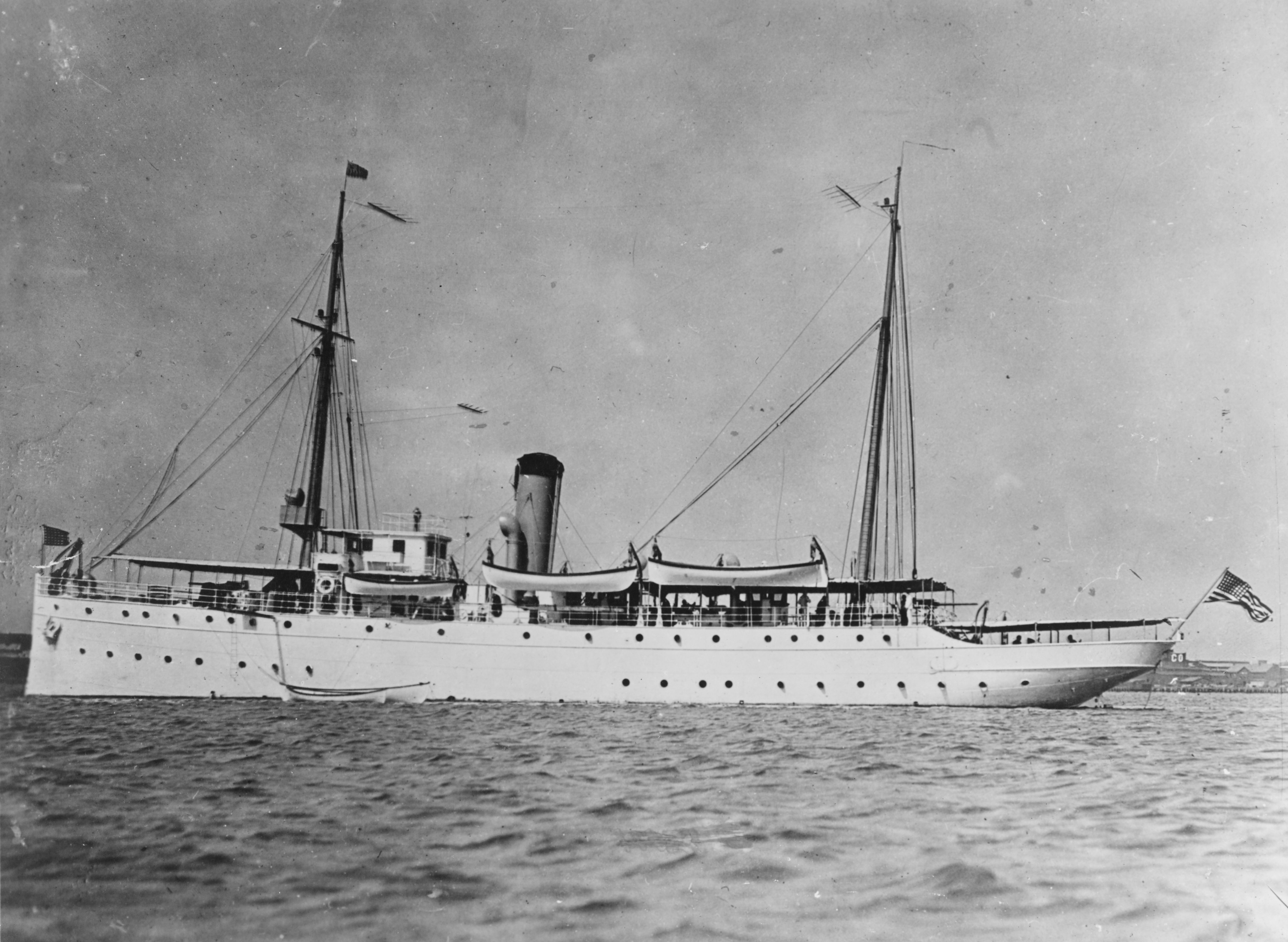
Sept. 26, 1918, Cutter Tampa, Lost with all Hands

File:USCGC Tampa (ex Miami).jpg

http://www.history.navy.mil/photos/sh-us-cs/uscg-sh/cgsh-t/tampa.htm

This is the 93rd anniversary of the loss of Cutter Tampa, which was the greatest loss of American naval forces at sea due to enemy action in WWI.

Naval History and Heritage Command is commemorating the loss.

Additional information on the ship here.

In addition to the Coast Guard Memorial at Arlington, the crew is remembered in England with their names engraved on the walls of the chapel of the Brookwood American Cemetery and memorial in Britain.

Piracy Update, 25 September, 2011

Somalia and Vicinity:

There has been another Yacht hijacking with deadly results. One of the two on-board was killed. The other was rescued by a Spanish warship (LPD). The two on board the yacht were believed to have been French.

In a not untypical action, a French Navy frigate recognized a dhow as a vessel previously seized by pirates and now being used as a mother ship, but ultimately let them go after they abandoned their “attack skiff.”

The Russians seem to use different tactics and are having some success against the pirates, while Somali pirates seem to be working further North into the Red Sea.

The Second Front–Piracy in the Gulf of Guinea:

There has been a significant upswing in pirate activity on Africa’s Atlantic Coast. An oil tanker, with a crew of 23, was seized on 14 September, but has already been released, as is reported here. The earlier report of its capture also provided some evidence the African Partnership Station and efforts to beef up local “coast guards” is paying dividends. The pirates in this area seem to be more interested in stealing oil, than collecting ransom.

Private Security Guards:

The idea of using private security guards continues to gain traction. The observation that no ship with armed guards aboard would seem to make this an obvious choice–“Marine Insurers Support Armed Guards to Counter Pirates.”

The concept is still not without its difficulties even so. The international transportation of weapons is still problematic. This is a little different from the norm, but a group of anti-piracy contractors have had a minor run-in with officials in Mozambique. (This apparently has a remote USCG connection because one of the private contractors was reportedly a civilian instructor for the Coast Guard.)

Representatives of the shipping industry have called for a United Nations armed guard force.

Cost of Piracy:

Neptune Maritime Security discusses the human cost of piracy that results from irresponsible ship owners and vessels that don’t meet international standards. (Thanks to eaglespeak for finding this.)

Here is a bit of background on the cargo owners liabilities incurred because of the potential for piracy.

Tactical Innovation?:

Not sure this is a tactical innovation on the part of the pirates, an act of frustration, or perhaps even an accident, but when the crew of a ship sought refuge in their “citadel” pirates set fire to the ship. The pirates fled and an Italian warship quickly arrived on scene to rescue the crew who abandoned ship.

Icebreaker Envy

Ryan Erickson has published the Arctic SAR boundaries on the Naval Institute Blog. Looking at this chart got me thinking about ice capable ships. That of course lead to looking for similar information on Antarctica, so this is going to be a survey of What nations are interested in the Polar regions? and What do their ice capable fleets look like?

https://i0.wp.com/1790.us/wp-content/uploads/2011/09/Picture-3.png

Continue reading

More Webber Class to be Contracted Soon + Background

The following is based on information from someone I believe to be a reliable source. To my knowledge there has been no official announcement.

The Coast Guard is expected to exercise an option for four more Webber class soon, probably this week. This contract will be FY2011 money and will bring the total under contract to twelve.

Out of a projected requirement for 58 Fast Response Cutters (FRCs), the current contract with Bollinger included options that allowed for construction of up to 34 vessels–a prototype, three low rate initial production examples, and five options of up to six each. The Coast  Guard will be exercising its second “full production rate” option. Because funding was only provided for four vessels for this and the previous option, the maximum that can be built under the existing contract will be 30 vessels.

The number of vessels to be funded in FY2012 is still to be determined. Six ships still seems most likely, but going with four rather than six would further reduce the maximum under the current contract to 28. Presumably that would put the project another four months behind.

The FY2012 budget is also expected to include funds for CG to purchase the complete design data package and design rights as provided for in the existing contract. This would allow the Webber Class design to be bid competitively as discussed earlier. Right now alternative designs appear unlikely assuming sea trials in Oct/Nov go as expected.

The costs for the actual ship building have been very stable since contract award (within one percent). Money appropriated for the project includes supporting infrastructure costs as well as the actually ship building. There does seem to have been an increase in these additional infrastructure costs.